Israel’s Iran strikes left nuclear threat unresolved, public doubts remain
Israel hit Fordow, Natanz and Esfahan, but the IAEA still could not measure the damage. A year later, many Israelis still doubted the war had delivered its promised victory.
The strikes were meant to break Iran’s nuclear program and blunt its missile threat. Instead, they left behind a harder question in Israel: what was actually achieved?
Israel launched surprise attacks on June 13, 2025, opening a 12-day war that ended with a U.S.-brokered ceasefire on June 24. During the fighting, Israeli and U.S. strikes hit Fordow, Natanz and Esfahan, but the International Atomic Energy Agency said on June 22 that it could not fully determine the damage inside Fordow’s underground enrichment halls. The agency also reported additional damage at Esfahan and renewed attacks on Natanz, while warning that the non-proliferation regime was on the line.
The core nuclear problem remained unresolved because inspectors had last verified Iran’s stockpile of more than 400 kilograms of highly enriched uranium just before the war began. In May 2025, IAEA reporting put that stockpile at 440.9 kilograms of uranium enriched up to 60 percent, a level far beyond civilian needs and uncomfortably close to weapons-grade. Iranian officials had already acknowledged enrichment to 60 percent in the run-up to the conflict, underscoring why the issue did not disappear when the bombing stopped.
That gap between battlefield claims and public confidence has only widened. A March 2026 Israel Democracy Institute survey found 81 percent of respondents supported Operation Roaring Lion, and 70 percent of Jews believed Iran’s nuclear project and ballistic missile threat could be eliminated. But a separate April 2026 Walla/Maariv poll showed a far more skeptical mood about the war’s result. In that survey, 46 percent said Israel and the United States did not win the war, just 22 percent said they did, and 63 percent said they were dissatisfied with the outcome.
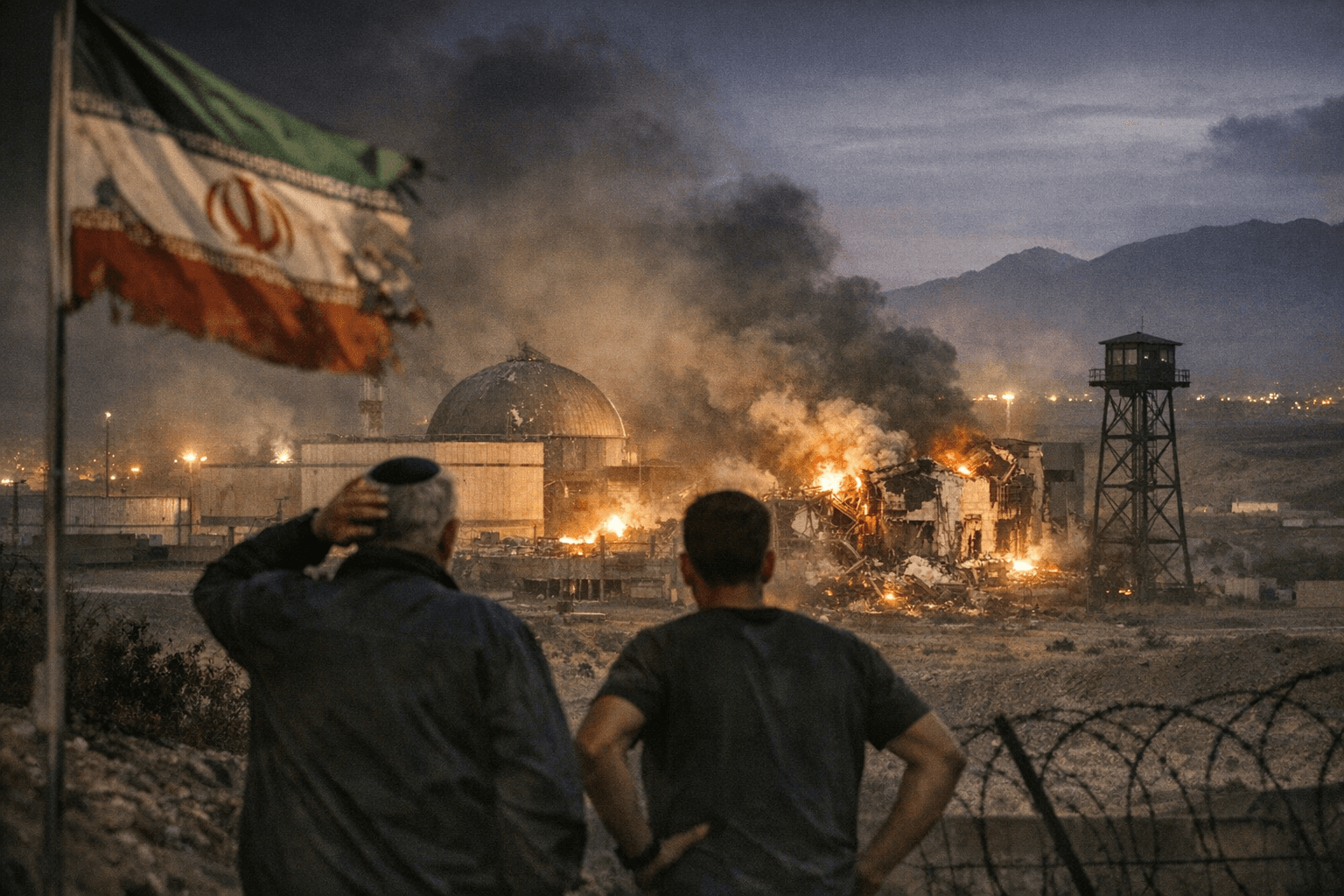
The same poll showed where Israeli trust still holds and where it is fraying. Air Force commander Tomer Bar received a 77 percent satisfaction rating, and IDF Chief of Staff Eyal Zamir got 71 percent. Benjamin Netanyahu, by contrast, received a 47 percent satisfaction rating, reflecting confidence in the military command but far less certainty that the campaign produced a durable political outcome.
Netanyahu declared a “historic victory” after the ceasefire and said Israel had removed Iran’s nuclear and missile threats. The numbers now suggest a more complicated verdict. Israel may have demonstrated reach and firepower, but the regime in Tehran remained in place, the nuclear stockpile remained uncertain, and many Israelis were left judging the war not by its opening salvos, but by what it failed to settle.
This article was produced by Prism’s automated news system from verified source data, official records, and press releases, then run through automated quality and moderation checks before publishing. The system is built and supervised by the people who set the standards it runs under. Read our full AI policy.
Did this article answer your question?


