Brent crude falls 2 percent after topping 126 amid Middle East tensions
Brent slipped more than 2 percent after briefly topping $126, but traders still priced in Middle East supply risk that could keep fuel and inflation pressures high.
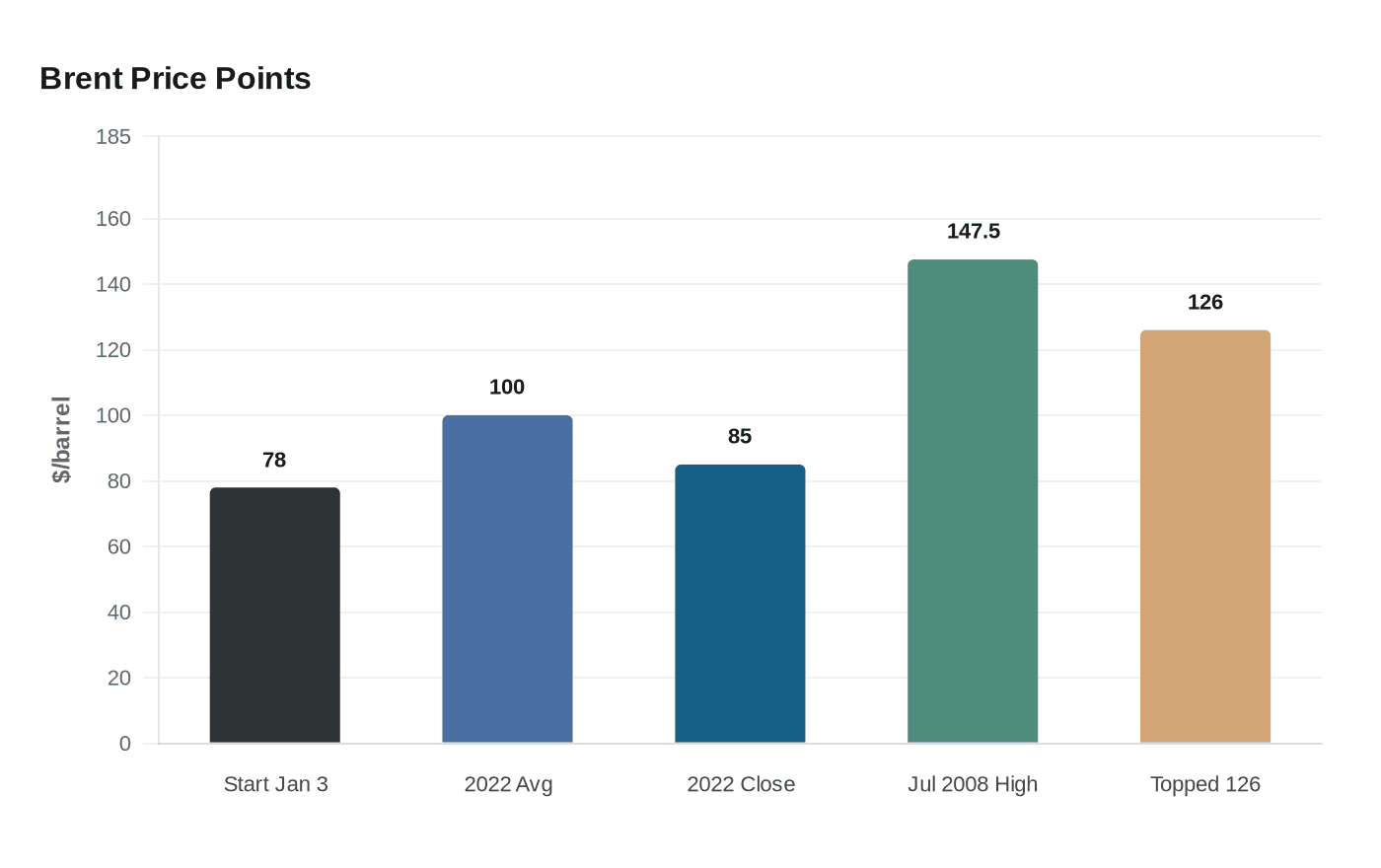
Brent crude pulled back more than 2 percent after a volatile session that sent the international benchmark above $126 a barrel, its highest level since 2022 and a four-year high. The retreat did little to calm a market that was still reacting to fears that a worsening U.S.-Iran conflict could choke off Middle East supplies and strain global growth.
Trading was wild from the start. Brent opened at about $111 a barrel, then surged intraday before giving back gains later in the session. The sharp reversal underscored how quickly prices can swing when traders think the Strait of Hormuz may be at risk. The waterway is one of the world’s most important oil chokepoints, and any disruption there could affect a large share of seaborne crude exports.
The move matters far beyond the oil patch. If traders continue to price in a prolonged supply threat, a brief dip from the day’s high may not meaningfully ease pressure on gasoline prices, airline fuel costs, freight rates and inflation. Energy analysts have warned that sustained disruptions can ripple through consumer prices well after the initial shock.
The latest spike also revived memories of the last time Brent traded in this range. According to the U.S. Energy Information Administration, Brent averaged about $100 a barrel in 2022, closing that year at $85 after starting Jan. 3 at $78. OPEC said in its June 2022 market report that benchmark spreads moved into deeper backwardation as supply tightened and expectations for summer demand strengthened, a sign of how quickly the market can shift when inventories look vulnerable.
Brent’s climb also fell well short of its historic peak, but not by much. Trading Economics puts Brent’s all-time high at $147.50 a barrel in July 2008, during a period when supply fears and strong demand pushed energy markets into a different kind of panic. The current rally has been driven less by fundamentals than by geopolitics, a pattern that leaves prices exposed to every new headline from the Middle East.
President Donald Trump also added to the uncertainty when he said he was considering taking over the Strait of Hormuz, a reminder of how politically sensitive the route remains. For oil traders, the message was clear: the recent drop was a pause in volatility, not a sign that the market had found relief.
This article was produced by Prism’s automated news system from verified source data, official records, and press releases, then run through automated quality and moderation checks before publishing. The system is built and supervised by the people who set the standards it runs under. Read our full AI policy.
Did this article answer your question?

