Britain’s farms depend on seasonal workers from Central Asia
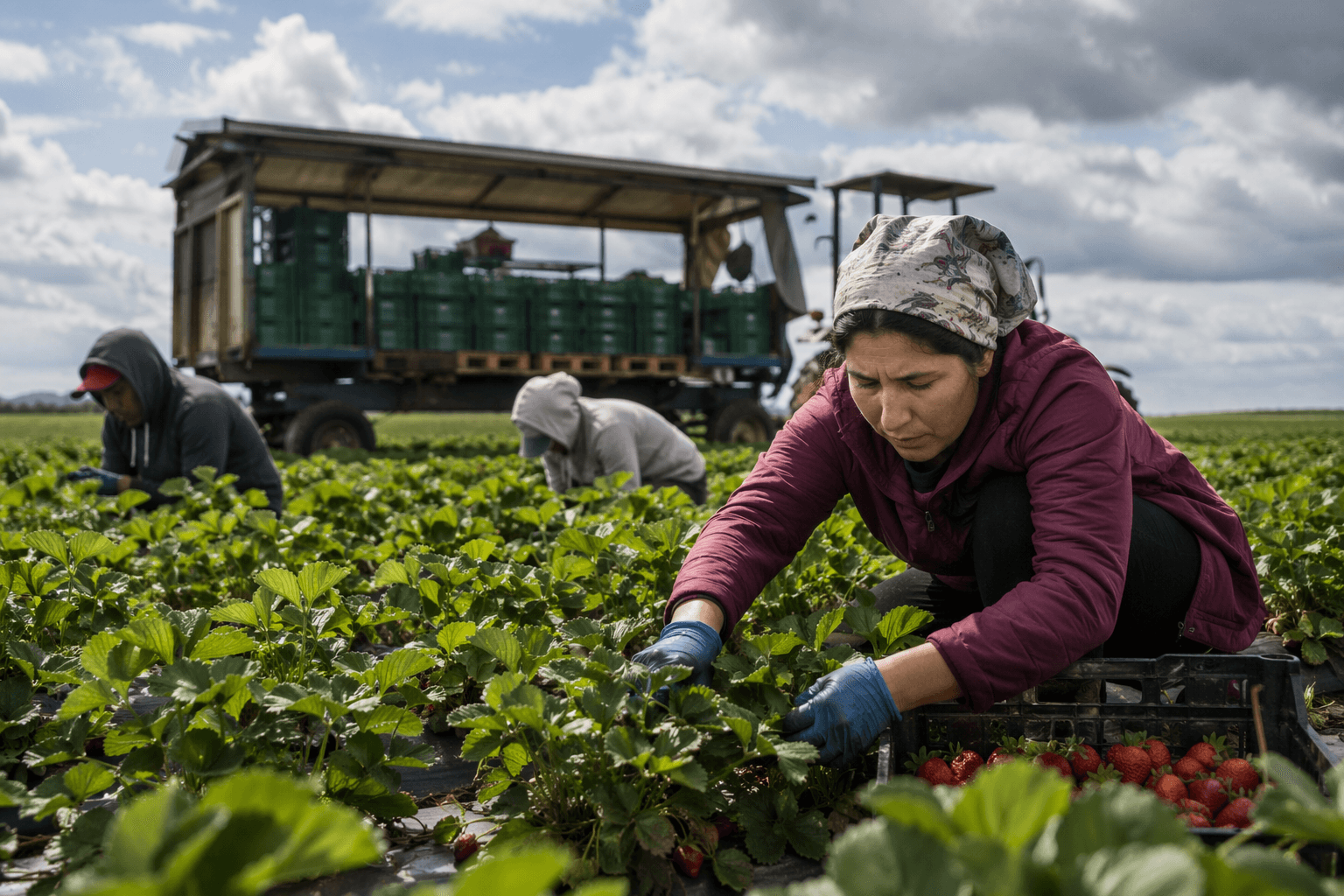
Strawberry fields still need hands, and those hands increasingly come from Kyrgyzstan, Tajikistan, Kazakhstan and Uzbekistan to keep British farms running.

Strawberries ripen quickly, and Britain’s farms now depend on a workforce that increasingly comes from Central Asia to pick them in time. A decade after Brexit made border control a defining political promise, the country’s seasonal harvests still rely on overseas labour to keep fruit on the shelves and farms in business.
The UK Seasonal Worker visa route was introduced in 2019 to address farm labour shortages that were expected to worsen after Brexit. It lets overseas workers come to British farms for up to six months, and it has expanded rapidly since then. The Migration Advisory Committee said the scheme issued about 33,000 visas in 2023, well below the previous government’s 57,000-visa cap for 2023 and 2024, and ministers later extended the scheme for five more years.
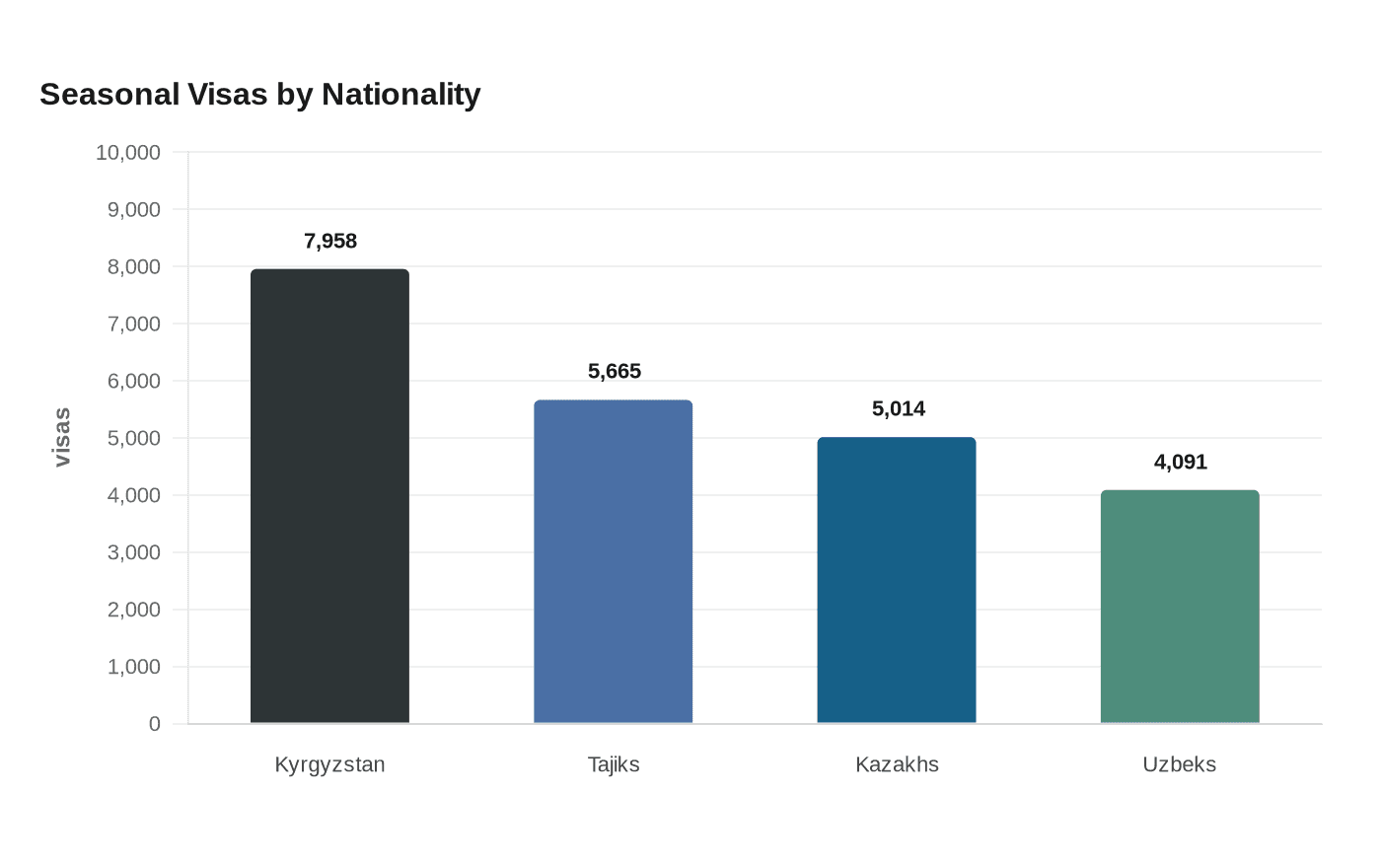
The shift in who is coming is now unmistakable. Official 2024 survey results showed that 91.5% of respondents were from Kazakhstan, Kyrgyzstan, Tajikistan and Uzbekistan, with Kyrgyzstan the single most represented nationality. Government data cited by labour-rights groups showed 7,958 Seasonal Worker visas were granted to Kyrgyzstan nationals in 2023, 5,665 to Tajiks, 5,014 to Kazakhs and 4,091 to Uzbeks. For growers, that is no longer a marginal trend but the core of the labour supply behind a major horticulture industry.
Farm leaders say the system now sits at the heart of food security. Tom Bradshaw of the National Farmers’ Union has argued that visa certainty is essential for growers, and the union said the government confirmed 41,000 horticulture visas for 2026 while also warning that worker numbers had fallen and labour shortages persisted. The Migration Advisory Committee’s 2024 review said the sector had a clear short- to medium-term need for the scheme to maintain domestic food production, but it also called for tighter protections, fairer pay and work conditions, and stronger enforcement of worker rights.
That tension has sharpened criticism from campaigners and UN-linked investigators, who say some workers face recruitment-fee abuse and exploitation. The debate is now widening beyond Britain, as officials and non-government groups in Kyrgyzstan and Tajikistan build information networks to help workers prepare for UK farm jobs. For Britain, the paradox is stark: a politics built around control at the border now depends on migrant labour from Central Asia to keep the harvest moving.
This article was produced by Prism’s automated news system from verified source data, official records, and press releases, then run through automated quality and moderation checks before publishing. The system is built and supervised by the people who set the standards it runs under. Read our full AI policy.
Know something we missed? Have a correction or additional information?
Submit a Tip