Britain’s housing market stays weak as rate fears linger
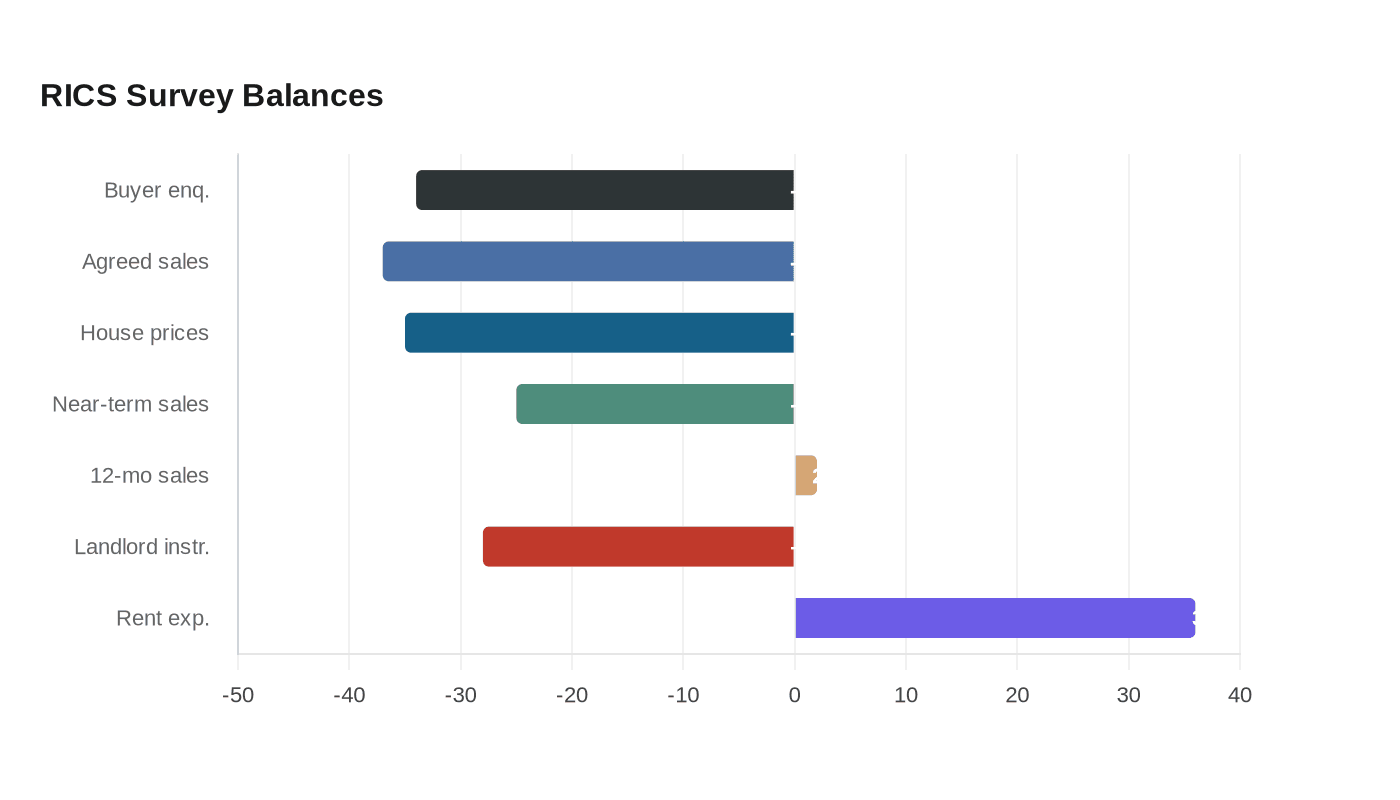
Buyer enquiries were flat at -34% while landlord instructions sank to -28%, leaving Britain stuck between weak sales and a tightening rental market.

Britain’s housing market stayed stuck in weak territory last month, with only a slight hint that buyer interest was starting to recover while landlords pulled back from letting properties. That combination is squeezing households from both sides: would-be buyers still face high financing costs, and renters are confronting a thinner supply of homes.
The Royal Institution of Chartered Surveyors’ monthly survey, a closely watched barometer used by the government, the Bank of England and the International Monetary Fund, showed new buyer enquiries unchanged at -34%. Agreed sales were steady at -37%, and house prices held at -35% for a second month, the broadest fall in prices since November 2023. Near-term sales expectations improved to -25%, while 12-month sales expectations turned positive at +2%, suggesting some confidence that the market may be bottoming out, even if the recovery remains fragile.

The rental side told a different story. Tenant demand rose, but landlord instructions fell to -28%, the weakest reading since December 2025, as owners offered fewer rental properties in May when new tenant protections were introduced. Rent expectations strengthened to +36%, the highest since May 2025, pointing to continued pressure on renters even as the sales market struggles for momentum. That split matters because landlords pulling back can make both renting and buying harder at the same time, tightening one part of the market while leaving another clogged with weak demand and low price growth.
The backdrop is monetary policy. The Bank of England held Bank Rate at 3.75% on 30 April and is due to meet again on 18 June. It said inflation had risen to 3.3% and expected it to rise further this year, keeping alive the possibility of more rate pressure if price growth proves sticky. That outlook helps explain why sentiment remains fragile: buyers are reluctant to commit, sellers are adjusting to weaker pricing, and landlords are more cautious about expanding supply.
Official data underline the same strain. The Office for National Statistics said average UK private rents rose 3.5% to £1,381 in the 12 months to April 2026, while average UK house prices were unchanged at £268,000 in the 12 months to March 2026. It also said annual house price inflation slowed after monthly prices fell 0.4% between February and March, ahead of April 2025 Stamp Duty Land Tax changes in England and Northern Ireland. Together, the numbers show a market that has stopped falling fast, but has not yet found a firm recovery.
This article was produced by Prism’s automated news system from verified source data, official records, and press releases, then run through automated quality and moderation checks before publishing. The system is built and supervised by the people who set the standards it runs under. Read our full AI policy.
Did this article answer your question?

