Britain’s labor market cools as firms turn to temp workers
Iran-war uncertainty pushed British employers toward temp staff in May as permanent hiring weakened and vacancies fell further.
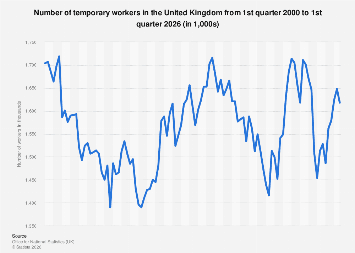
Britain’s jobs market lost more momentum in May as employers pulled back from permanent hiring and leaned harder on temporary staff, a sign that geopolitical shock is filtering directly into day-to-day business decisions. The shift came as the war in Iran and higher business costs made firms more cautious about taking on lasting payroll commitments.
The monthly Report on Jobs from KPMG and the Recruitment and Employment Confederation showed permanent staff appointments falling faster, while temp billings edged up slightly. The report, compiled by S&P Global from questionnaires sent to about 400 UK recruitment and employment consultancies, covers permanent and temporary recruitment, vacancies and earnings across the UK labor market.
The message from employers was clear: flexibility now matters more than expansion. The REC said improving momentum earlier in the year was tempered by the impact of the Gulf conflict and ongoing economic uncertainty, with firms increasingly turning to temporary workers to fill gaps. Vacancy declines also eased to their slowest rate in nearly a year, but the market still pointed downward, and candidate availability rose sharply, driven by redundancies and weaker demand for staff.
Pay pressures remained subdued across both permanent and temporary roles, reinforcing the view that the labor market is cooling rather than overheating. Sector patterns showed how uneven that cooling has become. Engineering was the only occupation to record growth in permanent demand, while retail saw the steepest declines across both permanent and temporary vacancies.

The slowdown was already visible in earlier data. The April 2026 KPMG and REC release said demand for staff fell for the thirtieth successive month, and permanent placements dropped at the quickest pace since January 2026. In January, by contrast, permanent placements had fallen at the slowest rate in 18 months, temp billings had risen marginally for the first time in three months and candidate availability had increased at the softest rate in a year. Since then, conditions have deteriorated quickly.
Official figures have pointed the same way. The Office for National Statistics said UK vacancies fell to 705,000 in February to April 2026, down 28,000, or 3.9%, from the previous three-month period. Together, the survey and the official numbers show a labor market that was already cooling and has now weakened further, with employers using temp hiring as a buffer against a shakier outlook for Britain’s economy.
This article was produced by Prism’s automated news system from verified source data, official records, and press releases, then run through automated quality and moderation checks before publishing. The system is built and supervised by the people who set the standards it runs under. Read our full AI policy.
Did this article answer your question?