Britainy Beshear on Derby style, hats, and politics at Churchill Downs
At Churchill Downs, hats and hemlines do more than fill the grandstand. Britainy Beshear’s Derby look turns fashion into a political signal, pairing Kentucky pride with public service.
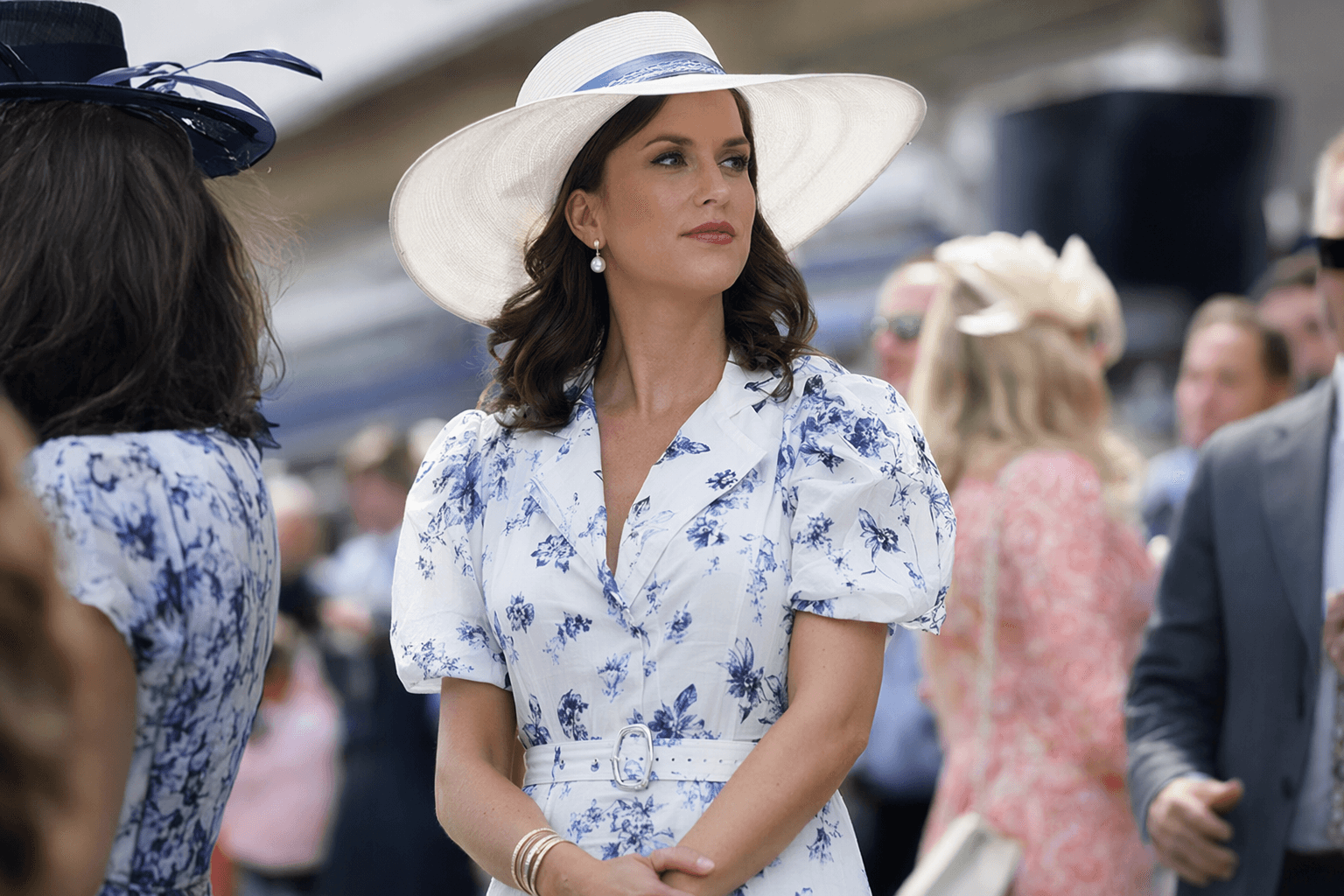
Derby style as political language
At the Kentucky Derby, clothing is never just clothing. Britainy Beshear understands that better than most, and her role as first lady of Kentucky has made her one of the state’s clearest examples of how image can operate as soft power in public life. Her Derby choices sit at the intersection of regional identity, class signaling, and political branding, giving Governor Andy Beshear’s administration a polished face on one of Kentucky’s most visible stages.
The 152nd Kentucky Derby, run on Saturday, May 2, 2026, at Churchill Downs in Louisville, was built for that kind of messaging. The race is a spectacle, but it is also a social gathering that pulls in politicians, celebrities, and business leaders who know the value of looking both aspirational and approachable. In that setting, the first lady’s style does not merely complement the event. It helps define how the Beshear family presents itself to Kentucky and to the nation.
Why Churchill Downs treats fashion like part of the race
Churchill Downs has spent years framing Derby dress as a core part of the event’s identity, not an accessory to it. The track’s official style guide continues to push hats, fascinators, bold colors, and the idea that race-day clothing should function as personal expression. The 2026 edition, released in March and billed as the third annual style guide, was themed “Art of the Kentucky Derby Fashion” and featured guest style editor Zanna Roberts Rassi.
That framing matters because the Derby is one of Kentucky’s most recognizable cultural exports. The first race was run on May 17, 1875, and the inaugural winner was Oliver Lewis, an African American jockey riding Aristides. The event began as a sporting contest, but over time it became a civic ritual, and Churchill Downs now describes itself as one of the world’s largest and oldest sports venues, with more than 1.7 million square feet under roof. Fashion helps make that scale feel intimate, giving attendees a way to participate in the mythology rather than simply observe it.
For the first lady, that makes wardrobe a form of public language. A well-placed hat or a carefully chosen color palette can signal confidence without seeming distant, tradition without seeming stiff. In Kentucky politics, where local familiarity still matters, that balance can be as useful as any policy rollout.
Britainy Beshear’s public role extends far beyond the grandstand
Britainy Beshear has served as first lady of Kentucky since 2019, and her public image has been shaped less by ceremony than by a steady stream of child-focused and family-centered work. The governor’s office says she led the Coverings for Kids effort during the pandemic, helping collect more than a million facial coverings for schools. She also organized toy drives after the December 2021 Western Kentucky tornadoes and the 2022 Eastern Kentucky floods.
Those relief efforts matter because they reinforce the image politics of Derby Week. More than 100,000 toys and $200,000 in gift cards were donated for flood recovery, according to the governor’s office, a scale that shows how the Beshear brand has been built on visible acts of care as much as on polished appearances. When Britainy Beshear steps into a public setting like Churchill Downs, she is not starting from zero. She arrives with a record that lets style and substance work together.
That combination is especially powerful in state politics. A first lady is not an elected official, but she can widen a governor’s reach by making him seem more rooted, more relatable, and more culturally fluent. At a place like Churchill Downs, where old money aesthetics and mass public enthusiasm coexist, that kind of presentation has real political value.
Derby Week as a networking machine
Kentucky politicians have long treated Derby Week as a visibility opportunity. Reporting from Kentucky Lantern has described the race as a chance for candidates and elected officials to network while sharing space with the celebrities and executives who descend on Louisville each spring. The point is not only to be seen. It is to be seen in the right setting, where power feels social rather than formal.
That is why fashion matters so much in the Derby ecosystem. A politician in a well-cut suit or a first lady in a standout hat can project ease, taste, and competence without saying a word. The visual shorthand helps soften partisan edges, particularly for a governor like Andy Beshear, whose national profile has grown well beyond Kentucky. Britainy Beshear’s public presentation supports that broader brand by making the administration look polished, family-centered, and culturally at home in one of the state’s signature traditions.
The result is a distinctly Kentucky form of political theater. It is not the hard-edged spectacle of a rally or a debate. It is a social performance built around hospitality, heritage, and the ability to look comfortable in elite spaces without seeming out of place.
Security messaging now shares the spotlight with style
In 2026, Derby Week also carried a more urgent message. Britainy Beshear chaired a new 15-member Human Trafficking Awareness Coalition created by executive order in March 2026, and she urged visitors to stay alert for warning signs as tens of thousands of fans converged on Louisville for the Oaks and Derby. WUKY reported that officials say large events like Derby Week can increase the dangers of human trafficking, which gives the first lady’s public role another dimension beyond image management.
That dual focus is important. The same visibility that makes Derby Week valuable for branding also makes it a place where public safety concerns can surface. By pairing fashion and awareness, Britainy Beshear uses one of Kentucky’s most glamorous events to direct attention toward a serious issue. The message is that style can attract notice, but it can also be used to point people toward vigilance and responsibility.
The National Human Trafficking Hotline is available 24/7 at 1-888-373-7888, a reminder that the pageantry of Derby season does not stand apart from the risks that can accompany huge crowds and high-traffic events.
What the Derby look says about Kentucky politics
At Churchill Downs, hats are never just hats. They are signals of belonging, aspiration, and attention to detail, and Britainy Beshear’s Derby presence shows how those signals can be folded into statecraft. The first lady’s work on children, disaster recovery, and trafficking awareness gives her public style a practical foundation, while the Derby’s own fashion culture gives her a stage where presentation carries political weight.
That is the deeper story of Derby style in Kentucky. It is not merely about dressing for the races. It is about translating regional identity into visual form, and using that image to project steadiness, reach, and relevance at a moment when the governor’s office is already operating on a national scale.
This article was produced by Prism’s automated news system from verified source data, official records, and press releases, then run through automated quality and moderation checks before publishing. The system is built and supervised by the people who set the standards it runs under. Read our full AI policy.
Did this article answer your question?

