British shop price inflation eases as Easter discounts cut food costs
Easter discounts pulled British shop prices up just 1.0% in April, but food still rose 3.1% and retailers warned cost pressures are far from gone.
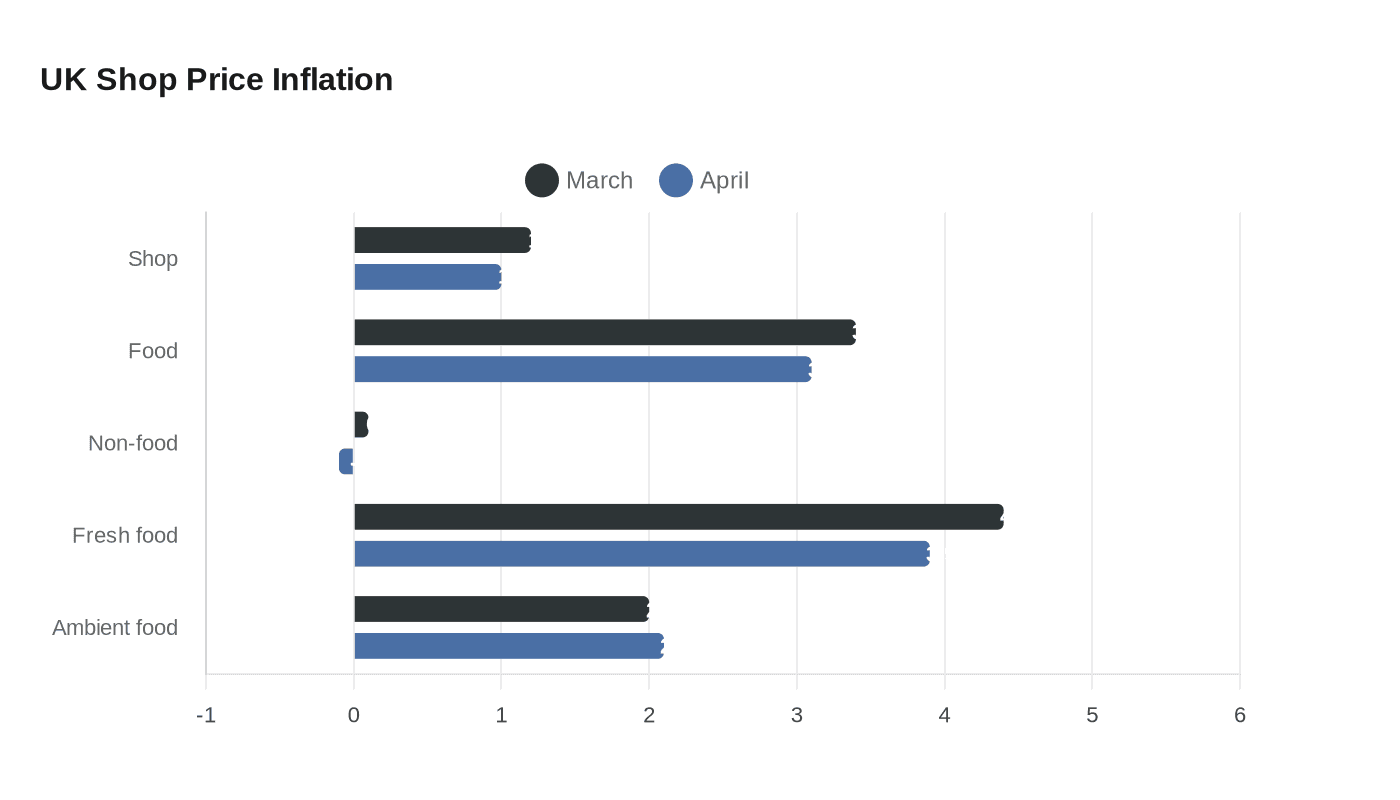
Easter promotions helped drag British shop price inflation down to 1.0% in April from 1.2% in March, offering households some short-term relief without proving that inflation pressures have genuinely faded. Food price inflation also eased, slipping to 3.1% from 3.4%, but the cut came from heavy markdowns rather than a broad-based improvement in costs.
The British Retail Consortium said its survey covered 1-7 April, putting the Easter weekend in the middle of the measurement period and helping explain the scale of the discounting. Non-food prices fell 0.1% year on year in April after a 0.1% rise in March, while fresh food inflation slowed to 3.9% from 4.4%. Ambient food inflation edged up to 2.1% from 2.0%, a sign that the easing was uneven across the shop floor.
Helen Dickinson, chief executive of the British Retail Consortium, said bigger discounts in clothing, furniture and DIY goods helped pull down shop price inflation. She said weaker consumer confidence was pushing retailers to compete harder on price to stimulate spring spending. That matters because a lower shop-price reading can make a trip to the supermarket or high street feel less punishing, but it does not remove the underlying squeeze on margins or supply chains.
Dickinson also warned that retailers were already facing an extra £10 billion a year in costs over the last two years from employment costs, packaging taxes and more. Mike Watkins of NielsenIQ said higher fuel prices were already feeding into food and non-food supply chains, and retailers would try to hold back price increases for as long as possible because fragile consumer confidence makes faster inflation a risk for sales.
The BRC measure covers a narrower range of goods than the official UK consumer inflation index, which rose 3.3% in March. The International Monetary Fund has forecast British inflation will reach 4% in 2026, a reminder that April’s softer shop prices may not carry through into the broader economy. The Bank of England’s Monetary Policy Committee was meeting this week and watching closely how much higher costs firms are passing on. Governor Andrew Bailey has said businesses are reporting a lack of pricing power, unlike in 2022 when inflation topped 11%.
The Office for National Statistics is due to publish April consumer price data on 20 May, which will show whether Easter discounts were a temporary lull or the start of a more durable slowdown.
This article was produced by Prism’s automated news system from verified source data, official records, and press releases, then run through automated quality and moderation checks before publishing. The system is built and supervised by the people who set the standards it runs under. Read our full AI policy.
Did this article answer your question?

%3Amax_bytes(150000)%3Astrip_icc()%2FCertificate-of-deposit-2301f2164ceb4e91b100cb92aa6f868a.jpg&w=1920&q=75)
