Briton held in Russian prison says UK has made no contact
Hayden Davies says he has had no contact with British authorities as he serves a 13-year sentence in Russian-occupied Donetsk. His case tests what London can still do for Britons pulled into Russia’s wartime courts.
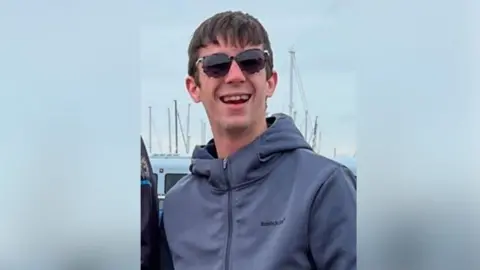
Hayden Davies says the British state has not been in touch since he was jailed in Russian-occupied Donetsk, turning his case into a hard test of consular reach in a war zone where normal diplomatic channels no longer function. In letters sent from prison to the BBC, the 30-year-old from Southampton said he has had no contact with British authorities.
Russian prosecutors said Davies was sentenced in December 2025 to 13 years in a maximum-security prison camp after being convicted of fighting as a paid mercenary for Ukraine. They said he arrived in western Ukraine in August 2024, signed a contract with Ukraine’s International Legion, underwent military training and was later captured in winter 2024 while carrying a U.S.-made assault rifle and ammunition. The sentence was handed down by a court in Russian-occupied Donetsk, on territory Moscow controls but Kyiv still claims as occupied Ukraine.
London has rejected Russia’s account. The UK government said Davies is not a mercenary and should be treated as a prisoner of war under the Geneva Conventions. It has also condemned Russia’s use of prisoners of war for political and propaganda purposes, a reminder that cases like Davies’s are fought as much in the information space as in courtrooms.
The stakes are broader than one Briton from Southampton. Davies has appeared in Russian media footage while in custody, raising questions over whether any statements were made under duress. His letters add to pressure on the British Foreign Office and the wider government to explain what protection can be offered when a citizen is seized by Russian forces in occupied Ukraine and placed beyond the reach of routine consular access.
Davies’s case also fits a wider Russian pattern. Another Briton, James Scott Rhys Anderson, was sentenced by a Russian court to 19 years in March 2025 after being convicted of mercenary and terrorism charges over fighting in the Kursk region. Together, the two cases show how foreign volunteers and ex-soldiers can become leverage in Moscow’s legal and political campaign once they are captured, prosecuted and held inside Russian-run facilities. For Britain, the question is no longer only how to contest the charges, but how much protection remains when a citizen falls into a system designed to deny it.
Know something we missed? Have a correction or additional information?
Submit a Tip