Broadcom revenue miss sparks chip stock selloff, drags Nasdaq lower
Broadcom's small revenue miss wiped out a sharp AI rally, sending chip stocks lower while the Dow surged as money rotated into banks and retail.
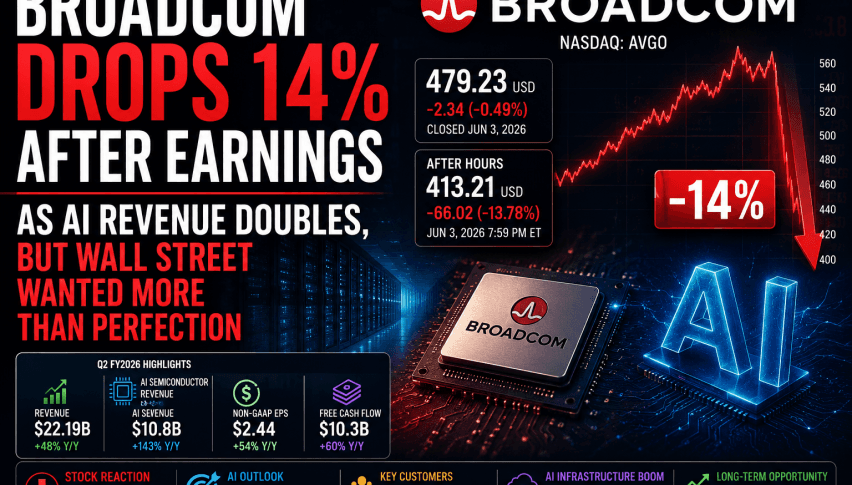
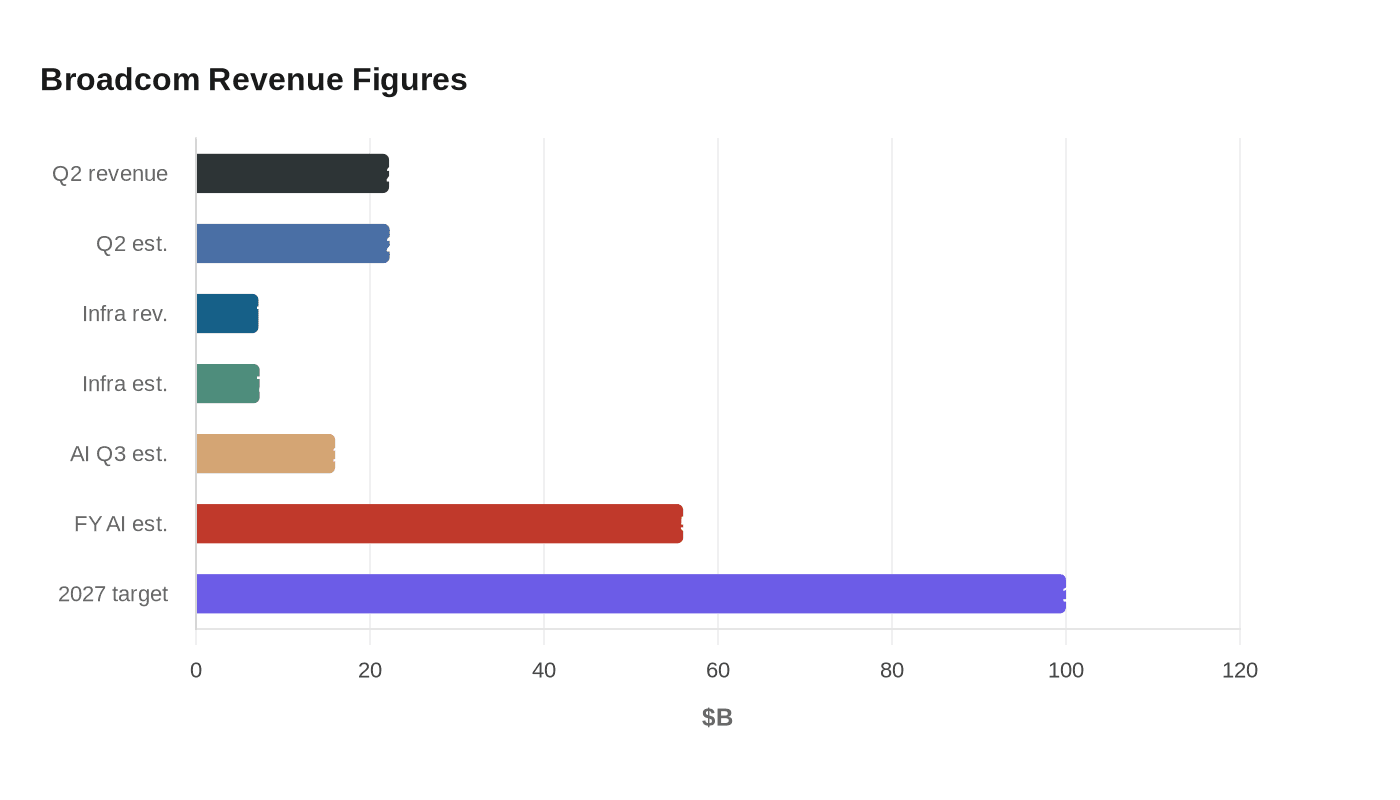
Broadcom’s latest quarter was strong by almost any normal measure, but Wall Street treated it like a warning shot. The chipmaker posted fiscal second-quarter revenue of $22.19 billion, up 48% from a year earlier, with adjusted earnings of $2.44 a share. Even so, that still came in just below the roughly $22.27 billion analysts expected, and the reaction was swift: Broadcom shares fell about 12% to 15% in after-hours and early trading.
The biggest concern was not the tiny revenue miss alone. Investors latched onto the fact that Broadcom left its long-standing $100 billion AI-chip sales target for fiscal 2027 unchanged, even after reporting that AI semiconductor revenue jumped 143% to $10.8 billion. Broadcom said it expects about $16 billion in AI semiconductor revenue in the current third quarter and $56 billion for the full fiscal year, figures that underscored the scale of its business while also raising the bar for future growth. Infrastructure software revenue, another closely watched line, came in at $7.18 billion, short of the $7.32 billion estimate.

That combination, strong growth but not enough upside versus already elevated expectations, hit the broader chip trade hard. Micron, Marvell and Arm were among the names that came under pressure as traders reassessed how much good news is already priced into the sector. Broadcom has become one of the market’s most important AI bellwethers, and its numbers are now being used as a read-through for spending on custom AI chips and networking gear by large cloud customers. When Broadcom does not raise the outlook enough, investors are quick to infer that the pace of AI capital spending may be normalizing.

The market response also suggested a rotation, not just a one-day stumble. The Dow jumped about 800 to 865 points while the Nasdaq lagged, and small caps outperformed as money moved into banks, retail and other non-tech names. The split performance pointed to a market still willing to buy growth, but less willing to pay endlessly higher multiples for a handful of AI-linked semiconductor leaders. After a long run in chip stocks, Broadcom’s miss looked less like an isolated earnings slip and more like a test of whether tech valuations have outrun the earnings reality underneath them.
This article was produced by Prism’s automated news system from verified source data, official records, and press releases, then run through automated quality and moderation checks before publishing. The system is built and supervised by the people who set the standards it runs under. Read our full AI policy.
Know something we missed? Have a correction or additional information?
Submit a Tip
%3Amax_bytes(150000)%3Astrip_icc()%2FGettyImages-2203071815-df2e4af189ba427296df30334cce7d7b.jpg&w=1920&q=75)