Burnham emerges as Starmer challenger as Labour turmoil deepens
Burnham’s path to a Labour challenge widened as a WHO Ebola alert pushed public health onto the front pages, revealing a week split between intrigue and alarm.
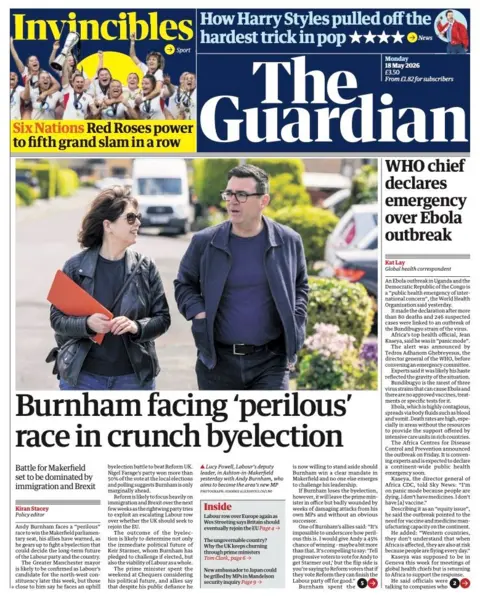
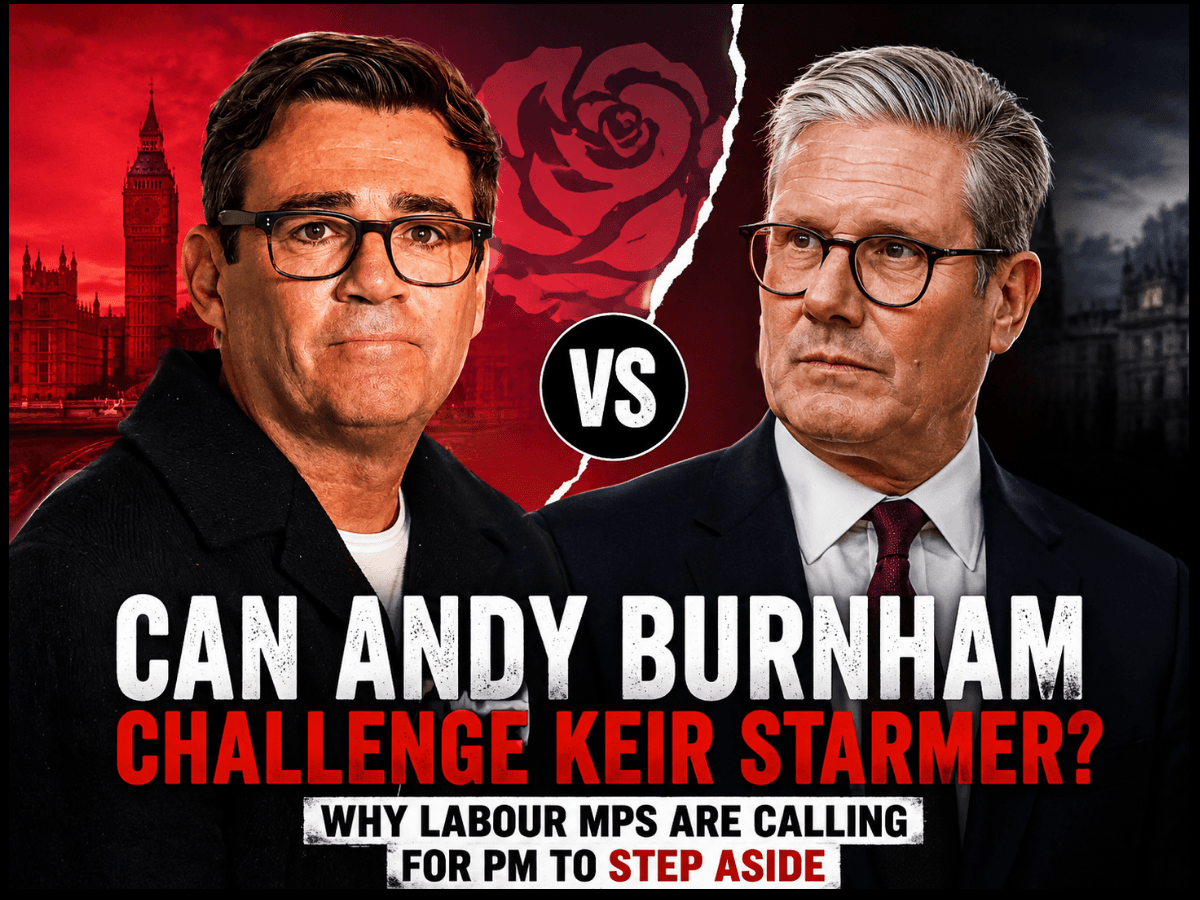
Andy Burnham has moved to the centre of Labour’s succession talk as pressure builds around Sir Keir Starmer and the party’s internal unrest deepens. The Greater Manchester mayor is now being cast as the leading potential challenger, a shift sharpened by speculation that he could return to Westminster and turn mayoral authority into a bid for the top job.
The opening created by Josh Simons’ decision to quit the House of Commons matters because Burnham cannot become prime minister without a seat in Parliament. Simons represented Makerfield, the constituency Burnham has been linked with, and local results in Ashton-in-Makerfield South and Bryn with Ashton-in-Makerfield North showed Reform UK gains alongside Labour losses, underlining the pressure in that part of Greater Manchester. Even with a Commons route, Burnham would still face a difficult constitutional and political climb.
At the same time, the week’s front pages have carried a different warning entirely. The World Health Organization declared the Ebola outbreak in the Democratic Republic of the Congo and Uganda a public health emergency of international concern on 16 May 2026, after reporting eight laboratory-confirmed cases, 246 suspected cases and 80 suspected deaths in Ituri Province. The affected areas included Bunia, Rwampara and Mongbwalu, and WHO Africa said it was rapidly scaling up support to the Congolese government after confirmation of Ebola Bundibugyo.
The numbers carry their own history. Bundibugyo was first identified in 2007 in western Uganda, where 131 cases and 42 deaths were recorded. WHO Africa said there is no approved specific vaccine or treatment for the strain. Uganda had only recently declared the end of its previous Ebola outbreak on 26 April 2025, after 14 cases and four deaths, a reminder that the region’s containment gains remain fragile even as surveillance, screening and contingency planning are intensified.
That split screen, leadership intrigue in London and an Ebola alert in central Africa, shows what editors think will define the week. One set of headlines treats Labour turmoil and Burnham’s ambition as the immediate political drama; another treats the WHO warning as the more urgent test of state capacity and international response. Together they point to a national mood shaped by instability, mistrust and a sharp appetite for news that looks like consequence, not noise.
This article was produced by Prism’s automated news system from verified source data, official records, and press releases, then run through automated quality and moderation checks before publishing. The system is built and supervised by the people who set the standards it runs under. Read our full AI policy.
Did this article answer your question?

