Burnham must prove he can turn popularity into a governing plan
Burnham is back in Westminster after Makerfield, but Labour’s rules and his Manchester record will decide whether his popularity becomes a governing case.
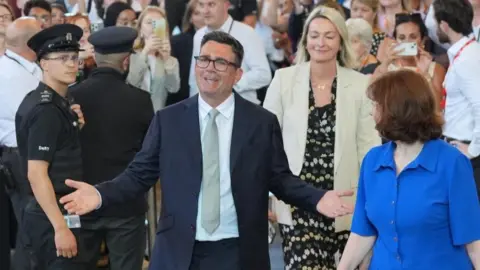
Andy Burnham’s return to Westminster has revived a familiar Labour question: can a politician with a strong personal brand and a large northern base turn that appeal into a national governing plan? After winning the Makerfield by-election on 18 June 2026 and taking the Labour seat, Burnham has moved from regional power to the centre of a leadership argument now sharpened by Keir Starmer’s resignation as Labour leader and UK prime minister on 22 June 2026.
The contest ahead is not a matter of mood alone. Labour leadership nominations are due to open on 9 July 2026, and a new leader is expected by the end of the summer parliamentary recess. Any challenger must secure the backing of 81 MPs, or 20 per cent of the parliamentary party, to enter the race. That threshold matters because it forces Burnham’s supporters to show more than nostalgia for a previous generation of Labour politics. It demands a parliamentary coalition with enough discipline to survive contact with government.

Burnham’s strongest argument is his record in Greater Manchester. He was first elected mayor on 4 May 2017, then re-elected in 2021 and again in 2024 with 420,749 votes, 63.4 per cent of the total, on a turnout of 32.05 per cent. The office he held covers about 2.8 million people across ten boroughs, a scale that gives him executive experience far beyond the symbolism of his profile. It also gives Labour a live test case: whether a mayoral style built on visible intervention, local identity and political reach can be translated into a national programme without the looseness that often comes with popularity.
That is where the harder questions begin. Burnham served as MP for Leigh from 2001 to 2017 and was Secretary of State for Health from 2009 to 2010 under Gordon Brown, so he is no outsider to the machinery of power. But Makerfield’s by-election win does not answer the central issue facing Labour: what does Burnham do differently at national level, on spending, public services, transport, housing and party discipline, from the politics that won him a mandate in Greater Manchester?

Inside Labour, his comeback has already intensified debate about leadership, direction and how a candidate with strong northern support would govern beyond the city-region. Burnham’s next task is not to bask in the mythology of inevitability. It is to show, in hard policy terms, that his popularity can be converted into a credible plan for power.
This article was produced by Prism’s automated news system from verified source data, official records, and press releases, then run through automated quality and moderation checks before publishing. The system is built and supervised by the people who set the standards it runs under. Read our full AI policy.
Know something we missed? Have a correction or additional information?
Submit a Tip