By-the-wind sailors wash up on Welsh beaches again
Bright blue by-the-wind sailors have turned up at Anglesey, Gwynedd and Tenby, reviving memories of million-strong wash-ups at Pendine and Cornwall.
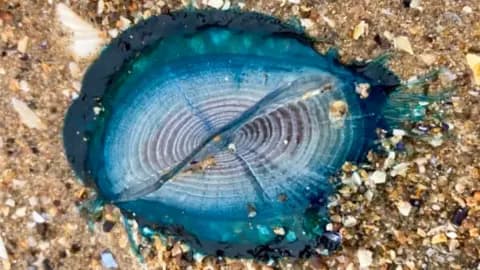
Bright blue, jellyfish-like by-the-wind sailors have been spotted on beaches at Anglesey, Gwynedd and Tenby, bringing a familiar but still striking coastal spectacle back to Welsh shores. The creatures, known scientifically as Velella velella, are small, short-lived drifters that can turn long stretches of sand into blue tide-line carpets when winds and currents drive them ashore.
The animals are commonly called by-the-wind sailors and grow to about 10cm, or 4in, long. Earlier Welsh strandings show how quickly they can appear in huge numbers: BBC News reported in 2006 that millions were blown ashore along seven miles of sand at Pendine in Carmarthenshire. Three years later, thousands were found near Penzance in Cornwall, where bright blue specimens were identified by Newquay’s Blue Reef Aquarium. BBC News also reported that the creatures are only thought to live for about a month.

Those earlier wash-ups have given scientists a useful clue about the bigger climate story. The 2009 Cornwall stranding was thought to coincide with warming coastal waters, suggesting that changes in sea temperature may help explain when and where the creatures gather in large numbers, or at least make such events easier to notice along busy shorelines. The current sightings fit that pattern of recurring seasonal strandings rather than a one-off anomaly.
Wales’ beaches give these events added visibility. Many hold Blue Flag, Seaside or Green Coast awards, and the coast is a major visitor draw, so a sudden arrival of thousands of blue marine creatures is likely to catch the eye of beach managers, conservation bodies and holidaymakers alike. On popular stretches such as Tenby, even an ordinary tide-line inspection can become a public moment when the sea delivers something unexpected.
The RNLI has already pushed its own summer safety message to Welsh beaches, with lifeguards returning to selected sites in May 2026 ahead of the May half-term period. The charity says the safest place to swim is between the red and yellow flags on a lifeguarded beach, even when the sea looks inviting in warm weather. That advice matters on a coast where the wildlife wash-ups may be temporary, but the surf, currents and cold water remain part of the landscape.
This article was produced by Prism’s automated news system from verified source data, official records, and press releases, then run through automated quality and moderation checks before publishing. The system is built and supervised by the people who set the standards it runs under. Read our full AI policy.
Did this article answer your question?