C/2025 R3 PANSTARRS Comet Set for Telescope Viewing in Southern Hemisphere
A rare telescopic comet brightened near the Sun, then slipped into a brief Southern Hemisphere viewing window around its late-April Earth flyby.
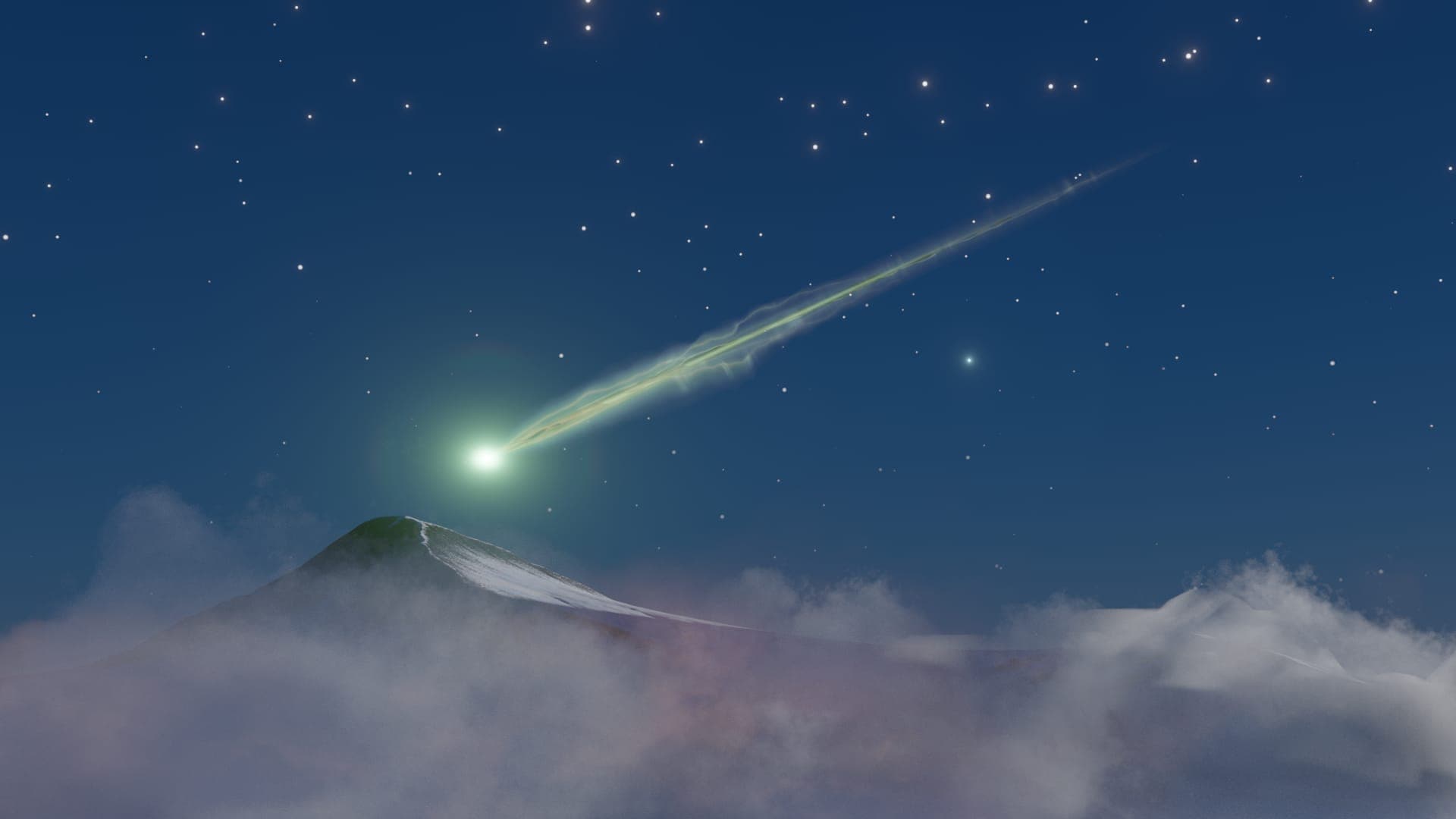
C/2025 R3 PANSTARRS gave skywatchers a reminder that not every comet becomes a spectacle for the naked eye. NASA describes comets as icy leftovers from the early solar system that brighten as they near the Sun, and this one offered a compact viewing window for telescope users in New Zealand, Australia and South Africa rather than a broad global show.
The International Astronomical Union Minor Planet Center lists the comet’s first reported observation from Pan-STARRS 2 on Haleakala on 2025-09-08. It then reached perihelion, its closest point to the Sun, on 2026-04-19.89500 at a distance of 0.4986070 AU. In-The-Sky.org placed its closest approach to Earth on 2026-04-26, while NASA’s April 2026 skywatching guide said the best chance to see Comet C/2025 R3 was around April 17.

That timing made the object noteworthy to astronomers even if it was never likely to dominate the night sky. A comet that brightens near perihelion and then passes within about 0.49 AU of Earth only days later creates a short, highly specific observing window. NASA said Comet C/2025 R3 may be visible with binoculars or a telescope, which put it firmly in the category of an observer’s target rather than a casual glance from the backyard.
The practical reality was also less dramatic than the social-media language around comet season sometimes suggested. ABC News reported on 2026-04-03 that C/2025 R3 PANSTARRS would be visible from April 30 onwards in Australia and that it would be dimmer than the other comet mentioned in the same coverage. Astronomers cautioned that both comets were unlikely to be visible at once, which meant the stronger headline did not automatically translate into the brighter view.

That is why C/2025 R3 PANSTARRS mattered most as a Southern Hemisphere event. The main viewing geography named for the comet ran through New Zealand, Australia and South Africa, making the best observing prospects a regional one. For anyone with binoculars or a telescope, the comet offered a brief chance to follow a freshly discovered solar-system relic as it moved through perihelion, crossed near Earth and faded back into deep space.
This article was produced by Prism’s automated news system from verified source data, official records, and press releases, then run through automated quality and moderation checks before publishing. The system is built and supervised by the people who set the standards it runs under. Read our full AI policy.
Did this article answer your question?