California governor candidates clash in first debate of open race
Six candidates turned California’s open governor’s race into a fight over housing, insurance and taxes after Eric Swalwell’s exit reshaped the field.
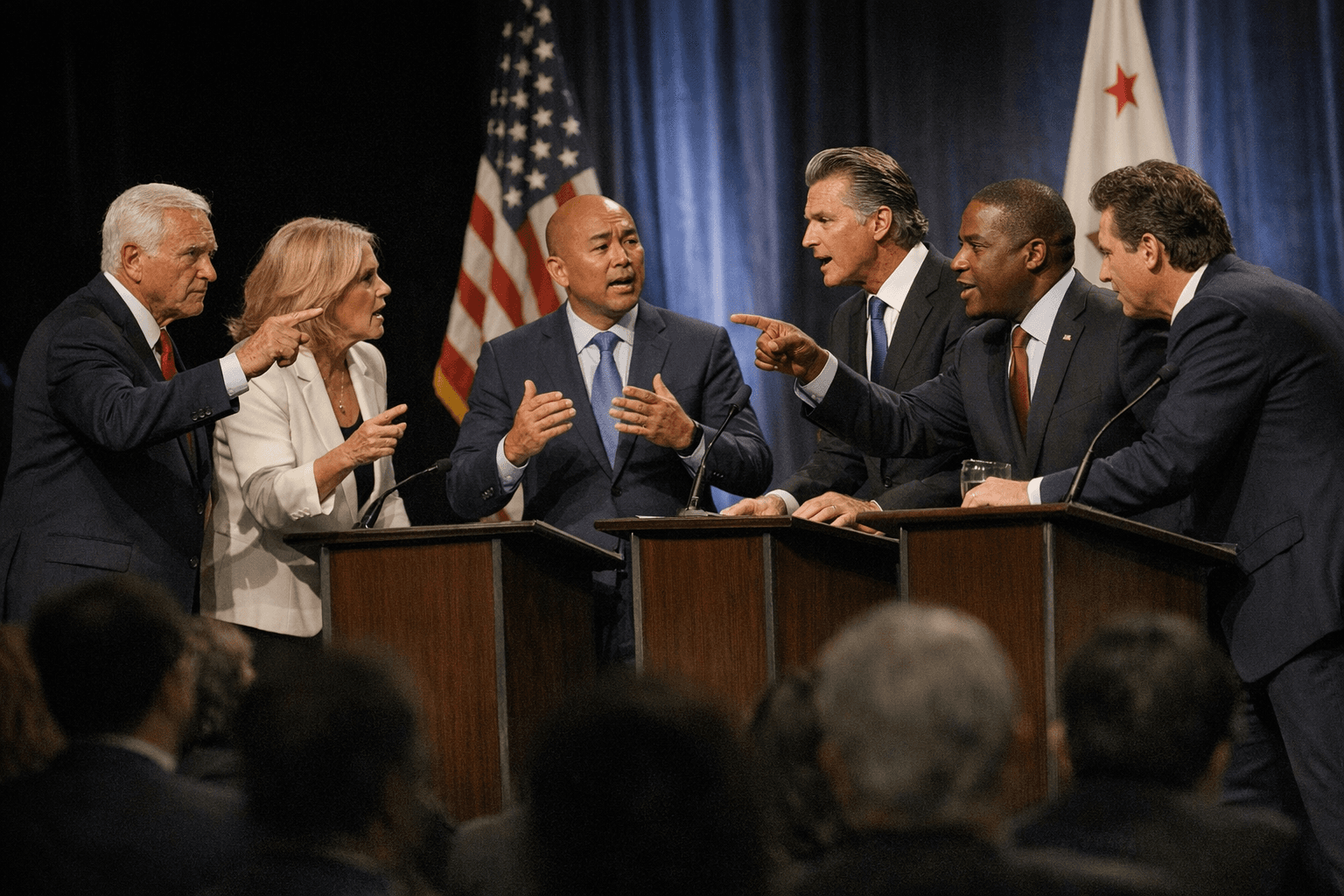
The first debate in California’s open governor’s race became a test of who could talk governance, not just grievance, in a state where housing, wildfire insurance and budget pressure are colliding. Six candidates took the stage in San Francisco on Wednesday night as California voters watched the race for the nation’s most populous state begin to take shape.
The contest is wide open because Gov. Gavin Newsom is term-limited and cannot run again. The filing deadline passed March 6, Secretary of State Shirley N. Weber certified the candidate list March 26, and the June 2 primary will winnow a field of 10 candidates, eight Democrats and two Republicans, before the November 3 general election. Even with those dates fixed, the race remained unsettled: an Emerson College Polling and Inside California Politics survey released March 11 found 24.5% of voters were still undecided.
The debate came two weeks after Eric Swalwell suspended his campaign and resigned from Congress after allegations of sexual assault and misconduct, a shake-up that narrowed the field and intensified the scramble for a breakout moment. On the Nexstar stage, the clearest lines of argument split along party lines. Republicans Steve Hilton and Chad Bianco blasted Democratic rule and taxes, while Democrats aimed much of their fire at Donald Trump and at one another. Hilton warned, “We cannot keep going in this direction with Democrats constantly going for their insatiable appetite for more and more taxes for their bottomless money pit.” Bianco added, “They’re raising your taxes, they’re spending more and more of your money, because they refuse to stop the spending.”

That exchange captured the night’s larger divide. The hardest operational problems facing the next governor are concrete and cumulative: the shortage of housing, the pressure on the state budget, crime concerns, insurers retreating from wildfire-prone markets, and the cost of climate resilience in a state already absorbing disaster losses. Those are management problems as much as ideological ones, and the debate rewarded candidates who tried to speak in those terms. Katie Porter pressed Tom Steyer over his wealth and past investments and said, “I have never taken corporate money,” while also leaning on her record as a consumer advocate and single mom. Steyer, Xavier Becerra and San Jose Mayor Matt Mahan all tried to claim the mantle of competence, but the sharpest exchanges centered on who could be trusted to govern, not who could simply outshout the rest.
The race now moves toward a primary in which top-two rules could send any pair of candidates into November, regardless of party. With ballots going out May 4, California’s governing argument is no longer theoretical; it is the state’s next emergency plan.
Know something we missed? Have a correction or additional information?
Submit a Tip