Golf courses become flashpoint in Britain’s housing and green belt debate
Golf courses are being cast as easy housing sites, but the numbers show Britain’s real shortage is less land than a planning system that blocks supply.
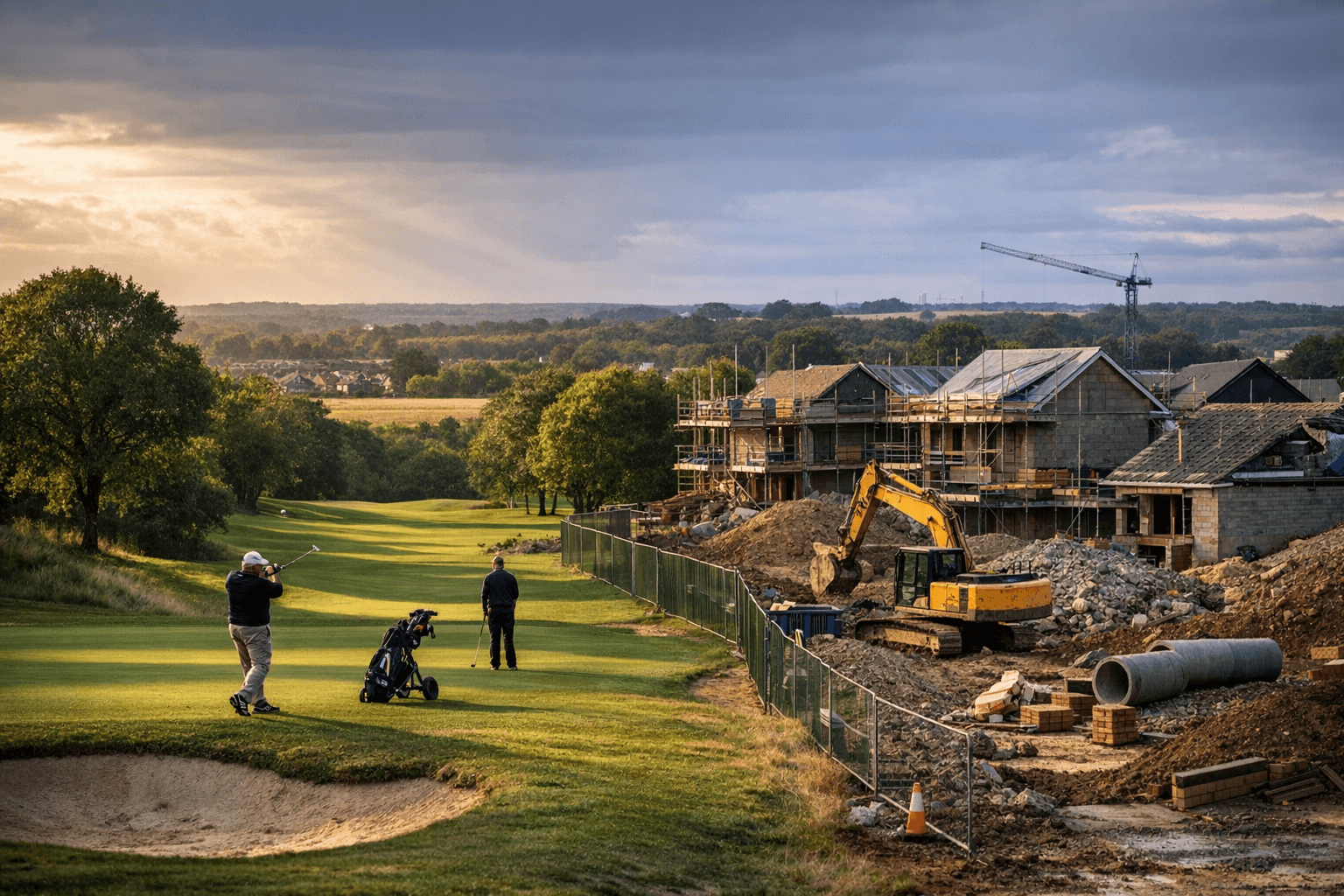
Britain’s housing crisis is not short of land on paper. It is short of political permission. That is why golf courses, with their broad fairways and low-density footprints, have become such a potent symbol in the argument over where homes should go and what the green belt is really for.
Why golf courses attract the argument
Golf courses sit in an awkward place in the housing debate. They often look underused, sit near strong housing markets, and occupy large plots that are already semi-private rather than openly wild countryside. That makes them easier to present as practical building sites than farmland, woodland or the last stretch of open land at the edge of a town.
But the symbolism can obscure the scale of the problem. A golf course may offer one substantial site; it does not answer Britain’s broader shortage, nor does it settle the deeper dispute over whether the planning system is rationing homes more tightly than the country can afford. The real question is not simply whether a golf course can hold houses, but whether these sites are being used as a politically convenient stand-in for a much harder reform.
What the green belt numbers show
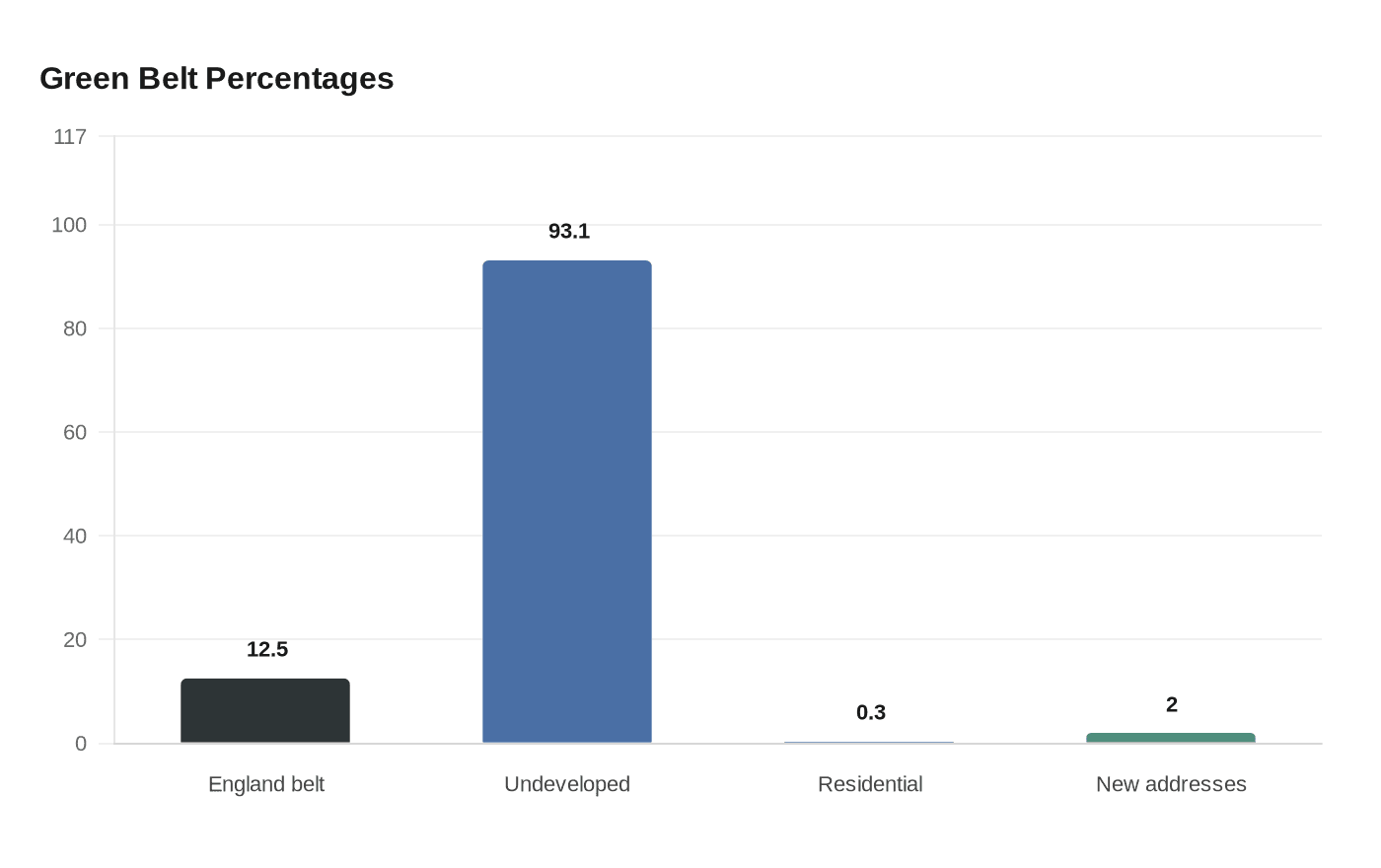
The green belt was introduced in 1955 to stop urban sprawl, and it remains a major planning constraint around English cities. As of 31 March 2025, England’s green belt covered about 12.5% of the country, or 1,633,220 hectares. House of Commons Library figures show that 93.1% of the green belt was undeveloped in 2022, while residential buildings accounted for just 0.3% of green belt land.
Those numbers matter because they undercut two different political claims at once. On one hand, they show that the green belt is still overwhelmingly open land, not a landscape already swallowed by housing. On the other hand, they show how little of that land is actually occupied by homes, which is why campaigners for reform argue that selective release could add supply without destroying the whole concept of protected edges.
Even so, the flow of new development into the green belt remains tiny. Government statistics say only 2% of new residential addresses created in 2021-22 were on land designated as green belt. That figure helps explain why the debate keeps returning to a small number of visible sites, where the political drama is concentrated even if the housing yield is modest.
Broke Hill shows both the promise and the limits
Broke Hill golf course near Orpington, in Greater London, has become one of the clearest examples. The 65-hectare site was proposed for around 800 dwellings, along with sports clubs, a retirement community and a primary school. By simple arithmetic, that works out at a little over 12 homes per hectare before counting the other uses, a density that is far from urban high-rise development and still low enough to look expansive in planning terms.
The proposal was rejected on appeal in 2022 after officials said it would harm the green belt. The Financial Times also reported that the course had closed more than half a decade earlier and had since become habitat for deer, rabbits and wood pigeons. That detail matters because it captures the central tension in the argument: a site may be visually green and ecologically alive even if it is not delivering much housing or public access.
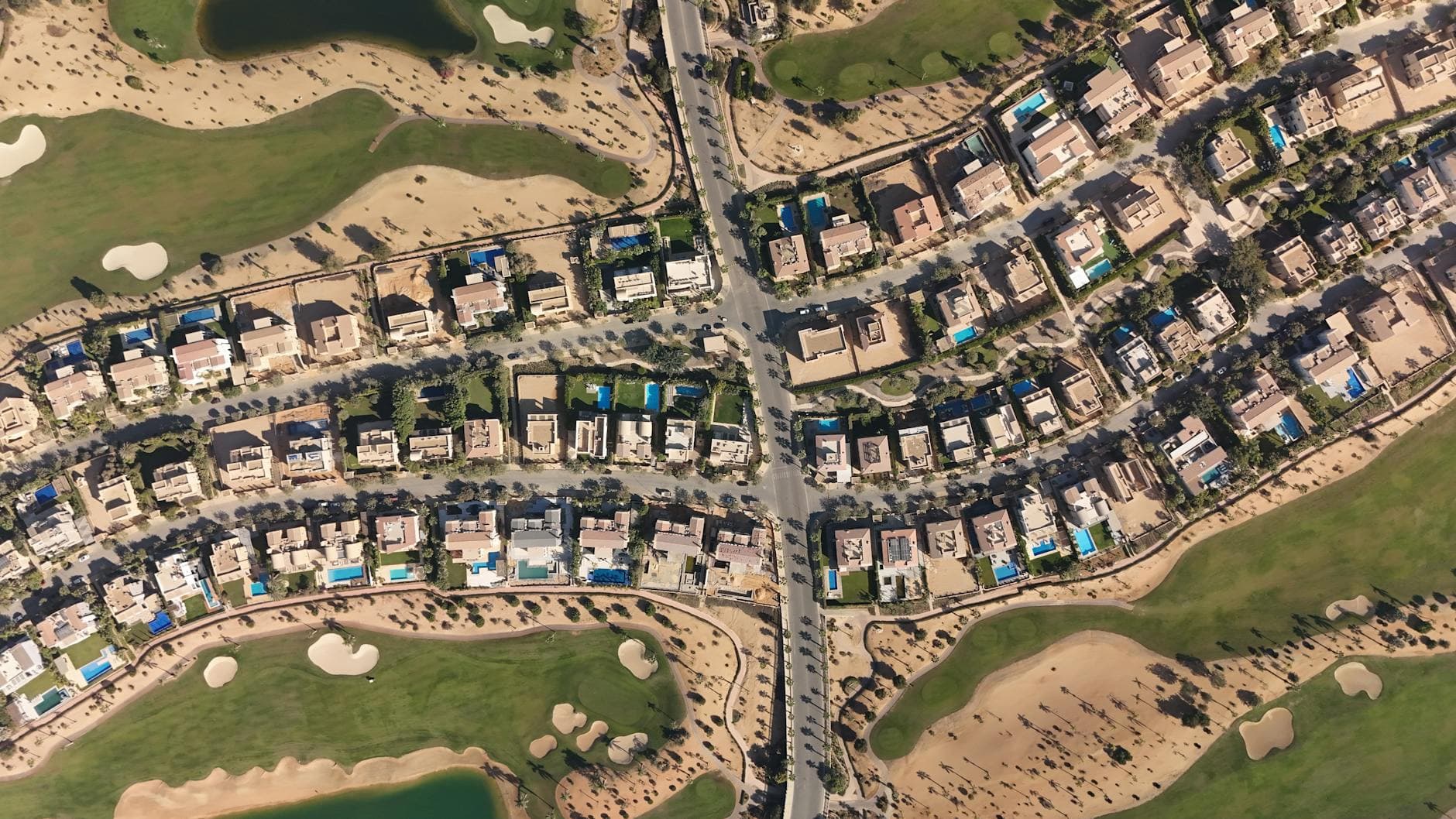
Broke Hill is therefore not just a local planning dispute. It is a case study in how developers, councils and ministers can see the same land differently. To some, it is an idle tract close to London that could absorb hundreds of homes, a school and community facilities. To others, it is exactly the sort of precedent that would make the green belt less of a boundary and more of a negotiable label.
The real bottleneck is still the planning system
The larger housing failure goes far beyond golf courses. Britain’s restrictive, unpredictable and politically permeated planning system has long hindered housebuilding, which peaked in the 1960s and never fully recovered. The Financial Times noted that if the UK had built homes at the average western European pace between 1955 and 2015, it would have added 4.3 million more homes to its stock.
That comparison is revealing because it dwarfs what any single golf-course scheme can deliver. Broke Hill’s 800 homes would amount to less than 0.02% of that 4.3 million-home gap. In other words, golf courses may be useful sites in some places, but they cannot by themselves close the structural deficit created by decades of constrained supply.
The institutional rules also remain formidable. Green belt boundaries can be changed through local plans, but only in “exceptional circumstances,” and planning guidance generally treats development on green belt land as “inappropriate” unless “very special circumstances” are shown. That means the debate is not really about whether a site is physically buildable. It is about whether the political system is willing to override its own protective logic when housing need becomes acute.
Why this has become a political flashpoint
A 2023 parliamentary debate on the Green Belt (Protection) Bill highlighted just how suspicious these transactions can look. It referred to a golf club being told it would no longer be available after the following April, apparently after a company bought it and was thought to be positioning the land for redevelopment later. That kind of case feeds a powerful narrative: that golf courses can be acquired not for sport, but as a slow-moving bet on planning change.
That is why the issue has become so combustible. Supporters of reform see underused land near major cities and ask why homes are blocked where infrastructure and demand already exist. Opponents see a soft target, one that is easier to sacrifice than genuinely protected countryside, and they warn that once the green belt is opened, the loss is hard to reverse.
The answer is unlikely to be all golf courses or no golf courses. The more honest test is whether ministers and local authorities can distinguish between symbolic land and strategically useful land, then pair any release with schools, transport, utilities and clear planning rules. Without that discipline, Britain will keep fighting over fairways while the deeper housing shortage remains untouched.
This article was produced by Prism’s automated news system from verified source data, official records, and press releases, then run through automated quality and moderation checks before publishing. The system is built and supervised by the people who set the standards it runs under. Read our full AI policy.
Did this article answer your question?

