California lawsuit accuses Toyota foundation of stealing farm tech
A Zimbabwean social enterprise says Toyota’s philanthropic arm took its rural EV system and field data after a pilot in Wedza. The case could shape how development tech is protected.

A Zimbabwean social enterprise has accused Toyota’s philanthropic arm of taking technology built to move rural farmers and women across off-road terrain, setting up a case that could test how intellectual property is protected in development partnerships. Mobility for Africa says the dispute centers on a small electric tricycle system, bespoke batteries and the off-grid charging and field data behind a rural transport model it spent years building in Zimbabwe.
The complaint, filed May 12 in the U.S. District Court for the Central District of California, Western Division, is Mobility for Africa v. Toyota Mobility Foundation, et al., case number 2:26-cv-05105. Public docket summaries identify the claims under the federal Defend Trade Secrets Act. The suit names Toyota Mobility Foundation, Olujimi Akindele, Thibaut Mallet de Chauny and EXA Innovation Studio Co., Ltd., also listed as EIS, among the defendants. Mobility for Africa’s lawyers say the foundation and outside consultants misappropriated trade secrets and other proprietary information tied to a rural electric-vehicle system and related field data.
At the heart of the dispute is a development tool, not a conventional car program. Mobility for Africa says it provides last-mile green mobility services to rural communities using custom-built electric tricycles and bespoke batteries, and that its vehicles are designed for a harsh, off-road environment. The company is registered in Mauritius, operates in Zimbabwe and plans to expand to Zambia and the wider region. Its website says it is building low-cost, quality, renewably powered electric tricycles and longer-term off-grid, community-based renewable power solutions.
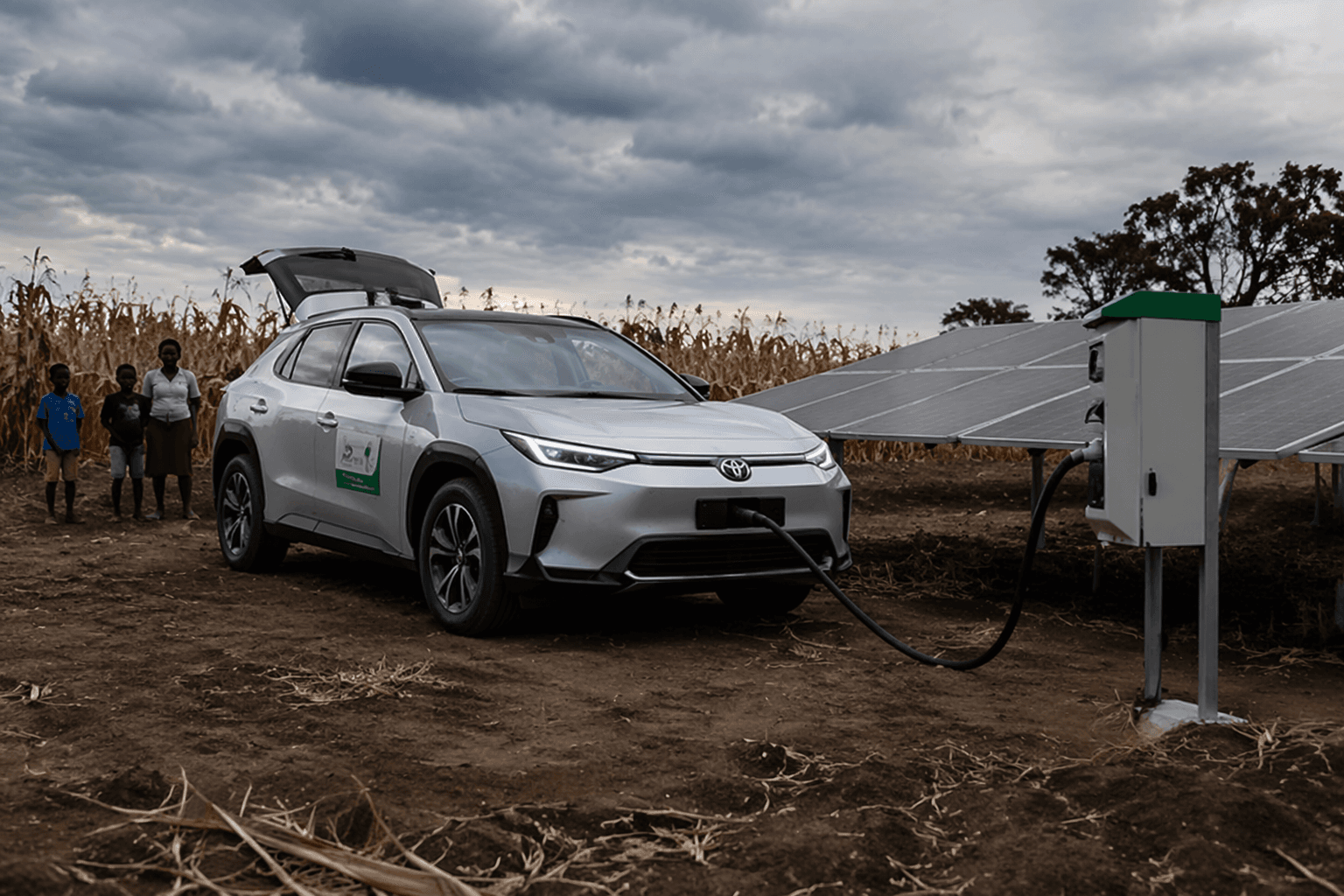
The case also points to a prior working relationship between the two sides. In a 2023 post, Mobility for Africa said Toyota Mobility Foundation’s African director, Hitoshi Bizen, visited its Zimbabwe operations and saw demonstrations of how the Hamba vehicle could serve clinics, carry produce and milk, and improve access to markets for rural women and farmers. The post said Toyota Mobility Foundation had been one of its first partners to support an initial pilot in Wedza.
The broader question now is whether a global automaker’s charitable arm can use a development partnership to gain access to technology that was built for poor, remote communities and then redeploy that knowledge elsewhere. The lawsuit says the alleged theft involved proprietary rural EV technology and operational data after Mobility for Africa had provided a proof of concept, and it seeks financial remedies and limits on future use of the disputed intellectual property. That could make the case a precedent for how trade secrets are handled when philanthropy, pilot projects and commercial mobility ambitions overlap.
This article was produced by Prism’s automated news system from verified source data, official records, and press releases, then run through automated quality and moderation checks before publishing. The system is built and supervised by the people who set the standards it runs under. Read our full AI policy.
Know something we missed? Have a correction or additional information?
Submit a Tip