California-Led States Seek $10.3 Million in Fees After Blocking Kroger-Albertsons Merger
States put the tab for blocking a $25 billion grocery megamerger on Kroger, seeking $10.3 million in legal fees while Kroger spent a combined $1.5 billion defending the deal.
A coalition of nine states and the District of Columbia, led by California, filed a petition seeking $10.3 million in legal fees and costs from Kroger, putting a precise dollar figure on what it cost taxpayers to stop what would have been the largest supermarket merger in American history.
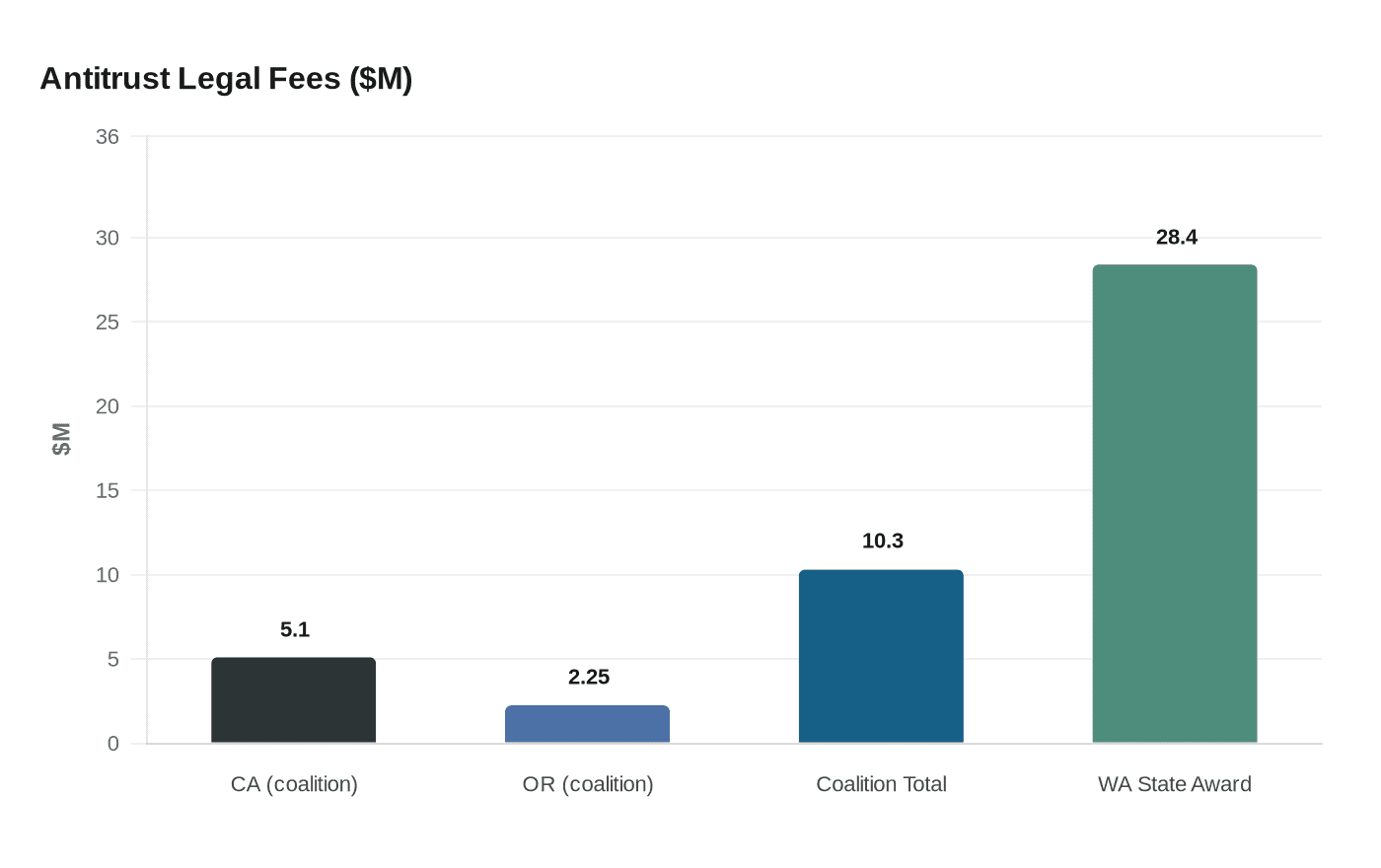
The fee petition, filed in federal court in Portland, Oregon, arrives roughly 16 months after U.S. District Judge Adrienne Nelson blocked Kroger's $25 billion proposed acquisition of Albertsons. Nelson has already ruled the states are entitled to recover their costs; what remains is for her to set the final amount. California claims the largest share at $5.1 million, with Oregon seeking approximately $2.25 million on its own. The remaining coalition includes Arizona, Illinois, Maryland, Nevada, New Mexico, and Wyoming.
The arithmetic makes for a stark contrast with what the companies spent on the losing side. Kroger and Albertsons reported a combined $1.5 billion in merger-related costs, an unknown portion of which went toward retaining more than 60 defense attorneys at eight law firms, some billing at rates exceeding $1,625 per hour. The states' $10.3 million request amounts to less than one percent of that figure.
Washington state, which mounted a separate antitrust challenge in state court and prevailed before King County Superior Court Judge Marshall Ferguson, offers the clearest precedent for what fee recovery can look like at scale: the state was ultimately awarded $28.4 million in fees and expenses. The Portland coalition's ask is considerably more modest, partly because the states coordinated legal work with the Federal Trade Commission and divided responsibilities to avoid duplicating effort.
The consumer harm argument that drove the original litigation was straightforward: a combined Kroger-Albertsons entity would have erased competition in hundreds of local grocery markets, leaving shoppers with fewer choices, higher prices, and grocery workers with diminished wage leverage. Those claims proved persuasive enough to win a preliminary injunction in 2024. Albertsons abandoned the deal the day after Nelson's ruling and subsequently sued Kroger separately over the failed transaction.
For California, the fee petition fits a broader pattern of state-level antitrust activism. The state is currently leading a bipartisan coalition to challenge Nexstar's $3.54 billion acquisition of television broadcaster Tegna, a case it is pursuing without federal backing after the Department of Justice declined to intervene. Recovering the Kroger litigation costs matters practically: antitrust cases of this complexity consume staff time, outside counsel fees, and expert witness resources that states must justify to legislatures and taxpayers.
The practical signal to companies weighing major acquisitions is clear. A ruling awarding the full $10.3 million would confirm that defeating a state-led antitrust challenge does not end the financial exposure: losing defendants also absorb the winners' litigation tab. That prospect is unlikely to deter all megadeals, but it adds a line item to merger risk calculations that corporate planners will find harder to dismiss.
Know something we missed? Have a correction or additional information?
Submit a Tip