California woman has fostered baby squirrels for seven years
A retired Lafayette teaching assistant spends hours a day bottle-feeding baby squirrels, part of a statewide rescue network strained each spring.
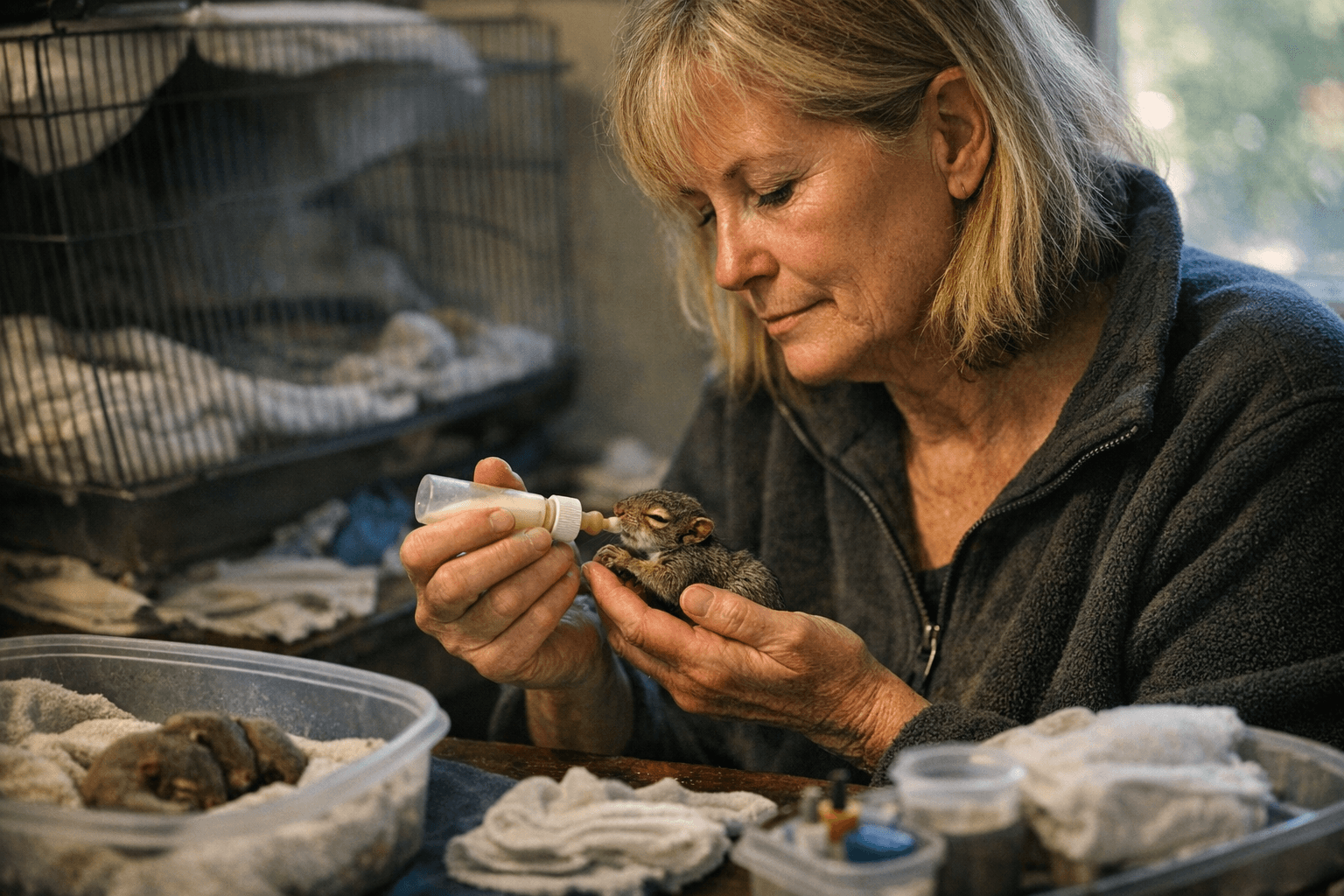
Angel Barba has spent the last seven years doing the kind of work most people never see: bottle-feeding baby squirrels through the Bay Area’s busiest rescue season, one tiny animal at a time. The retired California teaching assistant in Lafayette has cared for as many as six babies at once, including squirrels barely three weeks old, each one dependent on a schedule that can stretch to 12 feedings a day.
The labor is relentless. Barba said a single feeding can take more than an hour, and the work repeats from dawn to night as the animals grow, change formulas and gradually need fewer meals. California Wildlife Center says neonatal and infant squirrels often need hands-on care and specialized formula up to six times a day, then four times a day as they get older. The intensity of that routine helps explain why many rescued wild babies end up in foster homes and permitted rehabilitation spaces rather than in shelter cages.
This is baby squirrel season, one of two times each year when new litters arrive and wildlife centers fill up. In the Bay Area, spring tree and shrub trimming can cut down nests and send young squirrels tumbling to the ground, creating a surge of rescues. Wildlife experts say non-emergency tree work and yard trimming should be delayed until October or later, because most wild animals have their first brood between March and June.
Barba’s work is part of a larger California system built around volunteer and permitted rehabilitators. Under a Native Wildlife Rehabilitation Permit, injured, sick and orphaned native wild animals may be temporarily possessed for rehabilitation, with the goal of restoring them to good health for release into the wild. The California Council for Wildlife Rehabilitators says there are nearly 100 permitted wildlife rehabilitation organizations across the state, but the network is still stretched thin when baby season peaks.
At Lindsay Wildlife Experience in Walnut Creek, staff have seen as many as 500 baby squirrels in a single season. That volume shows how quickly a backyard pruning job can turn into a ground-level emergency for newborn wildlife, and how ordinary residents like Barba have become a crucial stopgap in the state’s rescue chain.
Barba describes squirrels as fun, engaging, fascinating and very smart, and her daily routine reflects the hidden work behind that affection. For California’s orphaned wildlife, the difference between a fallen nest and a release back into the wild often depends on the people willing to wake up, warm formula and do it again.
This article was produced by Prism’s automated news system from verified source data, official records, and press releases, then run through automated quality and moderation checks before publishing. The system is built and supervised by the people who set the standards it runs under. Read our full AI policy.
Did this article answer your question?

