War-driven gas prices may stay above $3 until next year
Iowa farmers were already paying hundreds more for diesel when war-driven fuel costs sent gas to $4.05 and diesel to $5.61, threatening feed and grocery prices.
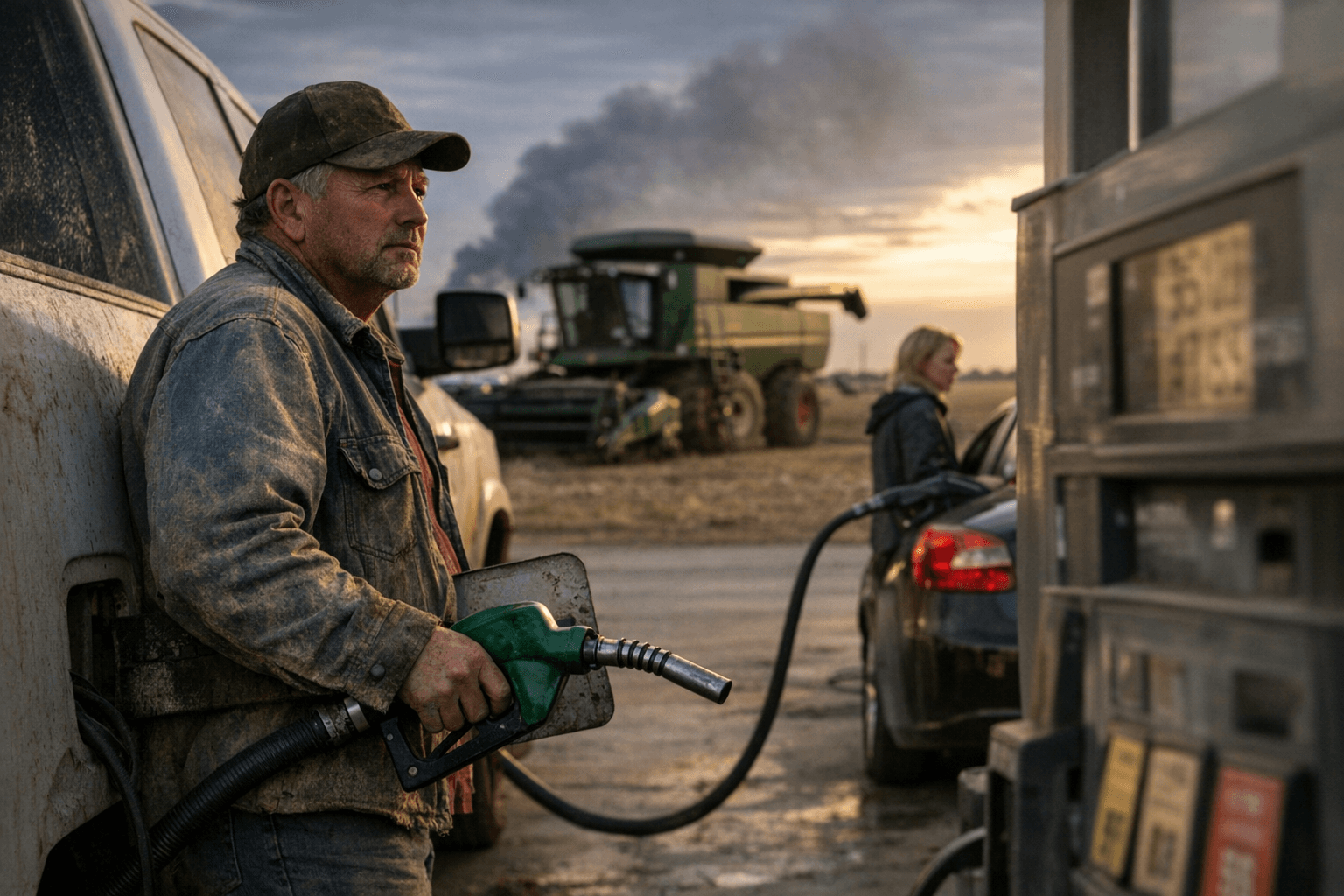
Farmers are absorbing the first shock from war-driven fuel costs, paying more to run tractors, haul crops and buy fertilizer while gasoline stays well above $4 a gallon and diesel pushes deeper into farm budgets. Energy Secretary Chris Wright said Sunday that prices lifted by the war may not fall below $3 a gallon until next year, even as regular gasoline averaged $4.05 a gallon and diesel averaged $5.61.
The burden is already showing up in Iowa, where farmers said they were spending hundreds more on fuel for tractors and other equipment. One farmer said, "It just feels like the world is trying to take this all away from us right now." Scott Marlow, an agriculture policy expert, said the fuel-cost shock from the war has hit farmers at "every step" of the process, from planting and fieldwork to hauling grain and moving goods to market.
That squeeze extends beyond diesel. The price of ammonia and urea, two key fertilizer ingredients, has risen about 20% and 50% since the war began, according to Oxford Economics. Those increases matter because fertilizer costs are built into crop budgets long before harvest, then are passed through storage, transport and processing. When diesel, fertilizer and shipping all rise at once, the pressure spreads from the farm gate to the grocery aisle.
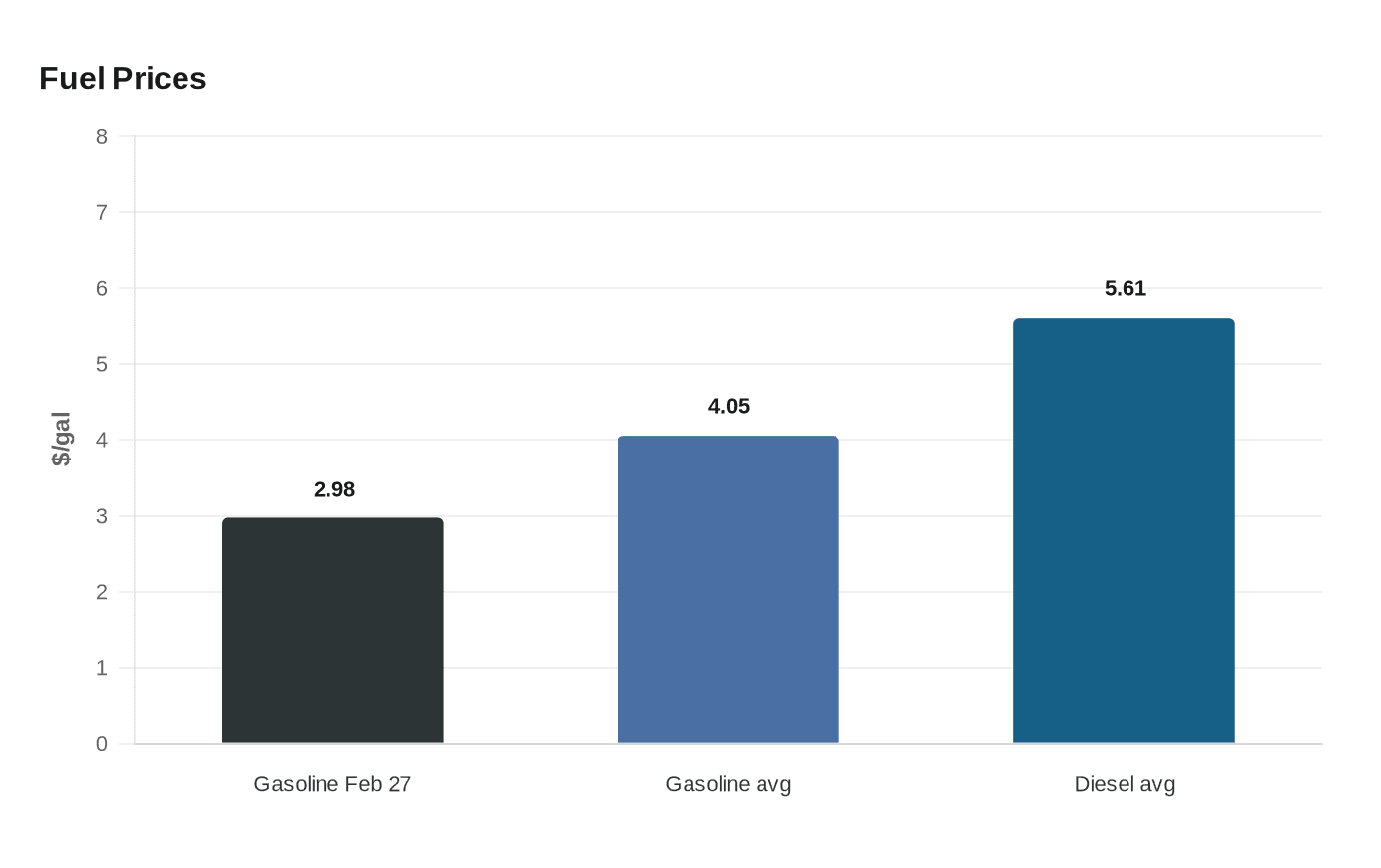
The war has already pushed gasoline sharply higher from the $2.98 national average on Feb. 27, the day before U.S. and Israeli strikes on Iran. Gasoline was up $1.16 a gallon since the start of the conflict, and J.P. Morgan energy analysts warned prices could top $5 a gallon later in April if the Strait of Hormuz stayed closed through mid-April. Wright has argued the disruption is likely temporary because the world is "very well supplied with oil," but even a ceasefire may not quickly restore cheaper fuel if oil flows remain strained.
For consumers, the risk is not just a higher fill-up at the pump. Elevated diesel and fertilizer costs can linger through planting and harvest, feeding into food prices after the fuel shock has already hit farmers. Until oil shipments and refinery markets settle, the war’s costliest effect may keep moving downstream, one tractor tank and one grocery receipt at a time.
This article was produced by Prism’s automated news system from verified source data, official records, and press releases, then run through automated quality and moderation checks before publishing. The system is built and supervised by the people who set the standards it runs under. Read our full AI policy.
Did this article answer your question?

