California's High-Speed Rail Project Connecting LA and San Francisco Goes Off Track
California's bullet train has cost $120B+ with no track laid after 16 years, and the project could run out of money before finishing even its first Central Valley segment.
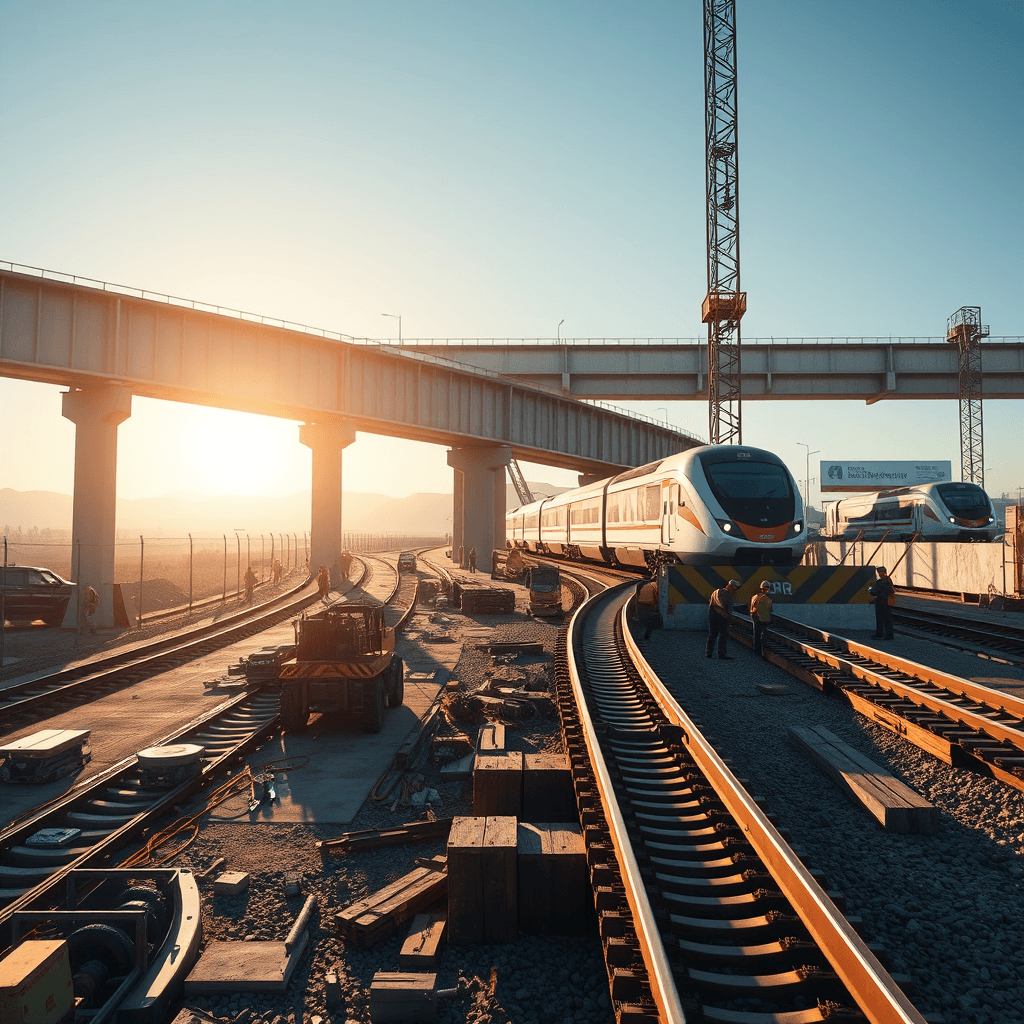
Every weekday, roughly 125,000 passengers board flights each way between Los Angeles and San Francisco, one of the ten busiest domestic air corridors in the country. That figure tells the story of what California has failed to build: a high-speed rail alternative that, by the project's own original design, would have been whisking passengers between the two cities in under three hours at speeds exceeding 200 miles per hour. Instead, sixteen years after construction began, not a single mile of high-speed track has been laid.
The scale of the collapse is staggering. California voters approved a $9.95 billion bond in 2008, with project backers promising a complete 800-mile network by 2020 at a total cost of roughly $33 billion. That cost estimate has since swelled to more than $120 billion, while the timeline has slipped by two decades and counting. The initial operating segment, a 171-mile stretch between Merced and Bakersfield in the Central Valley, has a price tag of $37 billion on its own, and even that modest first run has been pushed to 2033. Full Phase 1 completion between San Francisco and Los Angeles is now projected for 2040, if it happens at all.
The financial reckoning sharpened dramatically in July 2025, when the Trump administration terminated $4.2 billion in federal grants after the Federal Railroad Administration concluded the California High-Speed Rail Authority would not meet its obligation to begin operating the Merced-to-Bakersfield segment on schedule. The agency's 300-page compliance review cited systemic failures in management, funding, and schedule in nine distinct areas. Transportation Secretary Sean Duffy called it "the worst cost overrun I've ever seen."
The crisis has not eased in 2026. In March, both the nonpartisan Legislative Analyst's Office and the Office of the Inspector General warned a joint Assembly oversight hearing that the project faces a roughly $2 billion funding gap just to complete the Central Valley segment, and that its funding stream may not keep pace with construction costs. Inspector General Ben Belnap cautioned lawmakers that the project could exhaust its money within two years before finishing even that first stretch of track. A March 2023 peer review had already flagged an unfunded gap of between $92.6 billion and $103.1 billion for the full San Francisco-to-Los Angeles connection. The Legislative Analyst's Office added that the Authority has no feasible plan for exiting the Central Valley at all.

The reasons for the failure are structural and compound. The Authority broke ground in 2013 without having acquired sufficient land for its right-of-way, without having secured utility relocation agreements, and before design on key segments was complete. That sequence forced costly renegotiations at every turn: the initial bid for the first construction package came in just under $1 billion and ballooned to $2.2 billion through delay claims and change orders alone. Environmental review under state and federal law dragged on for more than a decade, opening the project to successive rounds of litigation. Governance proved equally fragile, with political disagreements between elected officials repeatedly stalling decisions that should have been made early. Cost per mile has reached approximately $207 million on some segments, a figure that will almost certainly rise.
The California High-Speed Rail Authority released its 2026 Draft Business Plan in late February, trimming $1.7 billion from its budget through what it described as a bottom-up cost review. Construction in the Central Valley has made measurable physical progress: as of late 2025, roughly 70 miles of continuous guideway were complete and ready for track-laying, with 54 civil structures finished and 32 more underway. But physical progress in the Central Valley is a long way from a train running between Los Angeles and San Francisco.
Closing that gap will require confronting the root causes rather than adjusting business plans. Analysts have pointed to specific, achievable reforms: streamlining environmental review timelines by setting hard statutory deadlines rather than open-ended processes, centralizing project governance under a single accountable executive structure to eliminate the fragmentation that has allowed cost overruns to go unchallenged, securing land and utility agreements before contracts are awarded rather than during construction, and attracting private co-investment to impose market discipline on cost estimates. The LA-to-SF corridor generates enough demand, and enough latent congestion, to support a viable rail business. The question is whether California can build one.
This article was produced by Prism’s automated news system from verified source data, official records, and press releases, then run through automated quality and moderation checks before publishing. The system is built and supervised by the people who set the standards it runs under. Read our full AI policy.
Know something we missed? Have a correction or additional information?
Submit a Tip