Cambodia recovers ancient Khmer crowns found in London parking lot
Four boxes in a car park outside London held 77 Khmer-era jewels, including crowns and an 11th-century gold bowl, before Cambodia brought them home.
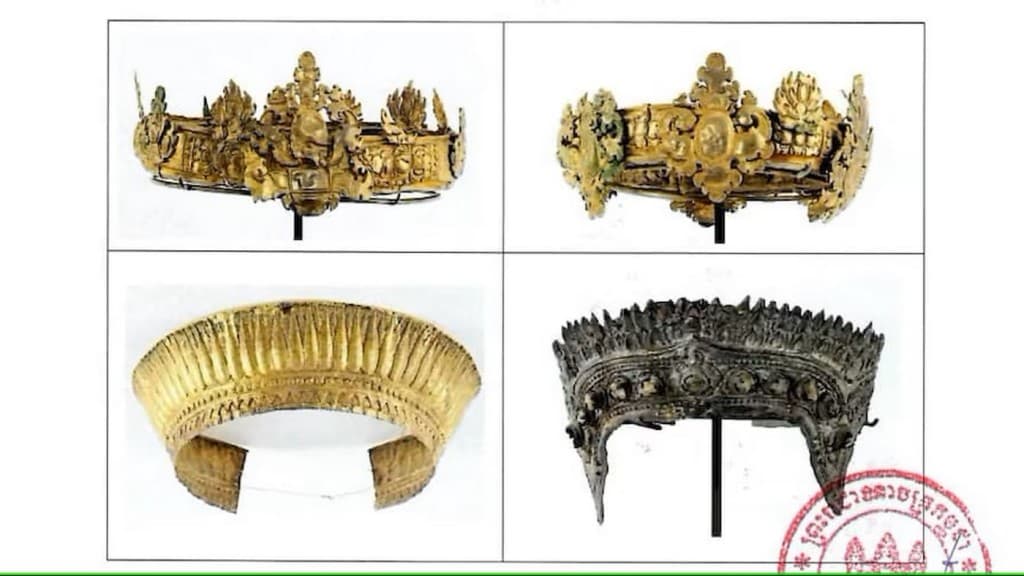
Four boxes in the back of a car in a parking lot outside London held 77 pieces of ancient Cambodian jewelry, a haul that spanned crowns, belts, earrings, amulets, bracelets and necklaces, along with a large gold bowl thought to date to the 11th century. Brad Gordon, who heads Cambodia’s investigative team and advises the culture ministry, said he was taken to the undisclosed site by a representative of the Latchford family and found the items there, a recovery he said left him deeply emotional.
Cambodian officials said some of the jewelry may date back to the 7th century, before the Angkorian period, while other pieces came from the Angkorian era itself. The collection was tied to the estate of Douglas Latchford, the British antiquities dealer and collector whom U.S. authorities accused in 2019 of trafficking looted Cambodian artifacts. Latchford died in 2020 while awaiting trial in the United States.
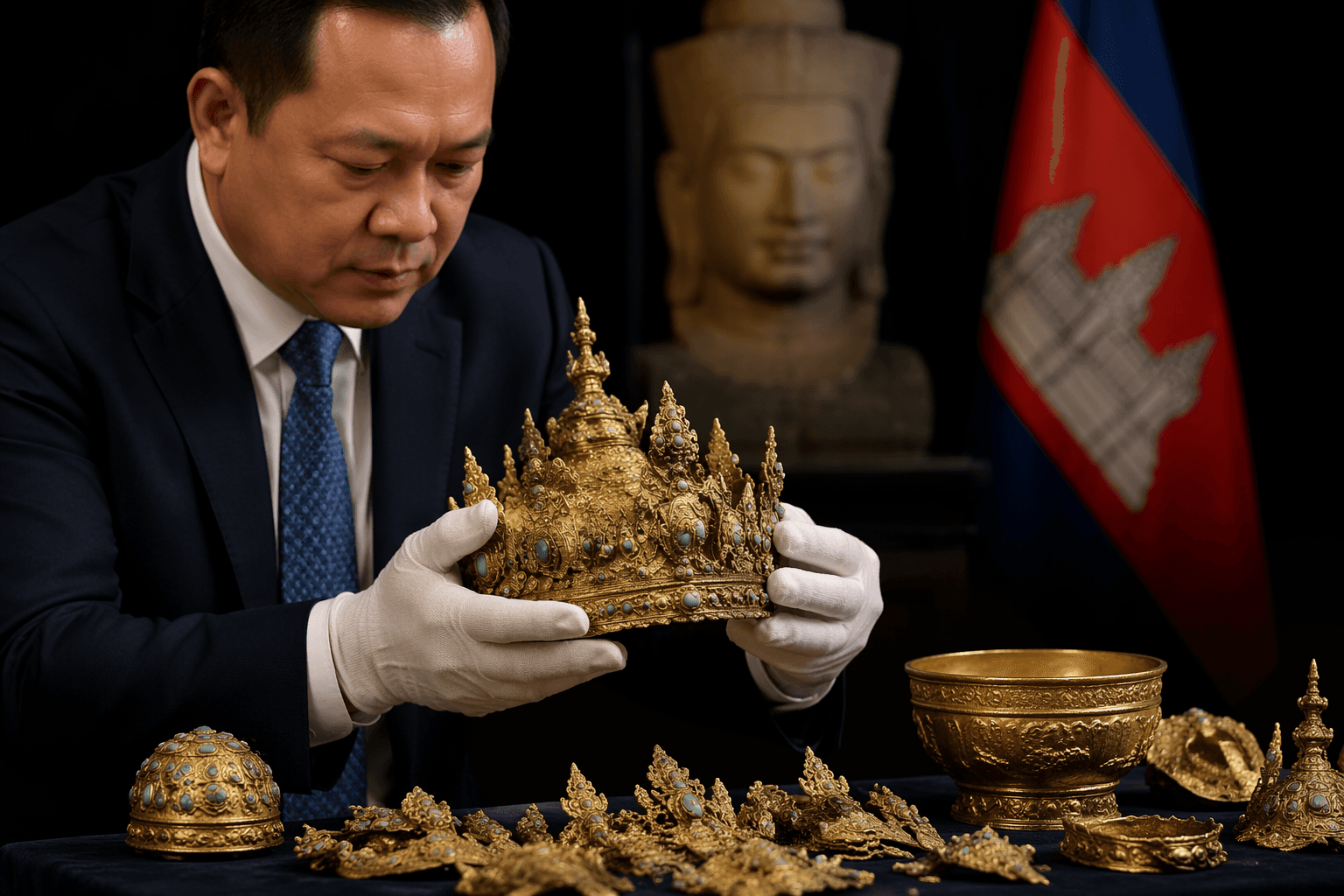
The return followed a September 2020 agreement under which all Cambodian artifacts in the family’s possession were to be handed back. Cambodian officials said the trove arrived in February 2023 and was expected to go on display at the National Museum of Cambodia in Phnom Penh, where it would join the country’s effort to reclaim objects removed during years of war, looting and the Khmer Rouge era.
Cambodia’s culture minister, Phoeurng Sackona, said the return carried consequences beyond the museum gallery. “The repatriation of these national treasures opens a new era of understanding and scholarship about the Angkorian empire,” she said, linking the recovery to the healing and reconciliation of Cambodians who lived through civil war and genocide.
For Cambodia, the London parking lot handoff exposed how long looted heritage can circulate before it is traced back to its point of origin. The recovery also underscored how dependent restitution can be on family cooperation, cross-border legal pressure and the persistence of investigators trying to reconstruct the path of objects that moved through private hands for years before returning to state custody.
This article was produced by Prism’s automated news system from verified source data, official records, and press releases, then run through automated quality and moderation checks before publishing. The system is built and supervised by the people who set the standards it runs under. Read our full AI policy.
Did this article answer your question?