Canada adds 87,800 jobs in May, unemployment rate falls to 6.6%
Canada added 88,000 jobs in May and cut unemployment to 6.6%, a rebound that cooled recession fears and muddied rate-cut bets.
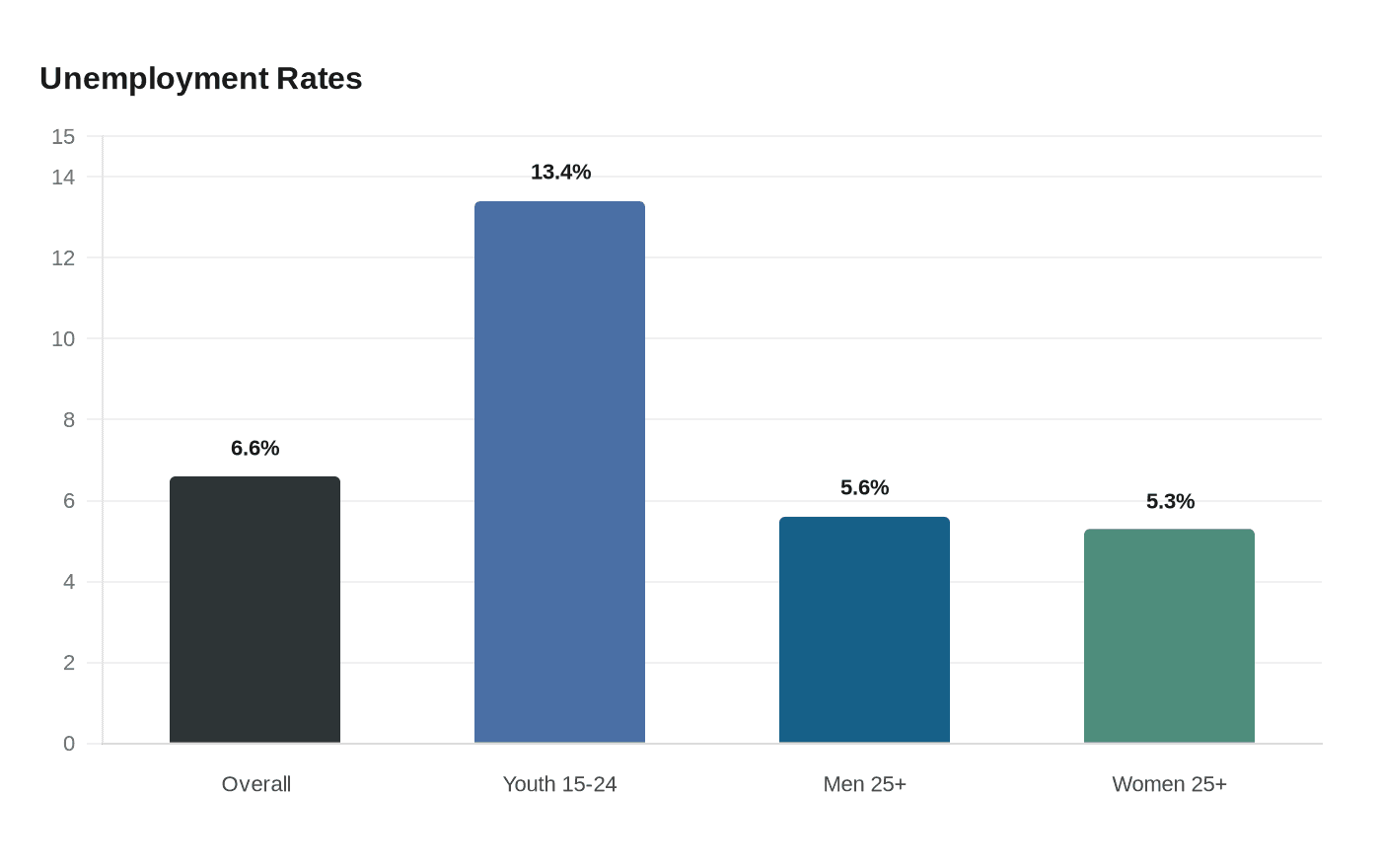
Canada’s labour market delivered a sharp upside surprise in May, adding 88,000 jobs and pulling the unemployment rate down to 6.6% from 6.9% in April. The gain was the largest monthly increase since December 2024 and the first significant employment advance since November 2025, a sign that hiring momentum returned after a weak start to the year.
The rebound mattered because the economy had shed 112,000 net jobs in the first four months of 2026 before May erased most of that slide. Statistics Canada said the employment rate rose to 60.7% while the participation rate held at 65.0%, leaving 1,482,400 people unemployed and 21,121,500 employed. The jobless rate for youth aged 15 to 24 fell to 13.4% from 14.3%, while the rate for men 25 and older dropped to 5.6% and for women 25 and older to 5.3%.
The gain was broad-based. Employment rose by 31,000 among core-aged women, 25,000 among core-aged men and 22,000 among youth. TD Economics said full-time work increased by 154,000 and private-sector employment rose by 56,000, underscoring that the improvement was not limited to one narrow corner of the labour market. Economists had been looking for only about 10,000 new jobs and for unemployment to hold at 6.9%, so May’s report landed far above expectations.
For the Bank of Canada, the surprise immediately sharpened debate over how quickly rate cuts might come. A labour market that is still stronger than expected gives policymakers less room to argue that the economy needs immediate support, even as growth has softened and the unemployment rate remains above the 6.0% average recorded from 2017 to 2019. The central bank has also been pointing to deeper forces reshaping employment, including immigration policy, U.S. tariffs, global trade shifts and AI-driven change, which makes it harder to read too much into a single month.
The Canadian numbers also matter south of the border. Stronger hiring in Canada can support household spending and import demand, which is relevant for U.S. exporters watching cross-border trade. It also suggests the North American economy is not moving in lockstep: Canada’s labour market showed fresh resilience even as higher borrowing costs, trade uncertainty and cautious consumers continued to weigh on the broader outlook. The May report was not proof of a full recovery, but it was one of the clearest signs yet that Canada may be stabilizing after a shaky start to 2026.
This article was produced by Prism’s automated news system from verified source data, official records, and press releases, then run through automated quality and moderation checks before publishing. The system is built and supervised by the people who set the standards it runs under. Read our full AI policy.
Know something we missed? Have a correction or additional information?
Submit a Tip