Debt collection complaints surge as Americans fall behind on bills
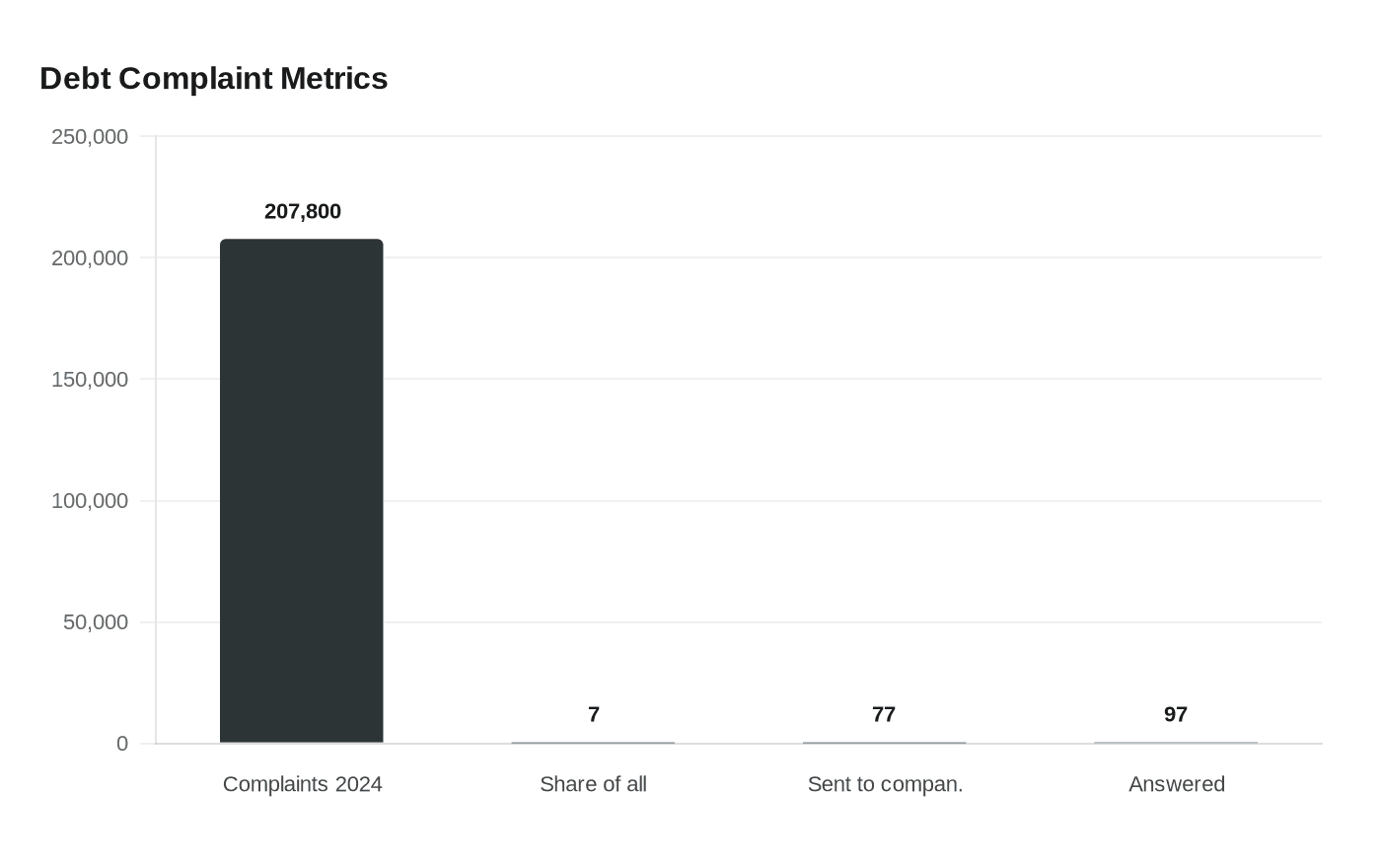
Debt collectors drew 207,800 federal complaints in 2024 as the FTC said the industry generated more fraud reports than any other.

Americans falling behind on bills are sending the pressure straight to the people on the phone. Federal regulators logged about 207,800 debt-collection complaints in 2024, and the Federal Trade Commission says debt collectors generate more fraud reports to the agency than any other industry.
Those calls have become a daily pressure point in a credit system under strain. Collectors say they are met with verbal abuse, obscene language and threats of violence, while consumer advocates say the same late-payment spiral that fuels the complaints also leaves borrowers vulnerable to mistakes, overreach and added fees. The Consumer Financial Protection Bureau says debt collectors violate the Fair Debt Collection Practices Act when they harass, oppress or abuse consumers, including through repetitious calls and threats of harm.

The numbers show how central debt collection remains to federal consumer complaints. The CFPB said its 2025 annual report on the law covered roughly 207,800 complaints in 2024, equal to 7% of all complaints it received that year. About 77% of those complaints were sent to companies for response, and companies answered 97% of the complaints that were forwarded. Even as the law aims to curb abusive tactics, the rules are written to protect consumers from collectors, not to shield collectors from the abuse that often comes back at them on the phone.
The policy fight has increasingly centered on the kinds of debt most likely to land people in collection. The CFPB’s 2024 report focused on medical and rental debt collection, reflecting how often those bills collide with household instability. A Congressional Research Service briefing said the CFPB finalized a rule in June 2024 to remove most medical debt from credit reports, only for a judge to overturn the rule in July 2025.
The strain is also showing up in court. Pew reported in September 2025 that debt-collection lawsuits had surged back to pre-pandemic highs, and in states with available data, about half of the cases were historically for less than $2,000. Credit card debt, bank debt and medical debt were the most common sources. That mix suggests a consumer-credit system being asked to absorb small-balance delinquencies at scale, with collectors, borrowers and regulators all absorbing the fallout.
This article was produced by Prism’s automated news system from verified source data, official records, and press releases, then run through automated quality and moderation checks before publishing. The system is built and supervised by the people who set the standards it runs under. Read our full AI policy.
Know something we missed? Have a correction or additional information?
Submit a Tip