Canada pushes Mercosur trade deal as U.S. tensions persist
Canada sent negotiators toward Brasilia as it seeks a Mercosur deal that could widen exports beyond the U.S. and hedge trade volatility.
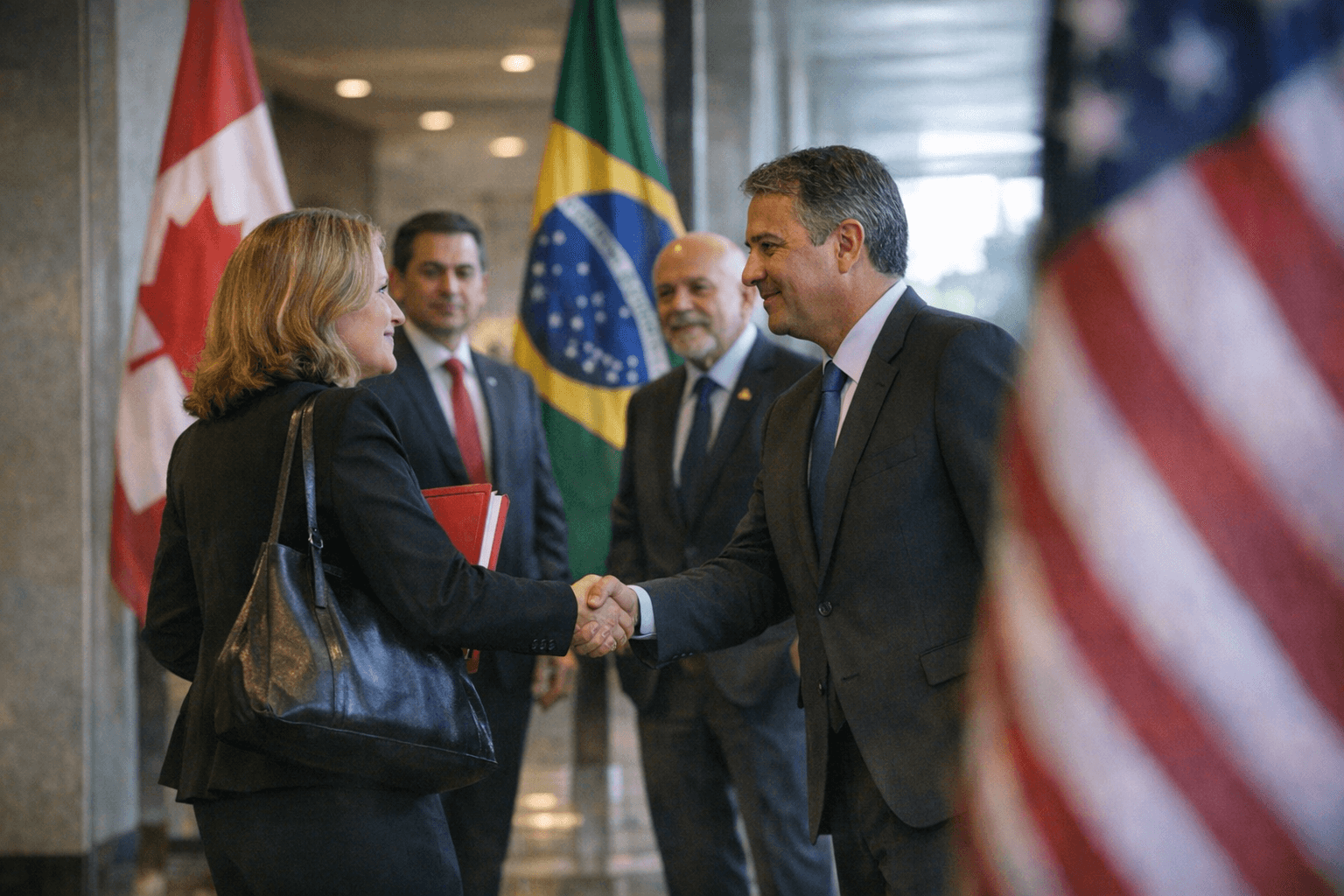
Canadian trade negotiators were set to head to Brasilia as Ottawa pressed ahead with a Mercosur free-trade deal, a sign that Canada is still trying to widen its commercial footprint even as tensions with the United States continue to hang over its economy. The talks have been building for months, with Ottawa and Brazil issuing a joint statement on August 25, 2025, then opening public consultations from December 13, 2025, to January 27, 2026, before Trade Minister Maninder Sidhu spoke with Brazil’s Foreign Minister Mauro Vieira in March and met him again at the World Trade Organization ministerial conference in Yaoundé.
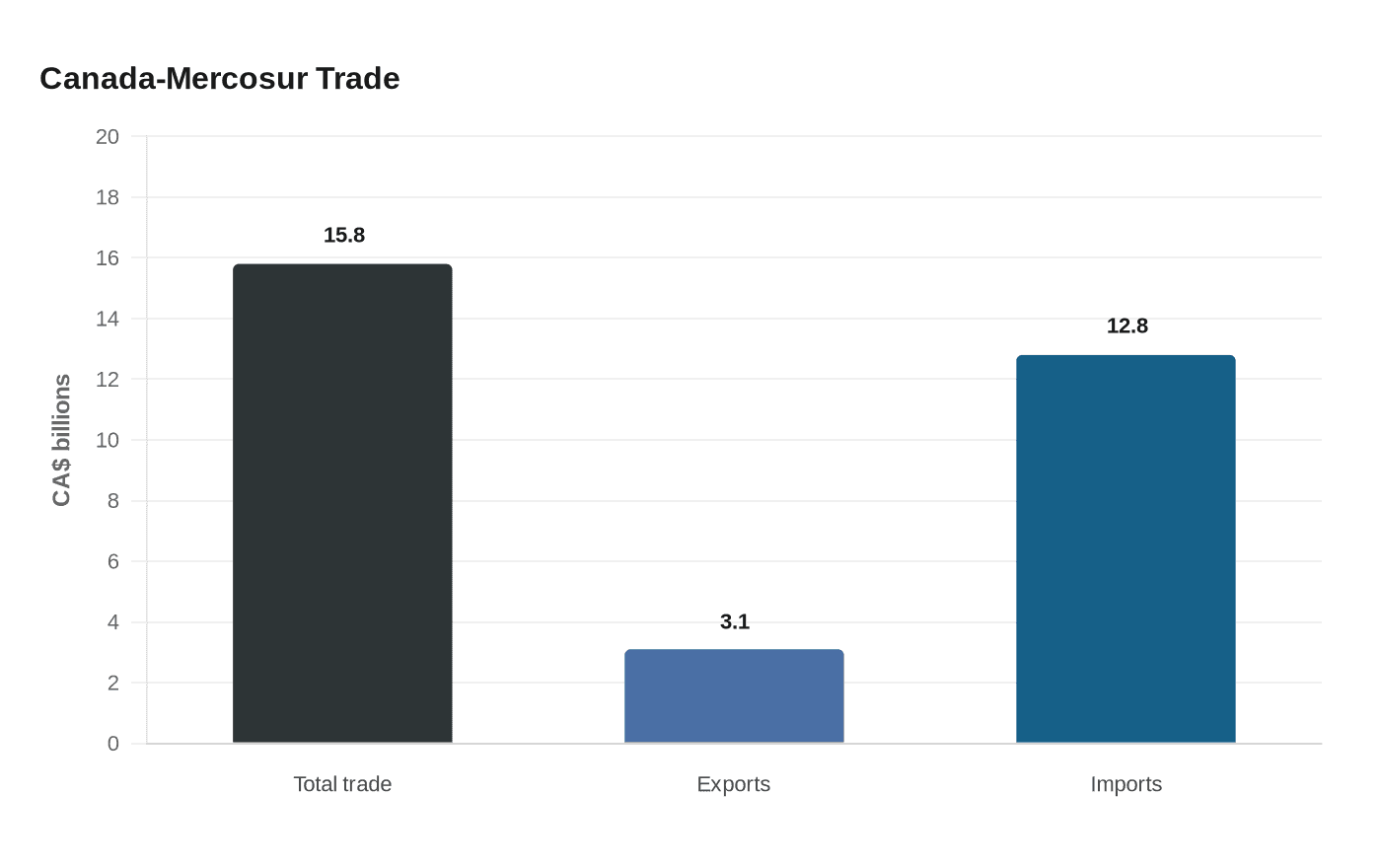
The push matters because Mercosur is large enough to give Canada a meaningful alternative market. The bloc includes Argentina, Bolivia, Brazil, Paraguay and Uruguay, and Ottawa says it represents a GDP of more than US$3 trillion and a population of 282 million. Canada-Mercosur merchandise trade reached CA$15.8 billion in 2024, including CA$3.1 billion in Canadian exports and CA$12.8 billion in imports, a lopsided flow that underscores why Canadian officials see room to expand sales into South America.
If completed, the agreement would cover goods, services, investment and government procurement, with potential gains for agriculture, industrial goods, services and capital flows. That makes the file more than a diplomatic gesture. It is also a response to the fragility of Canada’s current trade exposure, with Ottawa preparing for a mandatory review of the Canada-U.S.-Mexico Agreement later this year and trying to reduce its reliance on any one market. Brazil’s Paula Barboza said the negotiations had been propelled by a “political push” and that both sides wanted to close them quickly.
The Mercosur effort does not amount to a break with Washington, but it does show that Ottawa is no longer treating North American dependence as a sufficient strategy on its own. The renewed talks began after years of intermittent negotiation stretching back to March 2018, and the latest momentum suggests a practical hedge rather than a wholesale pivot. With negotiators heading to Brasilia and a signing target by autumn, Canada is signaling that it wants more leverage, more resilience and more options if U.S. trade friction deepens again.
This article was produced by Prism’s automated news system from verified source data, official records, and press releases, then run through automated quality and moderation checks before publishing. The system is built and supervised by the people who set the standards it runs under. Read our full AI policy.
Did this article answer your question?

