Canada’s economy contracts again as tariff uncertainty deepens strain
Canada’s GDP shrank again, a warning for U.S. exporters as tariff uncertainty freezes investment and strains North American supply chains.
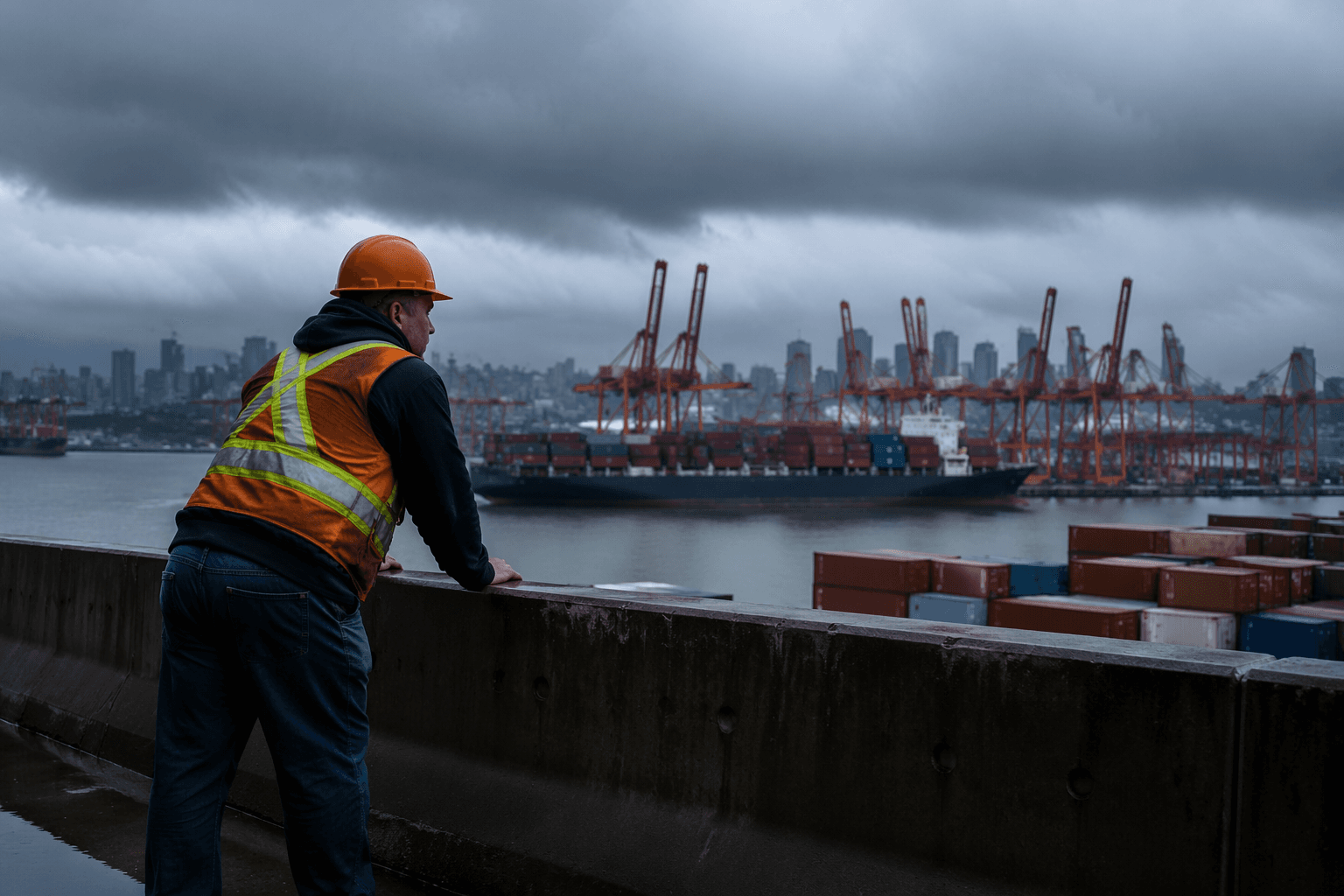
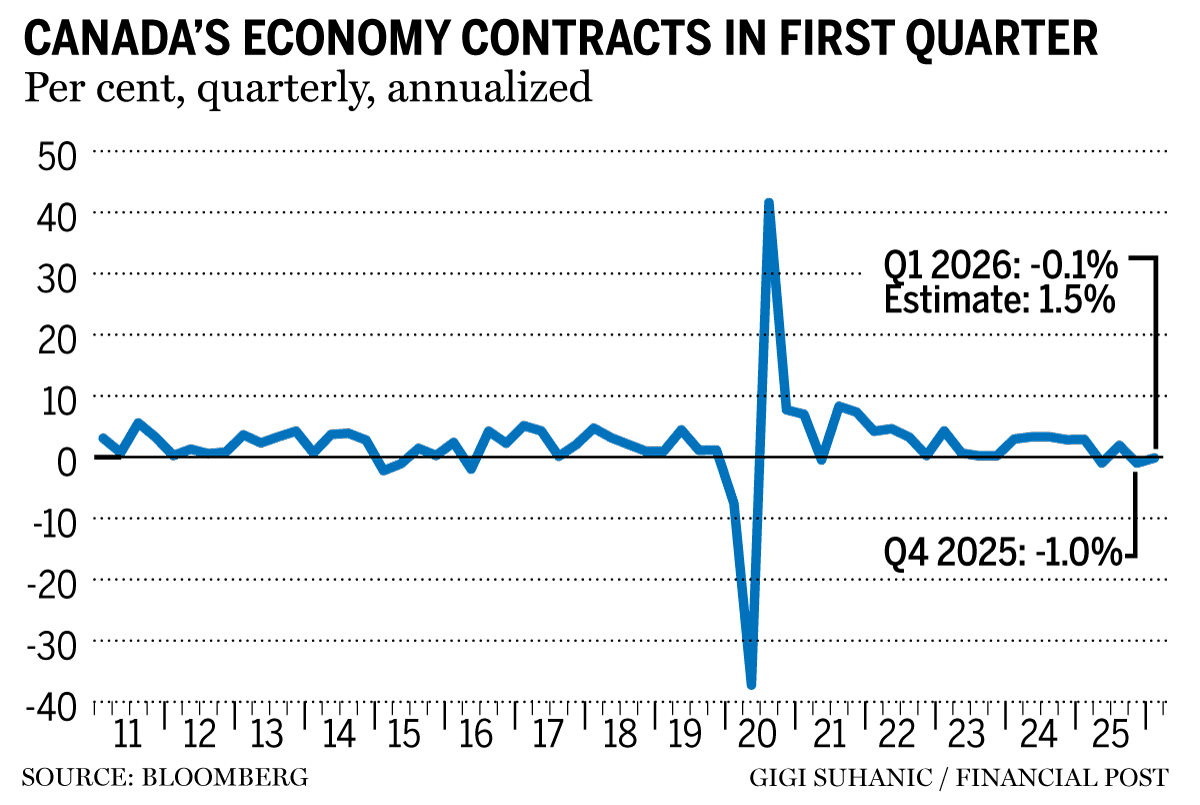
Canada’s economy contracted again in the first quarter, a fresh warning sign for U.S. exporters and cross-border supply chains as tariff uncertainty keeps firms on the sidelines. Statistics Canada said gross domestic product fell at an annualized rate of 0.1%, after the fourth quarter of 2025 was revised to a 1% annualized contraction. On a quarter-to-quarter basis, output was flat, narrowly avoiding a textbook recession, but the back-to-back annualized declines still pointed to a technical recession and a loss of momentum heading into spring. The result fell short of expectations for 1.5% annualized growth.
The weakness was not evenly spread. Household spending still rose, led by financial services and food, but that was offset by softer business and government investment. Business capital investment fell 0.7% in the quarter, its fifth straight decline, underscoring how trade rules, slower demand and tariff noise are keeping companies from committing new capital. Higher imports also weighed on first-quarter GDP, while a buildup in inventories partly cushioned the drag. The picture suggests Canadian firms were still stocking up, but not yet confident enough to expand production in a durable way.
That matters well beyond Ottawa. A weaker Canadian economy can ripple back into the United States through autos, machinery, energy and other cross-border supply chains that depend on steady trade flows. The uncertainty is also broader than Canada-U.S. relations alone. The looming review of the North American trade deal, combined with the knock-on effects of the Middle East conflict and higher crude prices, has made the outlook more fragile for businesses trying to forecast costs, margins and demand on both sides of the border. Those same trade frictions can complicate the Federal Reserve’s outlook by muddying the line between slower growth and higher import-driven prices.
The Bank of Canada has already moved to a more defensive stance. On April 29, it held its policy rate at 2.25% and said U.S. tariffs, trade uncertainty, the Middle East conflict and energy prices were central risks. Governor Tiff Macklem said consumer and government spending were supporting growth, while tariffs and trade uncertainty were weighing on exports and business investment. The central bank said unemployment was in the 6.5% to 7% range and projected GDP growth of 1.2% in 2026, 1.6% in 2027 and 1.7% in 2028.
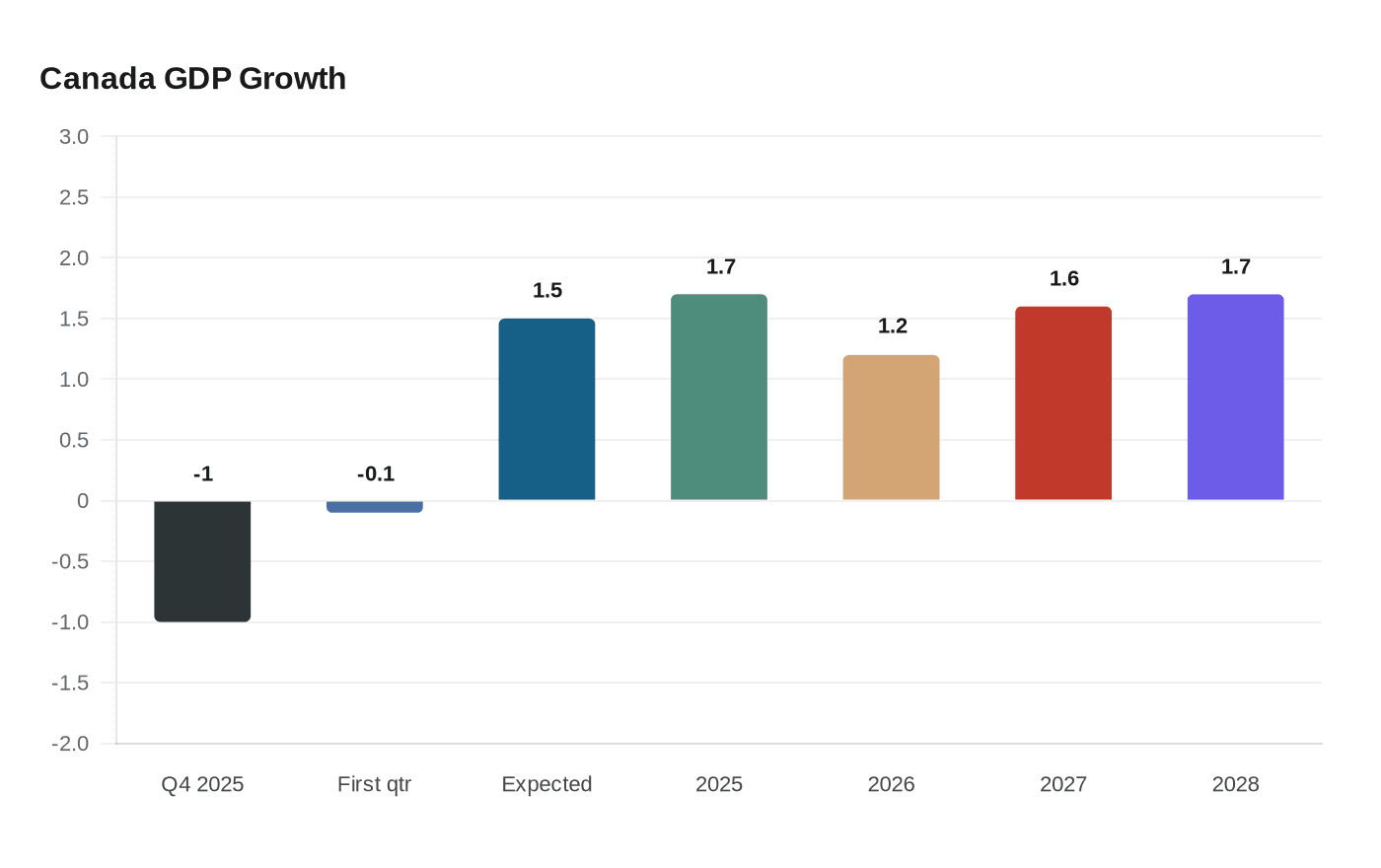
The latest data leave Canada with little cushion. The economy grew 1.7% in 2025, its slowest pace since 2020, and March GDP fell 0.1% before an advance estimate suggested April may have risen 0.4%. That leaves the country struggling to regain traction just as trade uncertainty threatens to keep North America’s growth engine running below potential.
This article was produced by Prism’s automated news system from verified source data, official records, and press releases, then run through automated quality and moderation checks before publishing. The system is built and supervised by the people who set the standards it runs under. Read our full AI policy.
Did this article answer your question?
%3Amax_bytes(150000)%3Astrip_icc()%2FCertificate-of-deposit-2301f2164ceb4e91b100cb92aa6f868a.jpg&w=1920&q=75)