Canadian Charity Funds Care for Retired Service Dogs and Highlights Dog Yoga
Ned's Wish, a Canadian charity, provides veterinary surgeries, wheelchairs and ongoing medical care for retired police and military working dogs across the country. The charity's work underscores the high costs of caring for retired service animals and highlights rehabilitative approaches such as dog yoga as part of broader physiotherapy and fitness maintenance.
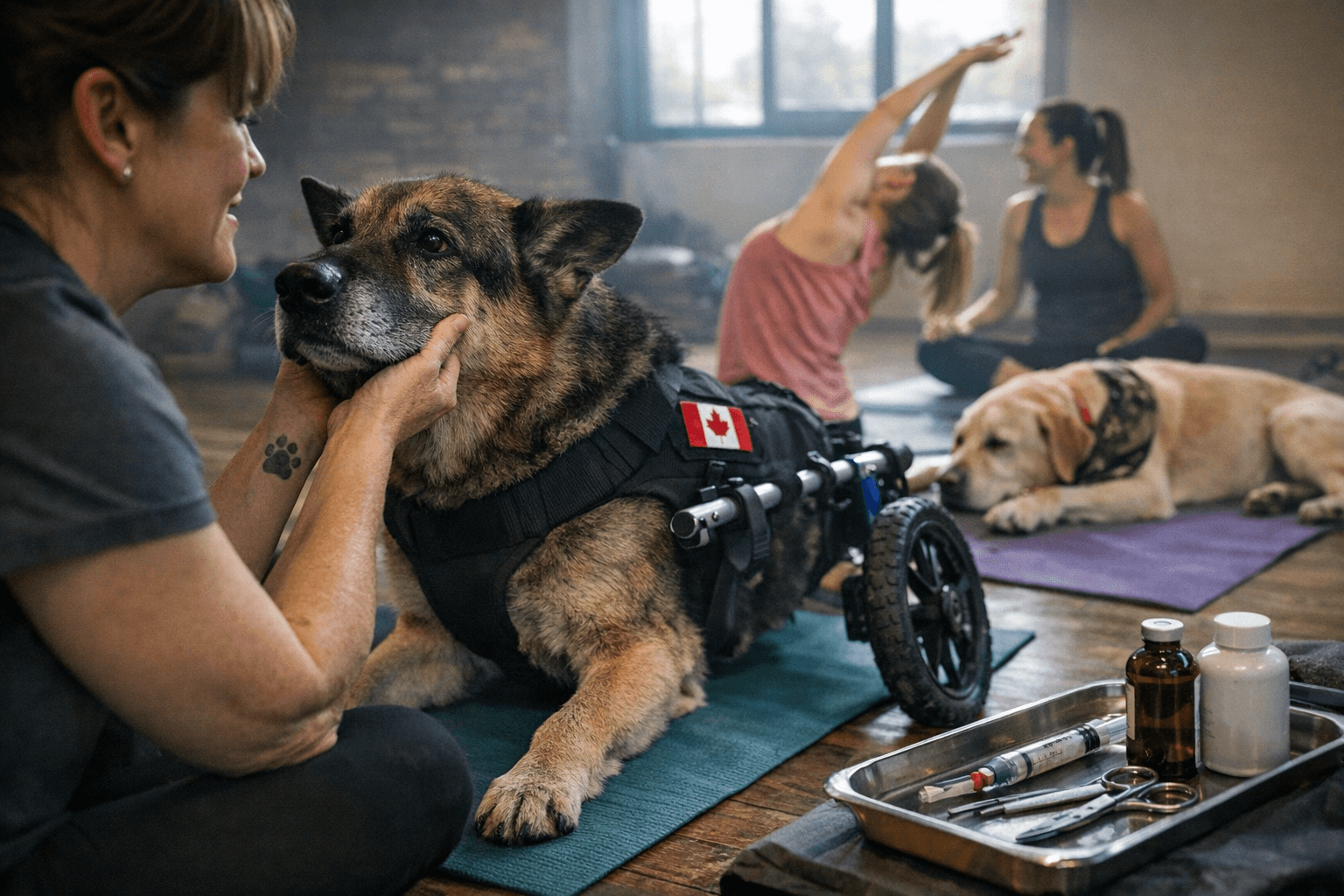
Ned's Wish is stepping into a growing gap in care for retired police and military working dogs by funding costly veterinary treatments and long-term support across Canada. The charity covers surgeries, mobility devices like wheelchairs, and ongoing veterinary and rehabilitative care for animals whose service has left them with chronic injuries or age-related needs. That financial assistance directly addresses the steep bills many handlers and families face when these dogs leave active duty.
Medical expenses for retired working dogs can quickly surpass what individual handlers can carry. By underwriting procedures and long-term therapy, Ned's Wish reduces a key barrier to getting necessary care. The charity operates nationally, connecting retired service animals with veterinary teams and rehabilitation providers so dogs receive tailored treatment rather than deferred or piecemeal care.
An important detail for the canine wellness community is the role of therapeutic modalities beyond surgery and medication. Some working-dog programs have incorporated dog yoga into broader physiotherapy and maintenance plans for active and retiring animals. In this context, dog yoga refers to rehabilitative stretching and controlled movement work designed to support canine fitness and recovery, not as a novelty class but as one component of a multi-modal rehabilitation strategy.
For instructors, handlers and owners, that distinction matters. If you teach or attend dog yoga, treat rehabilitative sessions as clinical adjuncts rather than replacements for veterinary care. Coordinate with veterinarians and certified canine rehabilitation professionals before introducing stretching routines for older or injured dogs. Adapt exercises to mobility limits, progress slowly, and monitor pain and fatigue closely. For dogs who require wheelchairs or have undergone surgery, consult prosthetics and mobility specialists to align therapeutic movement with mechanical support.
The community impact is twofold. First, increased awareness that rehabilitative approaches such as dog yoga can be clinically useful may broaden referral networks between vets, physiotherapists and community instructors. Second, charities that fund medical care make those therapies accessible to retired service dogs that otherwise might not receive them.
Ned's Wish’s work highlights both the financial realities of long-term care and practical pathways for improving quality of life for retired working dogs. For anyone involved in canine fitness and rehabilitation, the takeaway is clear: combine veterinary oversight, evidence-based physiotherapy and cautious, purpose-driven movement work to support the animals who served.
Know something we missed? Have a correction or additional information?
Submit a Tip