Canopy bridge lets Sumatran orangutan cross road for first time
A rope bridge in North Sumatra carried a Sumatran orangutan across a road for the first time, showing how access for villages and habitat protection can be built together.
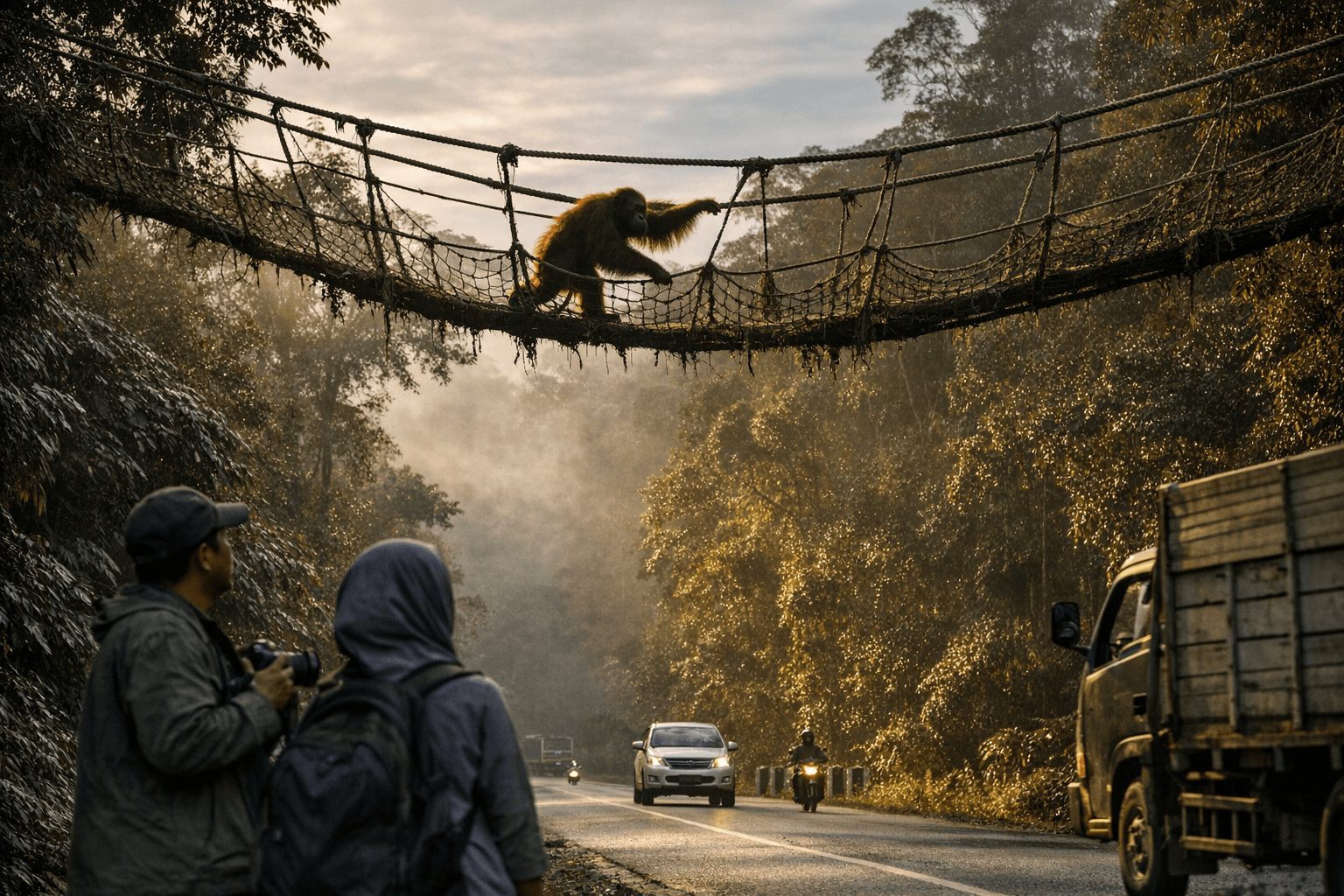
The Lagan-Pagindar road in Pakpak Bharat district cut through Sumatran orangutan habitat, and the 2023 upgrade widened the canopy gap enough to split one local population in two. Now a canopy bridge spanning that break has carried a Sumatran orangutan across the road for the first time, a small movement that conservationists say could matter for the future of an area that still holds about 350 of the species.
The bridge is one of five installed along the newly surfaced road by the Sumatran Orangutan Society and Tangguh Hutan Khatulistiwa, known as TaHuKah, with installation help from Vertical Rescue Indonesia. TaHuKah began working in the area in 2022 and placed the bridges using ecological surveys and data from the last orangutan census, conducted in 2016. The goal was not to block the road, which was expanded to improve access for remote communities to schools, hospitals and other services, but to keep wildlife movement possible above it.
That compromise matters because Sumatran orangutans spend more than 90% of their time in the forest canopy. When roads slice through that canopy, animals can become isolated from food sources, mates, territory and the genetic diversity needed to keep small populations healthy. Conservationists say that fragmentation can accelerate inbreeding and weaken the long-term survival of animals already under pressure from habitat loss.
The crossing is being treated as a conservation first because it shows that artificial canopy links can work in real forest conditions, not just on paper. Helen Buckland of the Sumatran Orangutan Society said the crossing could “vastly change things” for the primates. More crossings would strengthen the case for a model that tries to hold two public priorities together: infrastructure for people and connected habitat for wildlife. In Pakpak Bharat district, where roads have been pushed deeper into the forest to serve isolated villages, the bridge offers a practical example of how development does not have to mean permanent ecological division.
For Sumatran orangutans, the stakes are national as well as local. The species is already among the most threatened great apes on Earth, and each fragmented patch of forest can leave a population more vulnerable than the last. If the bridge continues to draw animals across the road, it could offer a template for road projects far beyond North Sumatra, showing that infrastructure built with wildlife movement in mind can reduce harm without closing off essential services for nearby communities.
This article was produced by Prism’s automated news system from verified source data, official records, and press releases, then run through automated quality and moderation checks before publishing. The system is built and supervised by the people who set the standards it runs under. Read our full AI policy.
Did this article answer your question?