Orbán skips parliament after election defeat, vows Fidesz renewal
Orbán will not sit in Hungary’s next parliament after a landslide loss, leaving Fidesz to rebuild after 16 years in power.
Viktor Orbán said he will not take his seat in Hungary’s parliament after Fidesz’s crushing April 12 defeat, marking a sharp turn for a politician who had sat in the legislature for 36 uninterrupted years and dominated the country’s politics for 16 years. In a video posted on social media on April 25, Orbán said his attention would instead go to the “reorganisation” and “renewal” of the nationalist-populist camp he built.
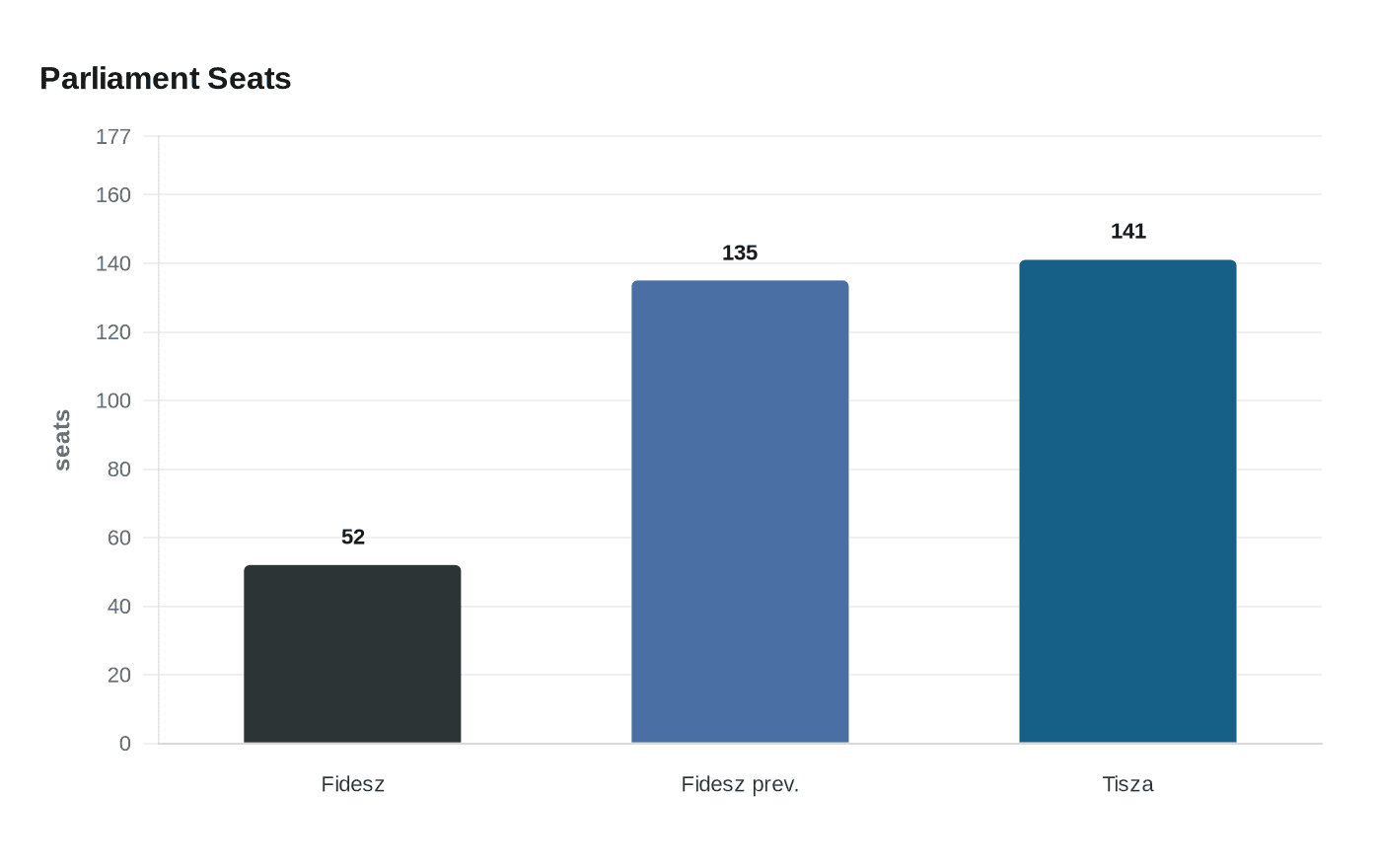
The decision means that when the new parliament forms on May 9, Orbán will not be among the lawmakers for the first time since Hungary’s transition from state socialism in 1990. Fidesz won only 52 seats, down from 135 before the election, while Péter Magyar’s Tisza party captured 141 of the 199 seats, the largest majority in Hungary’s post-Communist history.
Orbán said Fidesz’s parliamentary caucus would be “radically transformed” after the loss, a sign that the party is bracing for a deeper internal overhaul than a simple personnel change. He also indicated he wants to remain leader of Fidesz when the party congress meets in June, keeping a grip on the organization even as it loses power in parliament.
Magyar, a former Fidesz insider now set to become prime minister, has promised to restore democratic institutions and the rule of law and to hold accountable those responsible for alleged widespread official corruption. His victory ended Orbán’s 16 years in power and handed Hungary’s opposition its strongest mandate since the post-Communist era began.
The shift reverberates beyond Budapest. Orbán had become one of Europe’s most visible nationalist leaders, a reference point for populists who saw in Hungary a model for testing democratic constraints while entrenching political power. His retreat from parliament weakens that symbol, even if he remains a force inside Fidesz and tries to rally what he called the “national side.”
For the European Union and NATO, the change could alter the tone of one of the bloc’s most combative governments. Magyar’s promise to restore rule-of-law standards suggests a possible thaw in Hungary’s relations with Brussels and Western allies after years of friction under Orbán. But with Orbán still trying to reshape Fidesz from outside the legislature, Hungary’s right is entering a period of uncertainty rather than collapse, and the struggle over its future has only begun.
This article was produced by Prism’s automated news system from verified source data, official records, and press releases, then run through automated quality and moderation checks before publishing. The system is built and supervised by the people who set the standards it runs under. Read our full AI policy.
Did this article answer your question?