Cape Town's Tourist Rental Boom Pushes Workers Into Grueling Long Commutes
Cape Town has more Airbnb listings than Barcelona, Amsterdam, and New York — and workers now travel 50km daily to serve the tourists who replaced them in their own neighborhoods.
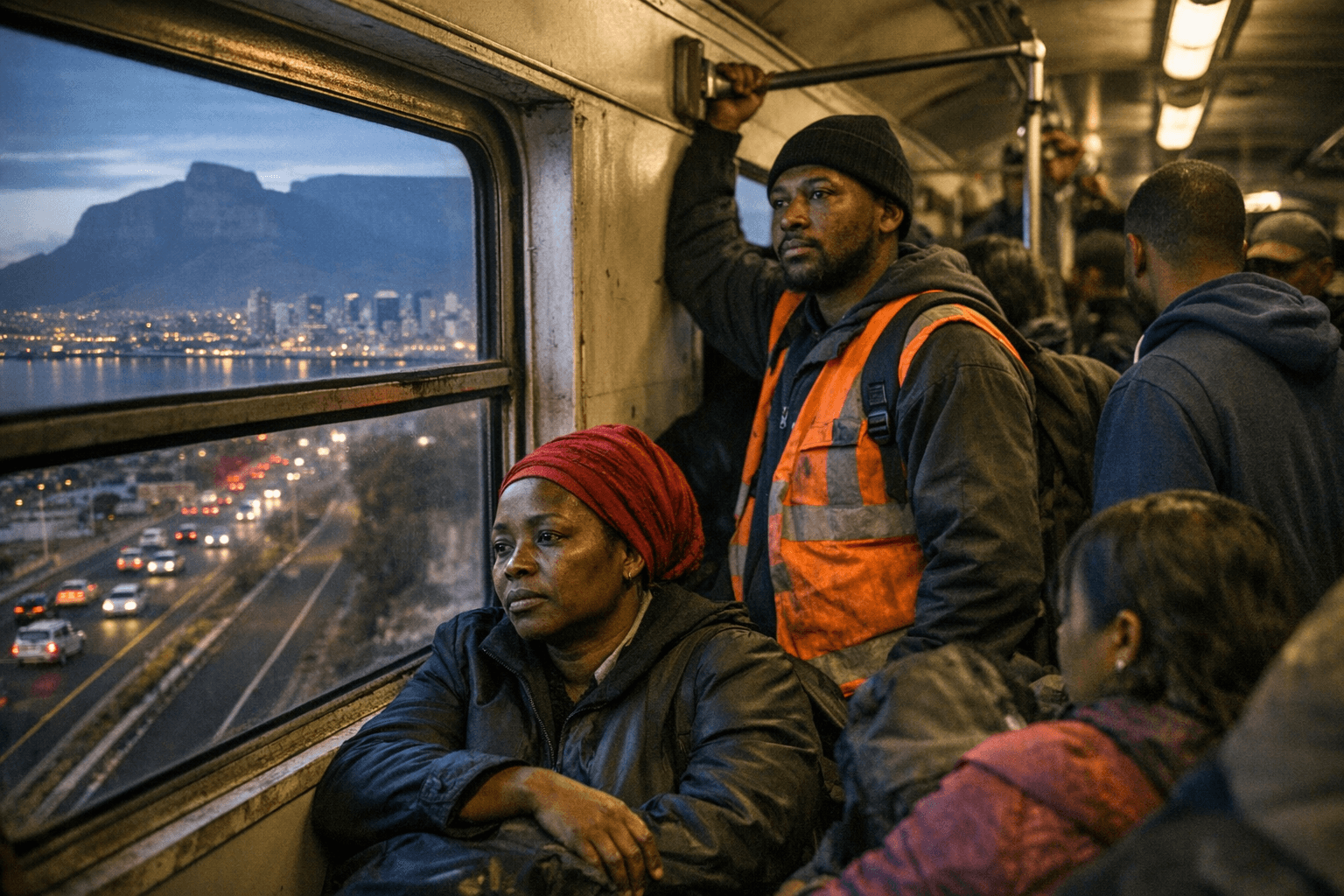
Workers who clean the short-term rentals, serve the restaurants, and sustain Cape Town's booming tourism economy are commuting up to 50 kilometers to reach jobs they can no longer afford to live near. Reporter John Eligon traced those journeys to their origin: townships and informal settlements on the city's distant periphery, where apartheid's spatial engineering deposited Black and coloured communities decades ago, and where the market is now holding them in place.
Cape Town topped both the Telegraph and Time Out magazine's 2025 rankings of the world's best cities. It has also quietly accumulated more short-term rental units than Barcelona, Berlin, Amsterdam, New York, and Hong Kong combined, cities that draw up to five times as many annual visitors. According to data aggregator InsideAirbnb, approximately 26,500 housing units in Cape Town are listed on Airbnb alone; the platform itself puts the figure at 33,000. In tourist-heavy zones along the city centre and the Atlantic seafront, Airbnb listings surged by 190 percent since 2022, according to Jens Horber of the housing activism group Ndifuna Ukwazi.
The consequence has been direct and measurable. Cape Town rental prices have risen by 68.5 percent, and a one-room flat in the CBD now starts at around R10,000 a month. Airbnbs near the District Six Museum, the memorial site of one of apartheid's most notorious forced-removal campaigns, average R1,500 a night. That history sits heavy here: the same neighborhoods from which Black and coloured residents were expelled to remote townships under the Group Areas Act are now commanding premium rates from foreign travelers.
"Long-term rental units have been converted into tourist accommodation, removing units from the housing supply, raising rental costs and pushing out locals from neighbourhoods where they can no longer afford to live," Horber said.
The irony cuts deepest for workers in the short-term rental sector itself. Outsourced cleaners who service Airbnb properties often commute from peripheral townships like Khayelitsha, Cape Town's largest, which was deliberately designed during apartheid as a dormitory settlement with no economic base of its own. The commute is not an inconvenience; it is a structural feature, inherited from segregation-era planning logic and now reinforced by market forces.
University of Waterloo researcher Cloe St-Hilaire estimated that Cape Town has lost 1.5 percent of its total housing stock to Airbnb, compounding an already severe shortage. The city's population is projected to reach 5.1 million in 2025, with roughly 100,000 new arrivals over three years, according to Mayor Geordin Hill-Lewis.
In February, the city announced plans to more than double municipal property rates on short-term rentals, introducing a bylaw that would bring Airbnb and Booking.com properties in line with commercial hotel and guesthouse tariffs. Housing activists, including Reclaim the City and Ndifuna Ukwazi, have gone further, challenging the city in court over decisions to sell prime public land, including the Tafelberg site in Sea Point, for private development rather than social housing.
The city's travel-guide reputation and its lived reality are pulling in opposite directions. For the workers enduring those multihour commutes before dawn, the gap has never been wider.
Know something we missed? Have a correction or additional information?
Submit a Tip