Capitol Hill harassment still rampant, lawmakers and aides say
A rare House Ethics Committee plea landed as new data showed only 35% of Hill workers who saw harassment reported it, even after Congress rewrote the rules in 2018.
Capitol Hill’s harassment system still depends on people knowing whom to trust, and many still do not. On April 20, 2026, the House Ethics Committee issued a rare public appeal for anyone with information about sexual misconduct by a House member or staffer to come forward, saying there should be zero tolerance for sexual misconduct, harassment or discrimination in Congress.
That plea came nearly 10 years after Congress overhauled its rules in response to the #MeToo era. In December 2018, bipartisan legislation eliminated the mandatory 30-day counseling phase, the 30-day mediation phase and the 30-day cooling-off period for harassment claims. It also gave employees access to a dedicated advocate, required public reporting of awards and settlements, and made members personally liable for some awards and settlements stemming from harassment they personally commit.
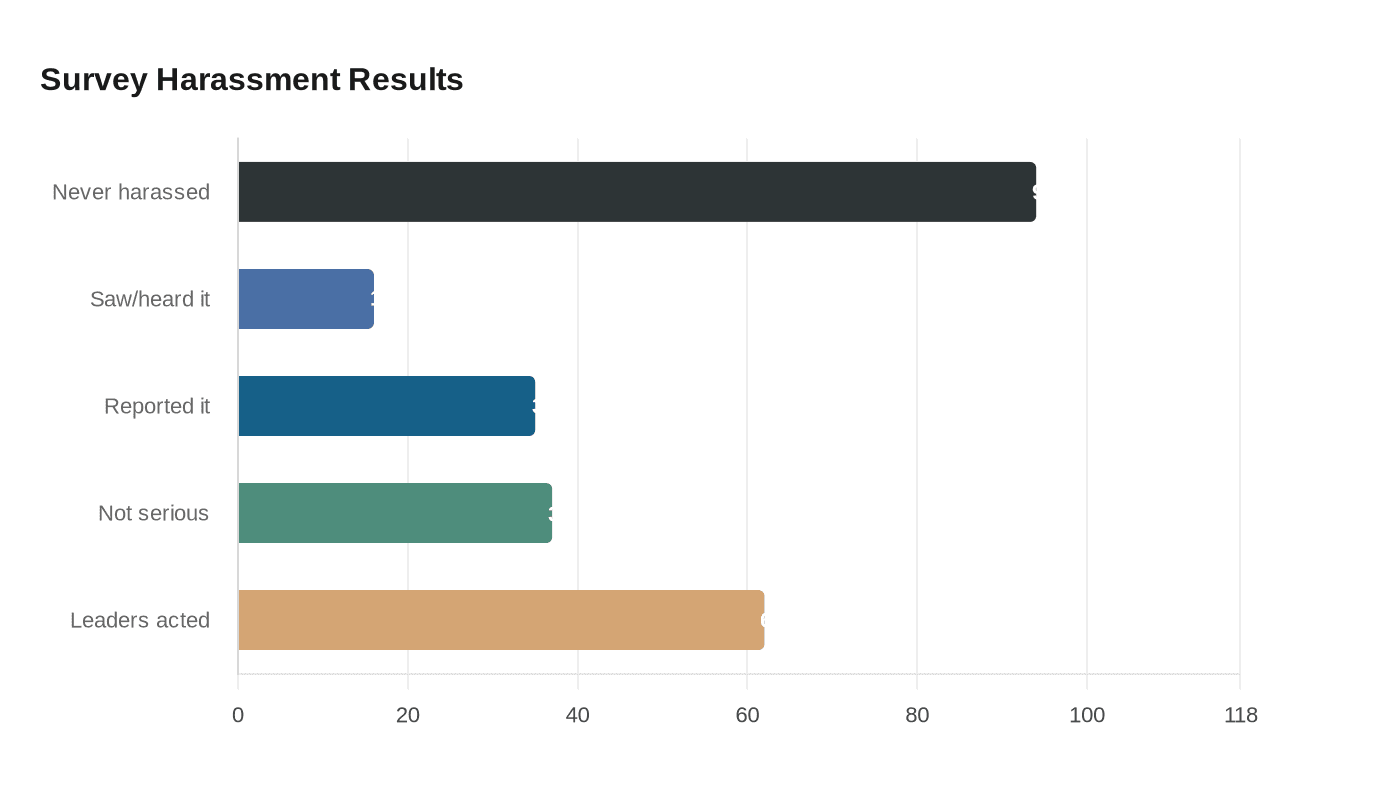
Even with those changes, the Office of Congressional Workplace Rights found in a House workplace climate survey administered from January 17 to March 29, 2024, that 1,515 employees and members responded, a 10% response rate. Ninety-four percent said they had never personally experienced sexual harassment in the last year, but 16% said they had experienced, witnessed or heard about it. Among that group, 35% reported the behavior, while 37% of non-reporters said the incident was not serious enough to report. Sixty-two percent said senior leaders had taken steps over the previous two years to address harassment, discrimination and retaliation.
The numbers suggest that formal channels exist on paper but are still hard to use in practice. In March 2018, all 22 female senators urged Senate leaders to update the 23-year-old system, pointing to a survey that found four in 10 female congressional staffers believed sexual harassment was a problem on Capitol Hill and one in six said they had survived it.
The issue has stayed in public view this spring. On April 15, 2026, AP reported that Reps. Eric Swalwell and Tony Gonzales resigned amid sexual misconduct allegations involving staff, and former Rep. Jackie Speier said the problems persisted after the reforms. On April 28, 2026, Roll Call reported that staffers often do not know where to report misconduct, that the Hill’s decentralized power structure makes reporting difficult, and that some lawmakers have taken on an informal role as safe points of contact.
The formal record shows the problem predates the reform era by decades. The Senate’s 2024 awards-and-settlements report, dated January 31, 2025, listed a $36,260 covered payment involving the Senate Sergeant at Arms. House Administration Committee records from fiscal years 1996 through 2002 showed member-led House offices disclosing settlement amounts totaling $119,979.00 in one set of cases.
For workers on Capitol Hill, the gap is not the absence of rules. It is the distance between the rules and the power it takes to use them.
This article was produced by Prism’s automated news system from verified source data, official records, and press releases, then run through automated quality and moderation checks before publishing. The system is built and supervised by the people who set the standards it runs under. Read our full AI policy.
Did this article answer your question?

