Streeting to enter Labour leadership contest as Burnham moves closer to challenge
Wes Streeting has pledged to fight any leadership race as Andy Burnham edges toward a Commons comeback, opening a battle over Labour’s direction after heavy losses.
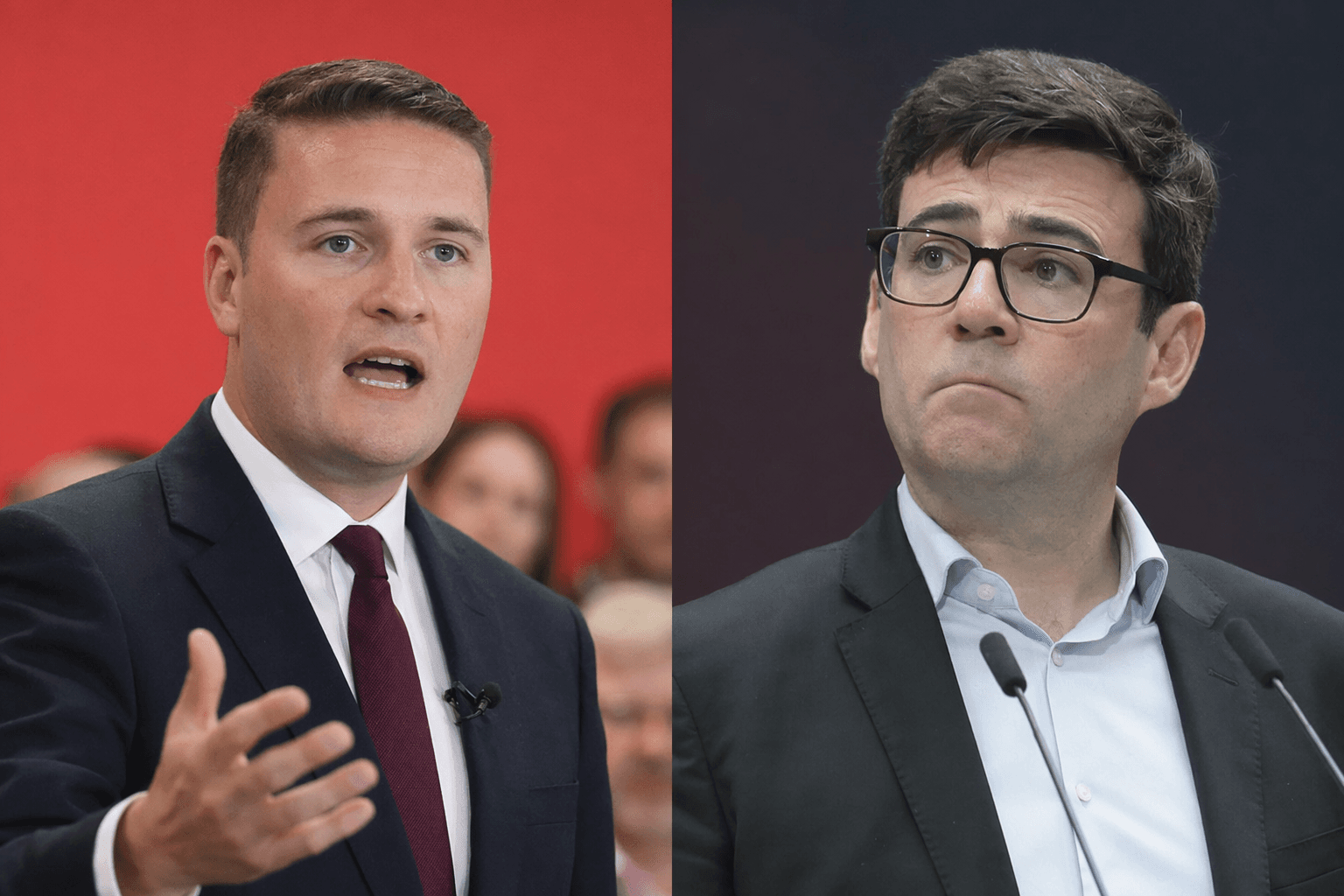
Wes Streeting has thrown himself into Labour’s succession struggle, saying he would stand in any contest to replace Keir Starmer and warning that the party needs a “proper contest” and a “battle of ideas, not personalities”. In his first major intervention since resigning as health secretary, Streeting called Labour’s local election results “unprecedented” and said the party risked handing Reform UK and Nigel Farage a path to power if it did not change course.
That sets up an early fight over what Labour is meant to become after its recent setbacks. Streeting is presenting himself as the candidate of a disciplined reset from inside Westminster, one that forces the party to confront its electoral weakness without descending into factional theatre. Burnham, by contrast, is moving as the insurgent with a broader message: he has said Labour needs to be “saved from where it’s been”, a line that points to a more openly interventionist and municipally rooted politics.
Burnham’s route back into national politics took a meaningful step forward when Labour’s National Executive Committee cleared him to put his name forward for the Makerfield by-election. That matters because Burnham needs a seat in the Commons before he can launch any leadership challenge. His allies believe the selection timetable could allow a by-election in early June, with reporting indicating the process could conclude on Thursday 21 May and polling is expected on 18 June 2026.
Streeting has backed Burnham’s bid to get back into Parliament, saying Labour needs its “best players on the pitch”, even as he prepares to run himself if a contest is triggered. That could sharpen the contest into something larger than a personal rivalry. It would pit a cabinet-era reformer against a mayor who has spent years building an independent power base in Greater Manchester, and who is seen by many Labour members as offering a more assertive answer to the party’s post-election malaise.

The pressure on Starmer is already severe. More than 90 Labour MPs have reportedly called on him to quit, including four ministers who resigned to demand his departure. Under Labour’s current rules, any challenger needs nominations from 20% of Labour MPs, a threshold the House of Commons Library and the Institute for Government put at 81 MPs under current numbers. That means any serious bid still depends on converting discontent in the parliamentary party into an organised majority.
The numbers around the race suggest why both men believe the ground is shifting. One poll found Streeting on 23% against Starmer’s 53% in a hypothetical head-to-head among Labour members. Another found 42% of Labour members preferring Burnham in a leadership contest. The uncertainty has already spilled beyond politics, with traders pushing borrowing costs higher and sterling lower as markets began to price in the end of the Starmer era and the prospect of a more interventionist Burnham.
This article was produced by Prism’s automated news system from verified source data, official records, and press releases, then run through automated quality and moderation checks before publishing. The system is built and supervised by the people who set the standards it runs under. Read our full AI policy.
Did this article answer your question?

