Car bomb kills eastern Libya military intelligence chief in Benghazi
A car bomb killed eastern Libya’s military intelligence chief outside his Benghazi home, exposing how targeted violence still reaches the heart of Haftar’s forces.
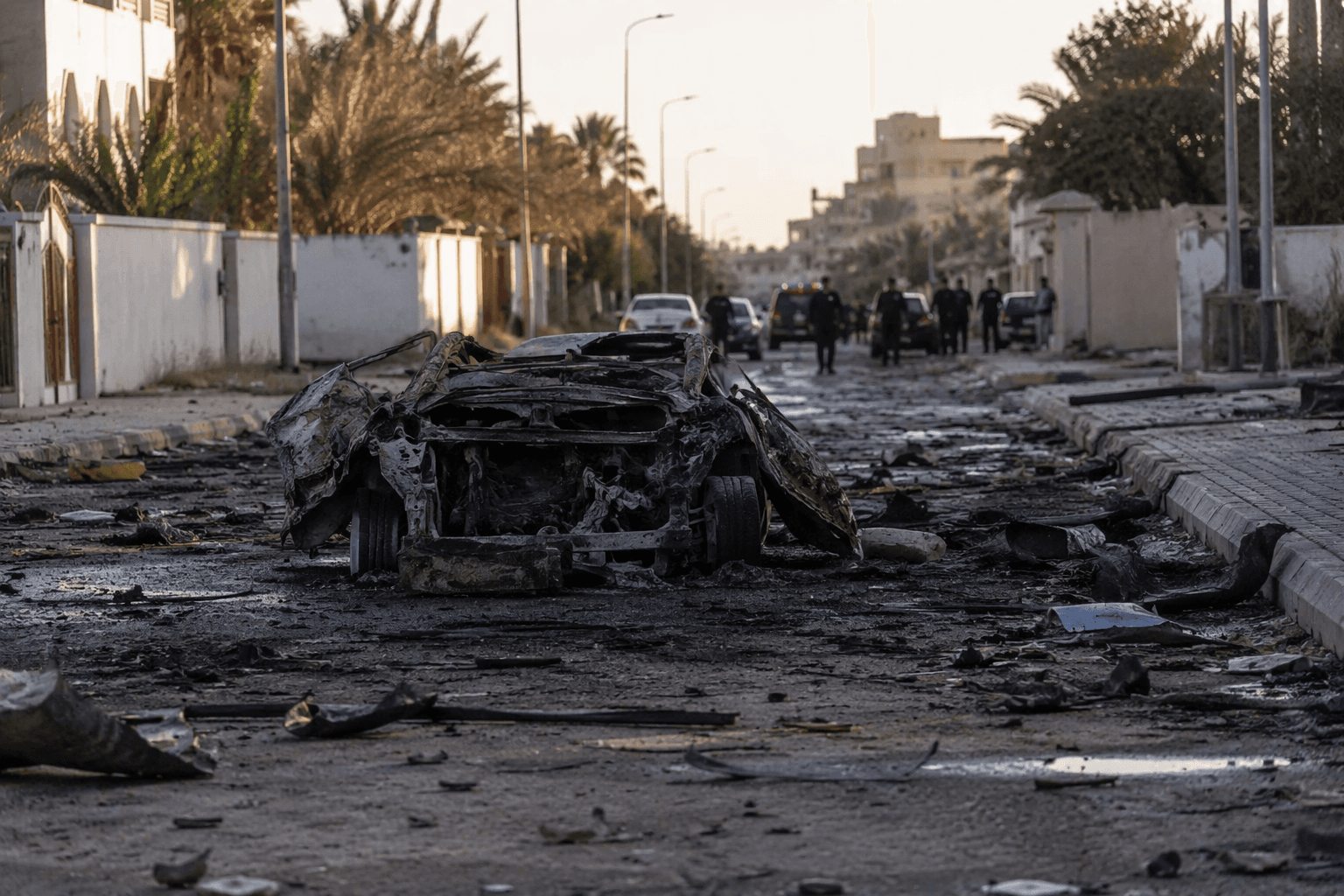
A car bomb killed eastern Libya’s military intelligence chief outside his home in Benghazi, a sharp reminder that Libya’s fractured security landscape still leaves senior commanders exposed. Two security sources said the blast struck Monday evening in the Hawari area, where an explosive device detonated in the vehicle as Brigadier Fowzi Mansouri was killed.
The attack was described as a targeted assassination, not a random explosion. Another account identified the victim as Maj. Gen. Fawzi al-Mansouri and said a security official believed the device had been planted under his vehicle and went off as he got in, suggesting close access and a high level of planning.
Mansouri was part of eastern Libya’s forces led by Khalifa Haftar, whose command structure has long operated separately from the internationally recognized authorities in Tripoli. Haftar expressed deep sorrow over the killing, and the eastern-based House of Representatives also reacted, underscoring how the blast reached into the political institutions that back the east’s military apparatus.
The killing landed in a country where a 2020 ceasefire halted major warfare but did not dismantle the armed groups and rival institutions that still shape daily power struggles. Benghazi has its own history of car bombings and attacks on security figures, and the latest blast adds to a record that shows how quickly targeted violence can return even in areas presented as more stable than the rest of Libya.
That pattern matters because military intelligence officers sit at the center of counterterrorism, internal security and surveillance of armed factions. A killing like this immediately raises questions about who had the access, motive and local networks needed to strike a senior officer in Hawari, near the heart of Benghazi, and whether the attack signals a wider contest inside eastern Libya’s security order.
Libya’s leadership problem remains more than a dispute over institutions on paper. In Benghazi, as in other parts of the country, armed force still decides who can govern, who can move safely and who can be reached at home by a bomb hidden in a car.
This article was produced by Prism’s automated news system from verified source data, official records, and press releases, then run through automated quality and moderation checks before publishing. The system is built and supervised by the people who set the standards it runs under. Read our full AI policy.
Did this article answer your question?