Iceland prepares for total solar eclipse, best views in the west
Iceland’s eclipse day will hinge on the west, where totality lasts up to 2 minutes 13 seconds and officials are urging people to stay local.
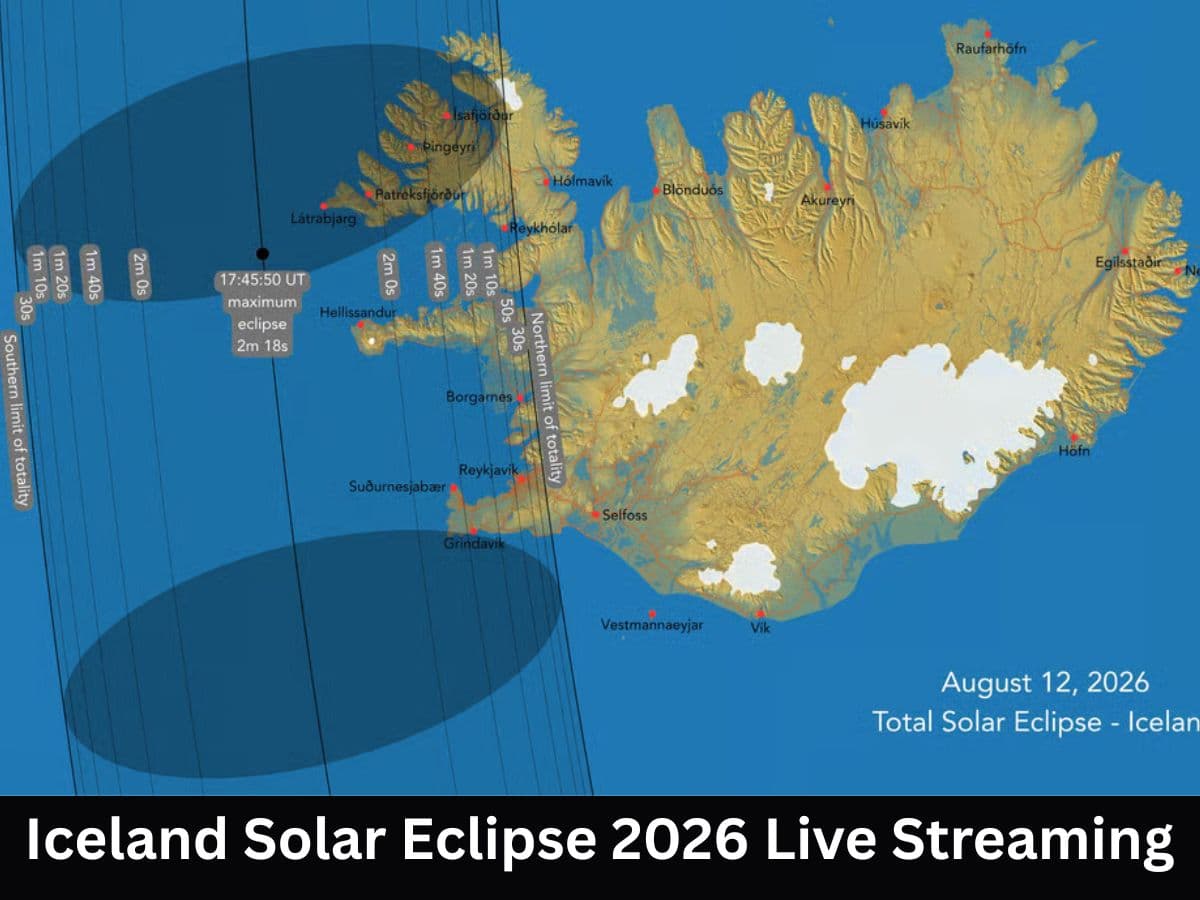
On Wednesday, 12 August 2026, totality will cross the Westfjords, Snæfellsnes, West Iceland, the Greater Reykjavík Area and Reykjanes, rewarding western viewers and testing everyone else’s patience with weather, roads and limited viewing time.
Where the eclipse will be visible
The timing is tight enough that even a short move can matter. Partial eclipse begins around 16:43 to 16:47, depending on location, and totality begins around 17:44 to 17:48. On land, the longest totality will reach 2 minutes and 13 seconds at the westernmost points of the Westfjords, while larger settlements across Iceland will see shorter totality windows.
The best viewing conditions will generally be in western Iceland, and the path of totality includes places that are reachable without crossing the whole country. Most residents in the western part of Iceland will be able to experience the eclipse from home, while people in other regions will see only a partial eclipse.
Why staying close matters
The official guidance is unusually direct: follow the event from home if possible. In most parts of western Iceland, it is possible to experience the eclipse from home or from nearby surroundings, and avoiding unnecessary travel is part of the public-safety plan.
Iceland’s government has framed the eclipse as a situation where individual viewing choices affect traffic, sensitive sites and crowding in small communities. Choosing a suitable location near home helps reduce pressure on roads and protects areas that could be overwhelmed if everyone heads for the same shoreline, hilltop or ferry terminal at once.
How officials have prepared
The state preparation effort has been running for months. A steering committee appointed by the Prime Minister earlier in 2026 has been coordinating the government’s response. Ísland.is posted a June 1 update as part of the run-up to the August 12 total eclipse.
A July 9 information page included guidance from the Icelandic Transport Authority and the Icelandic Road and Coastal Administration. It is aimed at people who do need to travel or take part in eclipse-related activities, with specific transport links highlighted for a day when road conditions and crowd flows could shift quickly.
The Road Administration’s eclipse page also lists ferry routes, including Dalvík–Grímsey and Árskógssandur–Hrísey.
Tourism pressure is already visible
The eclipse has pulled in far more than amateur astronomers. Arctic Adventures published an eclipse travel guide on 5 September 2024. The tourism industry had already begun building around the event long before the date arrived. On 7 August 2026, National Geographic called the Westfjords the epicenter of eclipse activity and the place with the longest totality in Europe, at 2 minutes and 13 seconds.
The lodging picture has been strained as well. By 10 August, Iceland’s hotels were already full, adding pressure to a destination that was already seeing strong demand in Skift’s 10 August report. Eclipse travelers are not just choosing a viewing point; they are competing for beds, rental cars and the narrow travel window between the afternoon partial phase and the late-day totality.
What the wider guidance landscape shows
The eclipse has generated a broad field of maps and travel advice from astronomy and tourism sources alike. NASA, the European Space Agency, Visit Iceland, Visit West Iceland, Visit Reykjanes, Visit Reykjavík, Guide to Iceland, Nordic Visitor, Sirius Travel and Icelandia all published eclipse-related guidance or maps, reflecting how many different travelers are trying to solve the same problem: where to be when the light drops.
This article was produced by Prism’s automated news system from verified source data, official records, and press releases, then run through automated quality and moderation checks before publishing. The system is built and supervised by the people who set the standards it runs under. Read our full AI policy.
Did this article answer your question?