Carney backs Saab GlobalEye, shifting Canada away from U.S. arms suppliers
Canada picked Saab’s GlobalEye for its early-warning fleet, signaling a deeper break from U.S. suppliers even as the plane uses Bombardier’s Global 6500 and 20% U.S. content.

Canada has opened negotiations with Saab of Sweden to become the preferred supplier for its Airborne Early Warning and Control capability, a move that puts a European aircraft at the center of a major Canadian defense purchase and sends a clear signal about where Ottawa wants its military ties to go.
Prime Minister Mark Carney said the aircraft contains 20% U.S. content, but the choice still marks a sharp turn away from American defense firms after Canada weighed Boeing’s E-7 Wedgetail and L3Harris Technologies’ Aeris X. The government had already said it wanted six radar aircraft for the Royal Canadian Air Force, and the decision narrows that competition to Saab’s GlobalEye, a system built on Bombardier’s Canadian-made Global 6500 business jet.
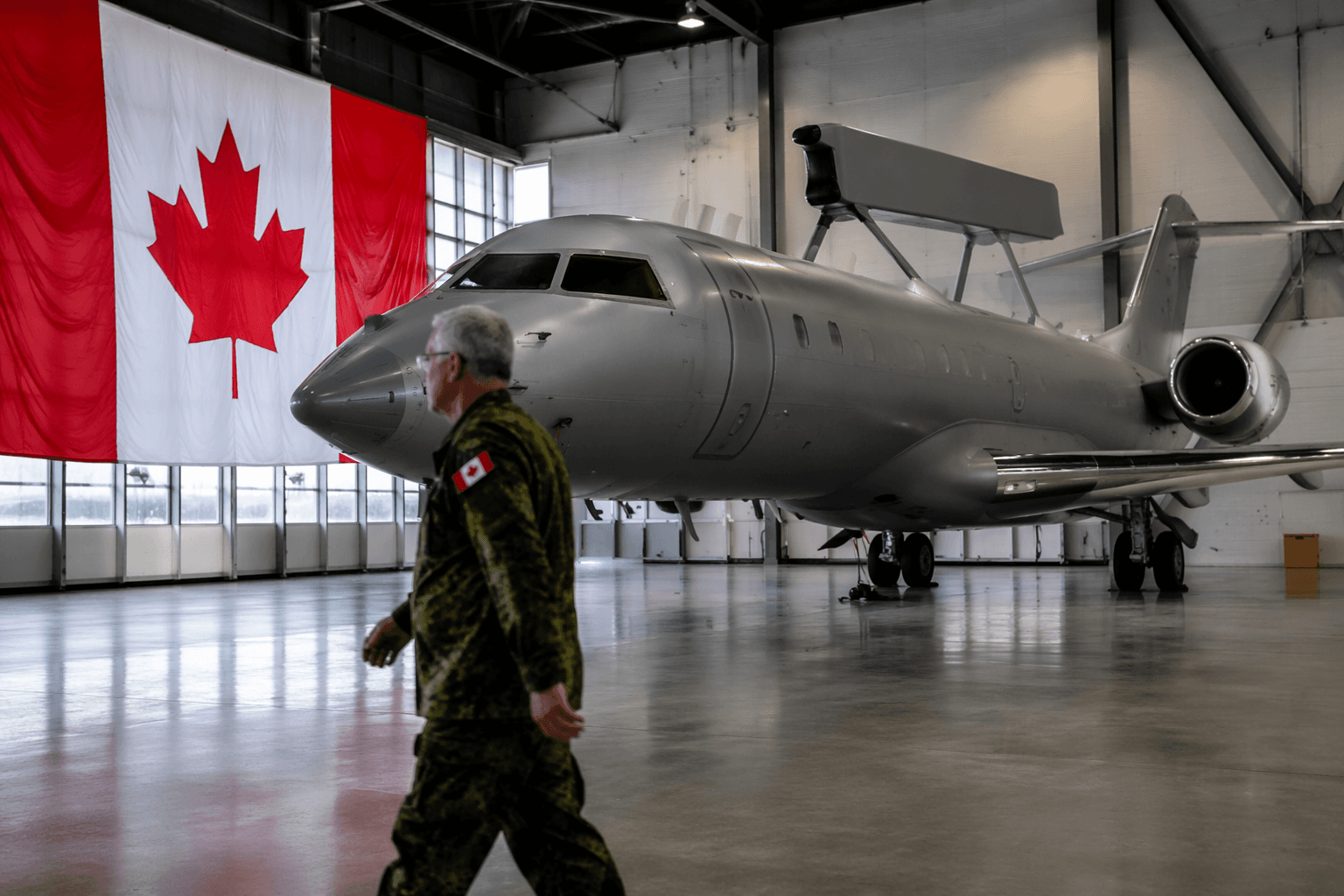
The platform is designed to detect and track aircraft, ships and missiles over long ranges, including cruise and hypersonic missiles, giving Canada a capability that matters across the Arctic and the continent. For Ottawa, the purchase is not just about filling a capability gap. It is part of a broader effort to reduce reliance on U.S. defense suppliers at a time when Carney is also trying to reset Canada’s security relationships.
That strategy has already reached beyond aircraft procurement. Canada joined the European Union’s Security Action for Europe defense initiative in December 2025, giving Canadian defense firms access to a large European procurement and lending program. The Saab selection fits that broader shift: Canada is looking to diversify the industrial and political architecture behind its military planning, not just the equipment it buys.

The announcement at CANSEC in Ottawa framed the move as part of rebuilding Canada’s military while strengthening ties with Europe. It also underlined how defense buying has become a strategic lever in Canada’s relationship with the United States. Choosing Saab over American suppliers does not sever North American defense cooperation, but it does show that Ottawa is willing to use procurement to widen its options, hedge against trade friction and assert more control over how Canada equips its forces for Arctic surveillance and continental air defense.
This article was produced by Prism’s automated news system from verified source data, official records, and press releases, then run through automated quality and moderation checks before publishing. The system is built and supervised by the people who set the standards it runs under. Read our full AI policy.
Did this article answer your question?


