Carney launches Canada Strong Fund, a smaller sovereign wealth push
Canada is seeding a $25 billion sovereign wealth fund, far smaller than Norway’s and Gulf giants, to back domestic projects, not just save oil revenue.

Why would an energy-rich country launch a sovereign wealth fund with only $25 billion when Norway’s oil fund ranks among the world’s largest? Ottawa’s answer is that the Canada Strong Fund is meant to do something different: finance domestic industry, not simply store commodity wealth for the next generation.
Prime Minister Mark Carney announced the Canada Strong Fund on April 27, 2026, calling it Canada’s first national sovereign wealth fund. The federal government said it will start with $25 billion over three years on a cash basis and will be run as a new Crown corporation at arm’s length, with a chief executive officer and an independent board. The fund will invest on a fully commercial basis, primarily through equity stakes, and will target strategic Canadian projects and companies in infrastructure, advanced manufacturing, energy and mining.
The design sets it apart from the classic oil-revenue model. Norway’s Government Pension Fund Global invests only abroad so the domestic economy does not overheat, and the Norwegian government says the broader Government Pension Fund exists to help finance the welfare state for future generations and support long-term management of petroleum revenues. Canada’s plan points in the opposite direction: it is meant to invest alongside private capital inside Canada, tying the fund to the government’s Build Canada Strong agenda, the Major Projects Office and the Building Canada Act. Ottawa is treating the vehicle less like a distant savings pot and more like a financing arm for nation-building projects.
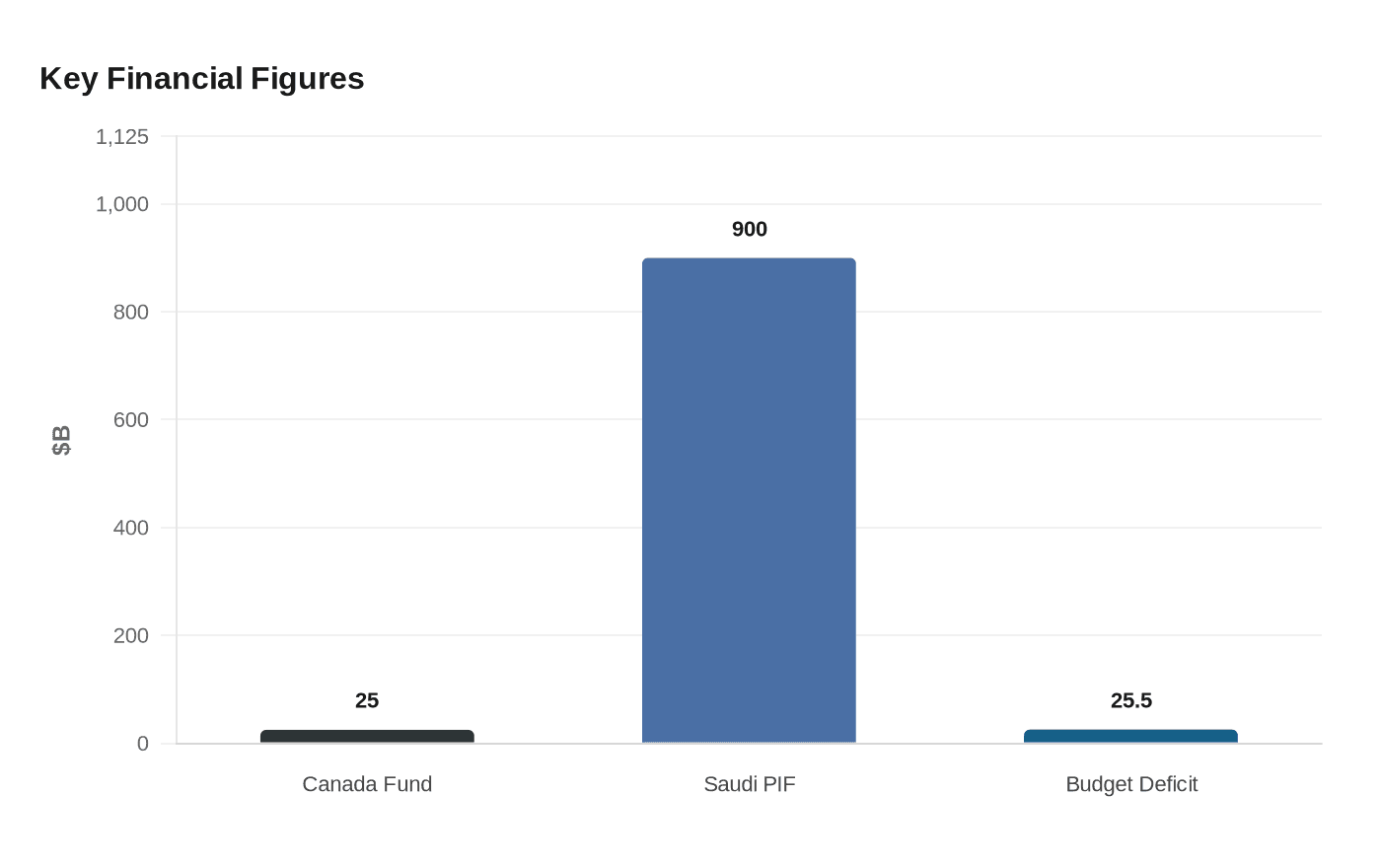
The size gap is just as revealing. Saudi Arabia’s Public Investment Fund says it manages more than $900 billion in assets, while Abu Dhabi’s Investment Authority was established in 1976 and invests on behalf of the government of Abu Dhabi for long-term value creation. Against that backdrop, Canada’s $25 billion seed capital looks modest. But that modesty is also the point: the government is entering the sovereign wealth field late and with a narrower mandate, trying to use public capital to crowd in private money rather than replicate the giant commodity funds built by major oil exporters.
The timing underscores the fiscal strain behind the politics. The Department of Finance Canada’s February 2026 Fiscal Monitor showed a budgetary deficit of $25.5 billion for the April 2025 to February 2026 period. The fund was unveiled just before a fiscal update, as Ottawa pushed a broader industrial policy agenda and moved toward eliminating the oil-and-gas emissions cap. The government has also said the Canada Strong Fund may eventually offer a retail investment product, a sign that it wants Canadians not only to watch the project but potentially to buy into it. The open question is whether the fund becomes a lasting source of commercial returns, a tool of industrial policy, or a symbol of discipline in a tighter fiscal era.
This article was produced by Prism’s automated news system from verified source data, official records, and press releases, then run through automated quality and moderation checks before publishing. The system is built and supervised by the people who set the standards it runs under. Read our full AI policy.
Did this article answer your question?

