Carney urges middle powers to work together, not court Washington
In Dublin, Mark Carney said Canada and Ireland should build leverage together, not chase Washington, as Ottawa broadened ties across trade, defence and AI.
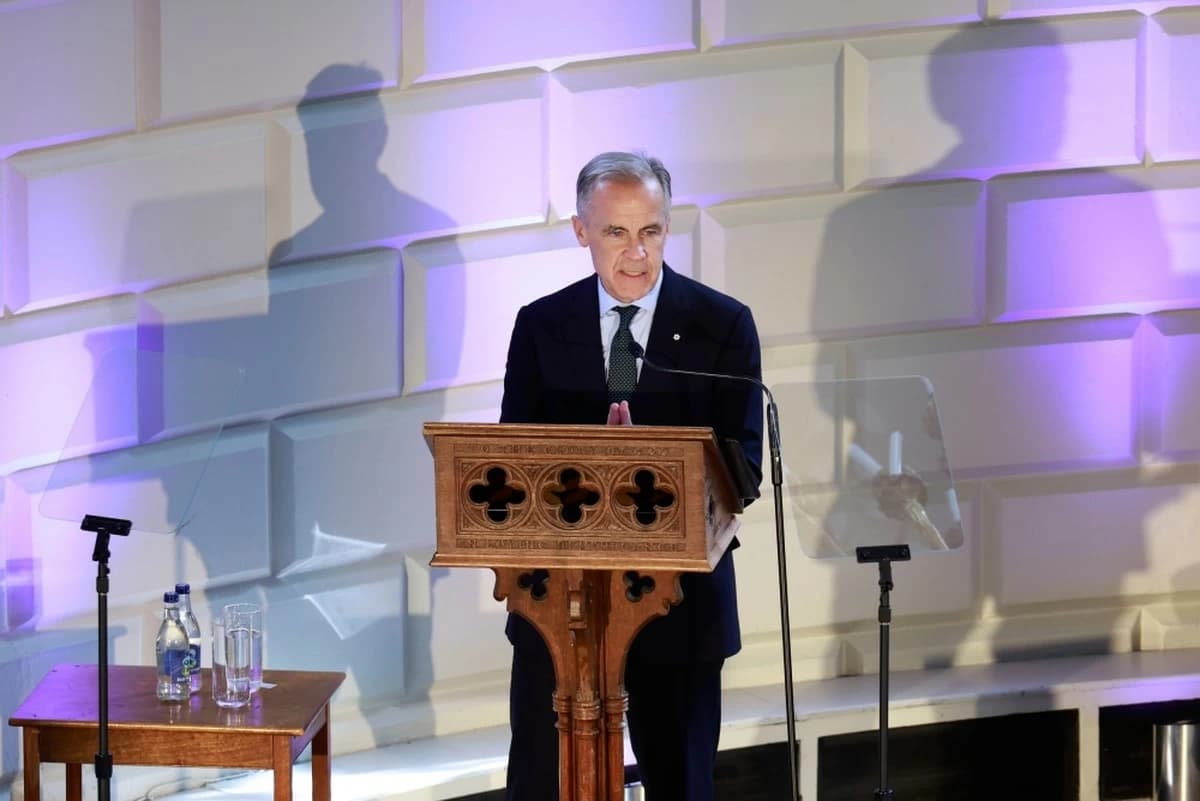
Mark Carney used his first official visit to Ireland as prime minister to argue that middle powers should stop competing for Washington’s favor and start building leverage with one another. In Dublin, Carney cast Canada and Ireland as countries that can still be forces for good in a fractured world, even as both keep an unavoidable relationship with the United States.
The message was paired with concrete diplomacy. Carney and Taoiseach Micheál Martin announced a new Canada-Ireland cooperation framework covering trade and investment, life sciences, research and innovation, and security and defence. The two governments also said they would deepen work across science, technology and culture, signaling that the relationship is no longer limited to heritage ties and sentiment.

The visit came as part of Carney’s June 11-17 tour that also included France and the 2026 G7 Leaders’ Summit. Ottawa said the broader trip was meant to deepen partnerships across trade, defence and technology. In Paris, Carney’s government said it was expanding Canada’s partnership with France across trade, defence and advanced technologies, a parallel effort that suggests a deliberate push to widen Canada’s strategic options beyond North America.
Ireland is already a growing economic partner. Dublin said bilateral trade in goods and services with Canada rose from €3.2 billion in 2016 to more than €12 billion in 2024. Irish officials said ratification of the Canada-EU Comprehensive Economic and Trade Agreement was expected in the coming weeks, giving the Carney government another reason to lean into Europe at a time of strain in global trade, security and supply chains.
Carney gave his argument numerical heft, saying Canada and the European Union together have a population more than twice that of the United States, a similarly sized economy and a collective defense budget twice China’s. The point was clear: middle-sized democracies do not need to wait for direction from Washington if they can coordinate trade, technology and security more closely among themselves.
Ottawa has already signaled where it wants that coordination to go. On June 4, Canada announced its National Artificial Intelligence Strategy: AI for All, and Irish officials said the two countries would work together on AI, pharmaceuticals, biotechnology and food security. The Canadian government said the Canada-Ireland relationship is rooted in shared history, democratic values, close people-to-people and business ties, and a commitment to international law and human rights.
For Carney, the Dublin stop was more than ceremonial. It was a case study in a broader Canadian strategy: keep cooperating with the United States, but build enough transatlantic and middle-power alignment to avoid being defined by Washington’s mood.
This article was produced by Prism’s automated news system from verified source data, official records, and press releases, then run through automated quality and moderation checks before publishing. The system is built and supervised by the people who set the standards it runs under. Read our full AI policy.
Did this article answer your question?


