CBS News Sunday Morning previews birthright citizenship, Mulaney, Manet exhibit
CBS News Sunday Morning mixes Supreme Court politics, celebrity conversation and a Cleveland art show in a lineup built to keep Sunday viewers with both news and culture.
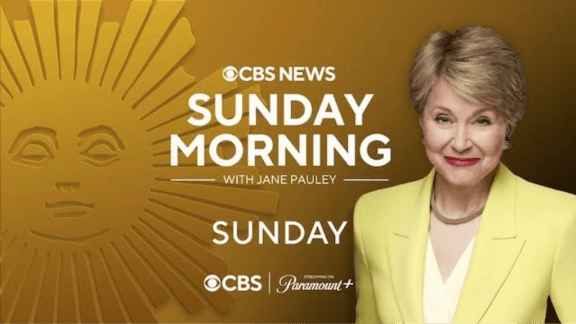
CBS News Sunday Morning is leaning into the format that has kept legacy Sunday news magazines relevant: a fast blend of public affairs, soft features, and cultural reporting. The June 21, 2026 broadcast, anchored by Lee Cowan, runs Sunday from 9:00 to 10:30 a.m. ET on CBS and begins streaming at 11:00 a.m. ET on Paramount+ and the CBS News app, with the episode order and subject matter subject to change. Hosted by Jane Pauley and overseen by executive producer Rand Morrison, the hour is built to move from the Supreme Court to a museum gallery without losing its audience.
A Sunday lineup designed for range
The program’s appeal has always rested on contrast, and this week’s slate makes that strategy plain. Mo Rocca takes on birthright citizenship, a live legal and political issue now before the Supreme Court, while Tracy Smith catches up with comedian and actor John Mulaney. From there, the show pivots to a profile of the Theodore Roosevelt Presidential Library, a seahorse feature, a music conversation with Shooter Jennings, and a personal reflection from Charles Blow on fathers.
That structure says as much about the economics of attention as it does about the daypart. Sunday morning remains one of television’s last places where a broad audience can be asked to follow policy, biography, science, history, and arts in a single sitting. CBS News Sunday Morning is not trying to segment viewers into narrow niches; it is trying to hold them with variety.
Birthright citizenship and the Supreme Court frame
Mo Rocca’s report on birthright citizenship gives the broadcast a clear news hook. By placing the subject in the context of the Supreme Court, the show ties a constitutional question to a current legal fight, making the segment part explainer and part public-affairs update. It is the kind of story that rewards viewers who want the day’s deeper stakes rather than a quick headline.
The choice also fits the program’s long-running editorial balance. Sunday morning news magazines have historically used high-interest legal and political topics to anchor lighter material around them, and this week’s broadcast follows that model. The result is a lineup that treats a constitutional issue as one piece of a larger civic and cultural conversation.
Comedy, conversation, and the celebrity interview
Tracy Smith’s sit-down with John Mulaney keeps the tone moving. Mulaney’s profile as both comedian and actor makes him an ideal subject for a Sunday feature that can mix entertainment with insight, especially on a broadcast that values personality-driven interviews as much as hard news.
The presence of Mulaney alongside a Supreme Court issue is part of the show’s formula. CBS News Sunday Morning has long used celebrity profiles not as filler, but as a way to widen the emotional range of the hour. That approach matters in a media environment where audiences are asked to choose between serious information and accessible storytelling; the show insists on both.
Theodore Roosevelt, Medora and the politics of place
Lee Cowan’s visit to the Theodore Roosevelt Presidential Library adds a historical and institutional layer to the hour. The project says it will open on July 4, 2026, in Medora, North Dakota, timed to the 250th anniversary of U.S. independence. It describes itself as a museum-inspired destination, and its remote Badlands setting is meant to reflect the landscape Roosevelt knew.
The timing is significant. Opening on Independence Day in the nation’s semiquincentennial year gives the library built-in symbolic force, while the location in Medora connects Roosevelt’s legacy to a specific Western geography rather than a generic memorial space. For viewers, the segment is likely to work on two levels: as a preview of a new cultural institution and as a story about how presidential memory is being packaged for a modern audience.
Science, family and the fatherhood thread
Conor Knighton’s piece on seahorses offers the sort of memorable natural-history detail that Sunday Morning handles especially well: the fathers carry the babies. It is a compact fact, but one that fits the show’s habit of turning unusual science into easy-to-grasp storytelling.
That theme of fatherhood carries into two other segments. Robert Costa talks with Shooter Jennings, the musician and music producer who is the son of the late country legend Waylon Jennings, while Charles Blow offers thoughts on fathers. Together, those pieces create a small thematic arc around inheritance, identity, and the ways family shapes public life. The result is not a formal package, but a subtle thread running through the broadcast.
Childhood obesity, measured in hard numbers
Dr. Jon LaPook’s segment on childhood obesity gives the hour its most direct public-health focus. CDC data published in 2026 show that 19.7% of U.S. children and adolescents ages 2 to 19 had obesity from 2017 to March 2020, equal to about 14.7 million young people. Those figures underscore why the topic remains central to conversations about long-term health costs, prevention, and care.
The data point also broadens the segment beyond individual behavior. A rate near one in five children points to a population-level challenge with implications for schools, families, insurers, and the health system. In a broadcast otherwise populated by culture and personality, this is the segment that most clearly carries policy weight.
Manet and Morisot in Cleveland
Lee Cowan’s final stop is the Manet & Morisot exhibition at the Cleveland Museum of Art, a show that deepens the program’s cultural range while keeping the emphasis on access and context. The museum says the exhibition is the first major show devoted to the artistic exchange between Édouard Manet and Berthe Morisot. It runs from March 29 to July 5, 2026, and includes 36 paintings and seven works on paper on loan from museums and private collections in the United States and Europe.
That scale matters because it signals ambition, not just novelty. By focusing on the artistic exchange between Manet and Morisot, the exhibition frames modern art as a dialogue rather than a series of isolated masterpieces. For Sunday Morning viewers, the segment offers a familiar pleasure of the franchise: a cultural story told through place, objects, and personalities rather than theory alone.
CBS News Sunday Morning’s June 21 lineup shows why the format still lasts. It can move from birthright citizenship and the Supreme Court to child health statistics, from a presidential library in the Badlands to a Cleveland art exhibition, and make that range feel cohesive. In an attention economy that often rewards narrowness, the broadcast is betting that viewers still want a single hour that makes the week’s public life feel both understandable and human.
This article was produced by Prism’s automated news system from verified source data, official records, and press releases, then run through automated quality and moderation checks before publishing. The system is built and supervised by the people who set the standards it runs under. Read our full AI policy.
Did this article answer your question?