CBS News Sunday Morning spotlights Ragtime revival and American Dream parallels
A Broadway revival, a labor-market stress test, and honey expertise show how Sunday Morning blends culture, accountability, and human-scale curiosity.
A broadcast built around national mood
Broadway revival energy sits beside labor-market anxiety and a lesson in honey on this week’s CBS News Sunday Morning, a lineup that shows how the program still builds around stories with broad emotional reach. Hosted by Jane Pauley, the Emmy-winning broadcast airs Sundays at 9:00 a.m. ET and streams on the CBS News app beginning at 11:00 a.m. ET.
The editorial mix is deliberate. One segment leans into theater and identity, another into work and economic uncertainty, and a third into consumer literacy and food culture. Taken together, the hour suggests that network newsmagazines are betting audiences still want craft, context, and lived experience, not just headlines.
Ragtime returns as a mirror of the present
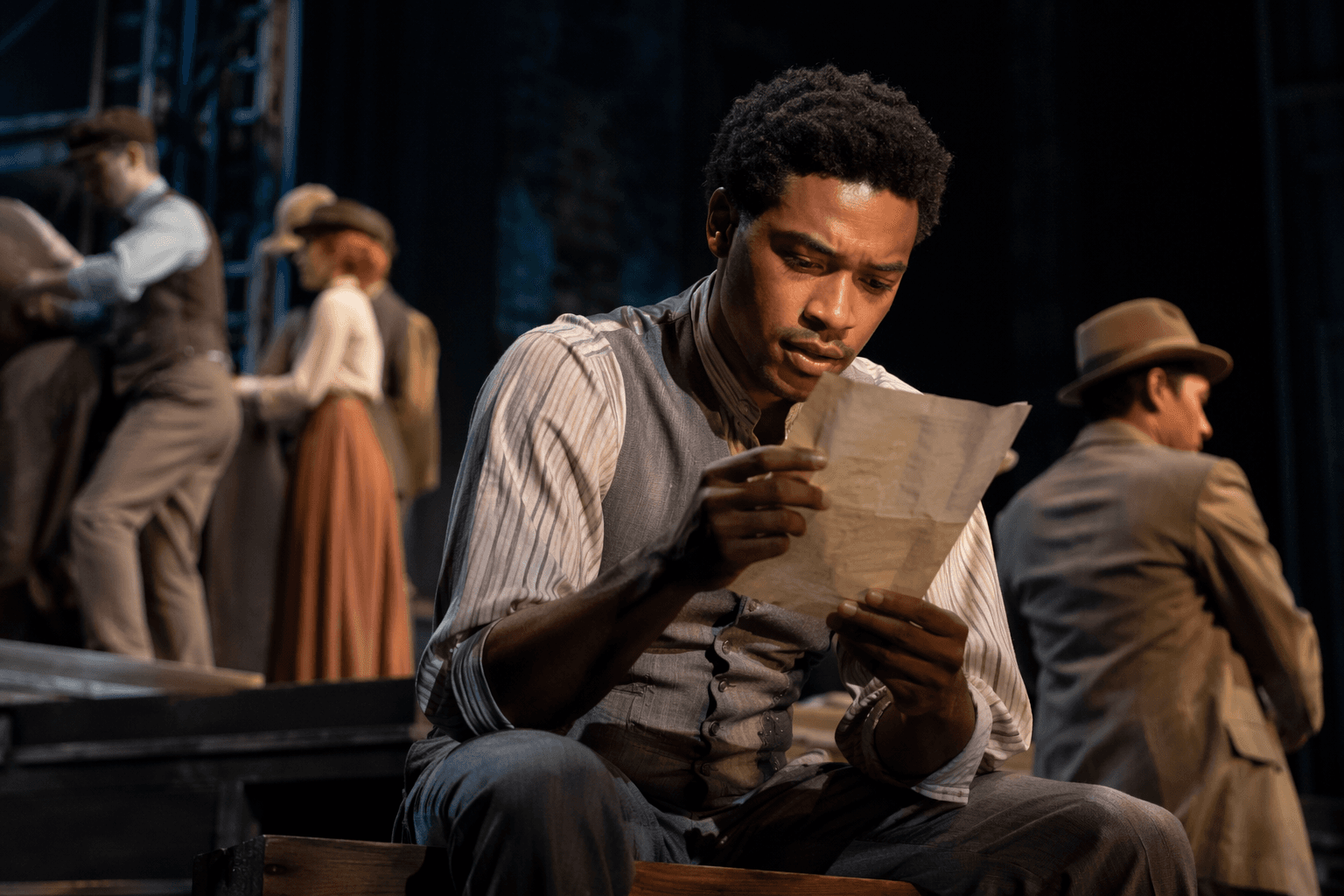
The cover story centers on the Broadway revival of Ragtime, a musical nominated for 11 Tony Awards that uses a turn-of-the-20th-century setting to reflect present-day anxieties. Correspondent Mo Rocca talks with Tony-nominated actors Joshua Henry, Caissie Levy, and Brandon Uranowitz, along with lyricist Lynn Ahrens and composer Stephen Flaherty, about how the show connects the American Dream to contemporary questions of race and immigration.
That framing matters because Ragtime is being presented not simply as a revival, but as a lens. The musical’s scope, emotional sweep, and historical setting make it useful for a newsmagazine that wants culture to do more than entertain. Here, Broadway becomes a way to talk about who gets included in the promise of America, and what that promise has always required from people trying to claim it.
The show’s themes also fit the tone of the program itself. Sunday Morning often favors stories that are accessible on the surface but layered underneath, and Ragtime offers exactly that kind of entry point. A musical about ambition, inequality, and belonging can carry a national conversation without ever sounding like a lecture.
Why the archive matters as much as the new interview
The episode also reaches back to Jan. 18, 1998, with archival footage from Sunday Morning’s original report on Ragtime’s Broadway opening. In that segment, Charles Osgood spoke with novelist E.L. Doctorow, playwright Terrence McNally, composer Stephen Flaherty, and lyricist Lynn Ahrens as the production debuted in New York City, alongside the opening of the Ford Center for the Performing Arts.
That archival return does more than fill time. It shows that the program understands its own history as part of the story, especially when a work has already proven it can speak to more than one era. The original Broadway production went on to win four Tony Awards, and the new revival is being framed as a continuation of that legacy rather than a nostalgic rerun.
For a national audience, that kind of programming has clear appeal. It gives cultural journalism a sense of continuity, while also reinforcing the idea that old stories can feel newly urgent when the social questions underneath them have not gone away. In that way, the archive functions as a bridge between past and present, not a detour.
Young workers, AI, and a tightening job market
The episode’s strongest accountability-minded segment turns to young job applicants trying to find entry-level work in a difficult market. Sunday Morning says the unemployment rate for young workers is about twice the national average, and correspondent David Pogue examines how AI is affecting both prospects and the hiring process itself.
That is a significant editorial choice because it shifts the conversation from abstract technology to real consequences for recent graduates. The segment brings in Columbia Business School professor Laura Veldkamp and Hilton chief human resources officer Laura Fuentes, signaling that the issue is being approached from both economic and employer perspectives.
The public-health and social-equity implications are hard to miss. Prolonged joblessness at the beginning of a career can shape income, housing stability, mental health, and long-term mobility, especially for workers already facing structural barriers. By pairing AI with youth unemployment, the program points toward a labor market where technology may be amplifying uncertainty just as new entrants are trying to get a foothold.
The segment also suggests where the audience’s curiosity is headed. Viewers are not being asked to choose between a human-interest story and a policy story, because this one is both. It is about a generation trying to be hired, and about the systems deciding whether that generation gets its first real chance.
Honey as a lesson in expertise and trust
The food segment brings a lighter surface but a similarly specific point of view. Serena Altschul talks with Marina Marchese, identified as America’s first honey sommelier, about the subtle differences among honeys and what consumers should watch for when looking for unadulterated honey.
That story fits the program’s broader instinct to treat niche knowledge as worthwhile television. Marchese’s role turns an ordinary pantry item into a subject of craftsmanship, fraud awareness, and sensory expertise. In a media environment crowded with broad claims and vague wellness language, the segment’s focus on what honey actually is and how it is evaluated feels refreshingly grounded.
The details extend beyond the segment itself. Marchese’s book, The World Atlas of Honey, is available in hardcover and eBook form through University of California Press, and her work is connected to the American Honey Tasting Society. Those specifics underline the show’s tendency to link expertise with practical consumer education, not just colorful television.
What this lineup says about Sunday Morning right now
This week’s broadcast shows a clear editorial strategy: cultural prestige, civic concern, and tactile human detail all share the same stage. Ragtime offers history and artistic scale, the job-search segment delivers policy relevance and social pressure, and the honey feature adds a precise, accessible form of expertise.
That balance helps explain why Sunday Morning remains durable. The program is not chasing novelty for its own sake; it is choosing stories that reveal what audiences still want from national newsmagazines, context, credibility, and a sense that the country’s biggest arguments can be understood through specific people, specific places, and specific work.
This article was produced by Prism’s automated news system from verified source data, official records, and press releases, then run through automated quality and moderation checks before publishing. The system is built and supervised by the people who set the standards it runs under. Read our full AI policy.
Did this article answer your question?