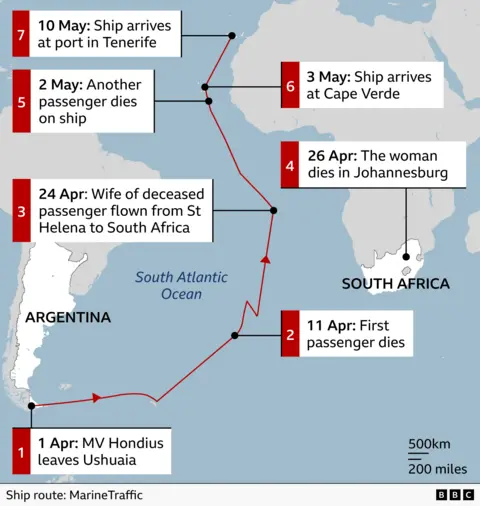
CDC monitors cruise ship hantavirus cluster, U.S. risk remains extremely low
CDC is watching a cruise-ship Andes virus cluster, but the U.S. has logged just 890 hantavirus cases since 1993 and says the public risk remains extremely low.
A cruise-ship cluster tied to Andes virus has put hantavirus back in view, but federal health officials say the danger to Americans remains exceptionally small. The Centers for Disease Control and Prevention says no U.S. cases have been reported from the outbreak to date, and the World Health Organization has assessed the risk to the global population as low.
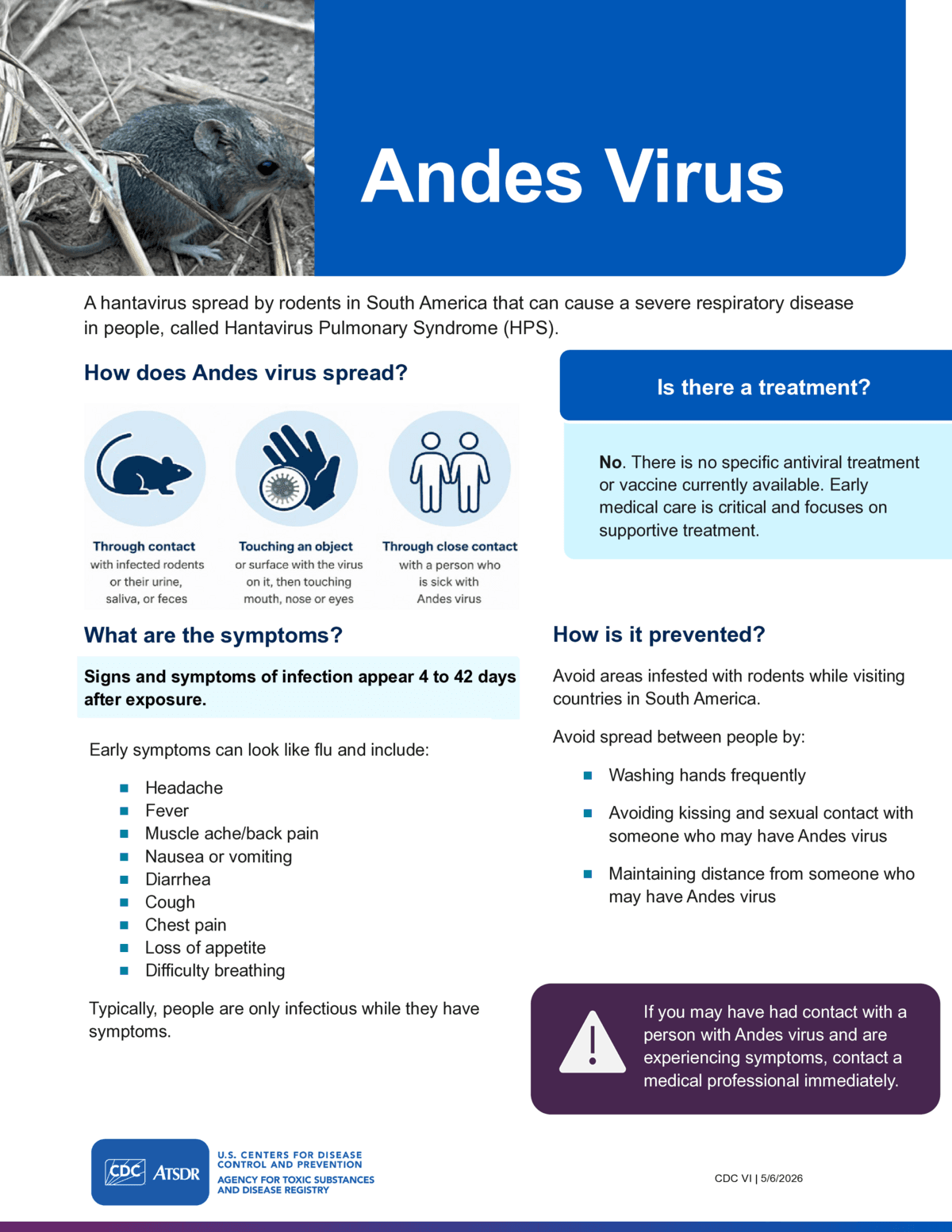
The reason hantavirus still draws attention is not how often it appears, but how hard it can strike when it does. In the Americas, hantaviruses can cause hantavirus pulmonary syndrome, a severe and potentially deadly lung disease. CDC says 890 laboratory-confirmed hantavirus disease cases were reported in the United States from 1993 through the end of 2023, a low total that still reflects a pathogen with a high enough fatality rate to keep public health officials on alert.
Transmission is usually tied to rodents, not casual contact between people. CDC says infection is primarily acquired through contact with the urine, droppings, or saliva of infected rodents, and its prevention guidance stresses rodent control and avoiding rodent contamination as the main ways to stop disease before it starts. That matters because exposures often happen in places people think of as temporary or low-risk, including cabins, lodging, cleanup sites, and other settings where rodents have been active.
The modern warning sign for hantavirus came in the spring of 1993, when a mysterious respiratory illness hit the Four Corners region of Arizona, Colorado, New Mexico, and Utah. A CDC retrospective says the investigation brought together CDC, state health departments, the Indian Health Service, the Navajo Nation, and the University of New Mexico, and that the causative virus was isolated in November 1993. The outbreak became a benchmark for the disease because it showed how quickly a rodent-exposure problem could turn into a lethal human emergency.
A second U.S. episode reinforced that lesson. In 2012, confirmed hantavirus pulmonary syndrome cases were reported among visitors staying in Curry Village in Yosemite National Park. WHO later described eight cases by September 7, 2012, with three fatalities, while CDC investigation summaries put the total at 10 infections among overnight visitors and three deaths. That history explains why officials are watching the cruise-ship cluster closely: hantavirus remains rare in the United States, but when diagnosis is delayed and exposure goes unnoticed, the consequences can be swift and severe.
Know something we missed? Have a correction or additional information?
Submit a Tip