CDC Pauses Testing for Dozens of Infectious Diseases, Alarming Health Experts
The CDC quietly paused confirmatory testing for rabies, mpox, and more than two dozen other diseases, as its poxvirus and rabies labs have lost roughly half their staff.

The Centers for Disease Control and Prevention quietly posted a list of more than two dozen diagnostic tests it had suspended, covering diseases from rabies and monkeypox to fungal infections and Oropouche virus, a move that infectious-disease specialists are calling an unprecedented surveillance gap tied directly to deep cuts across the agency's workforce.
The suspended tests include two human rabies assays: an antemortem test used to diagnose patients while still alive, and a rabies antibody titer test used to assess immunization status. Pox virus testing, fungal disease panels, and assays for Oropouche virus were also among the affected tests. HHS spokesman Andrew Nixon attributed the pause to a review process, saying the CDC was "evaluating these assays as part of our routine review to uphold our commitment to high-quality laboratory testing," and that "some of these tests will be available through CDC labs again in the coming weeks." He did not specify which tests would return first or in what order.
That explanation has not satisfied the public health community. Scott Becker, chief executive of the Association of Public Health Laboratories, said while the CDC has been evaluating its testing since 2024, this pause is broader than any previous one, and the reasons are not entirely clear. J. Glenn Morris Jr., a professor and former director of the Emerging Pathogens Institute at the University of Florida, was more direct, calling the situation "a real disaster from a public health standpoint." Morris described CDC lab services as the laboratory of last resort for states confronting rare or unexpected pathogens that exceed local capacity, and he singled out the suspension of pox virus testing as particularly alarming given that the United States has recorded roughly 370 mpox cases through March 2026, nearly four years after the 2022 global outbreak first revealed the need for sustained national diagnostic capacity.
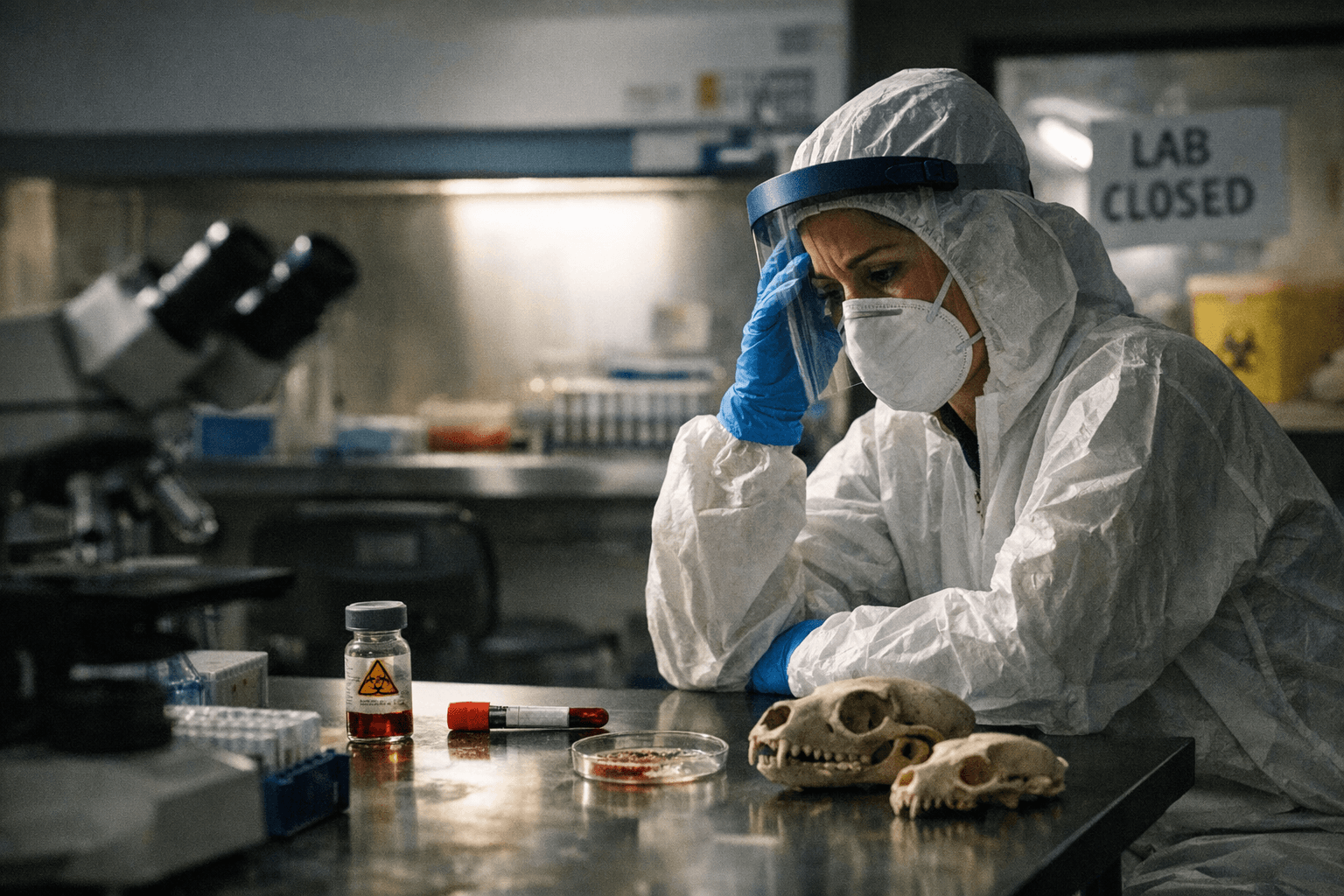
The pause comes after a dramatic reduction in CDC's workforce through layoffs, retirements, resignations, and the non-renewal of temporary appointments, with staffing dropping an estimated 20 to 25 percent across the agency. The impact on specific labs has been severe: the poxvirus and rabies labs each lost approximately half their staff, according to the National Public Health Coalition, a group of former and current CDC employees formed in the wake of the downsizing. The agency's malaria branch sustained even deeper losses.
The equity implications are significant. State public health laboratories in large jurisdictions like New York and California have the infrastructure to absorb some of the testing demand. Smaller and under-resourced state labs do not. When a case of suspected rabies or an unusual pox virus presentation surfaces in a rural county, confirmatory testing at the CDC has historically been the backstop. Without it, case confirmation slows, contact investigations stall, and the window for public health intervention narrows.
HHS said the CDC would help coordinate testing through alternate laboratories during the review period, but no specific interim protocol or timeline was provided for the diseases considered highest risk. For Becker, the outcome hinges entirely on permanence: he described the pauses as "concerning, only if it's permanent." For Morris and state officials watching the situation, the distinction between temporary and permanent may already be collapsing in practice, with no clear restoration date in sight.
This article was produced by Prism’s automated news system from verified source data, official records, and press releases, then run through automated quality and moderation checks before publishing. The system is built and supervised by the people who set the standards it runs under. Read our full AI policy.
Did this article answer your question?