CDC raises global polio advisory to Level 2 for 32 destinations, urges boosters
The CDC flagged 32 countries for circulating poliovirus and told travelers to “practice enhanced precautions,” urging routine vaccination and eligible adult boosters before travel.

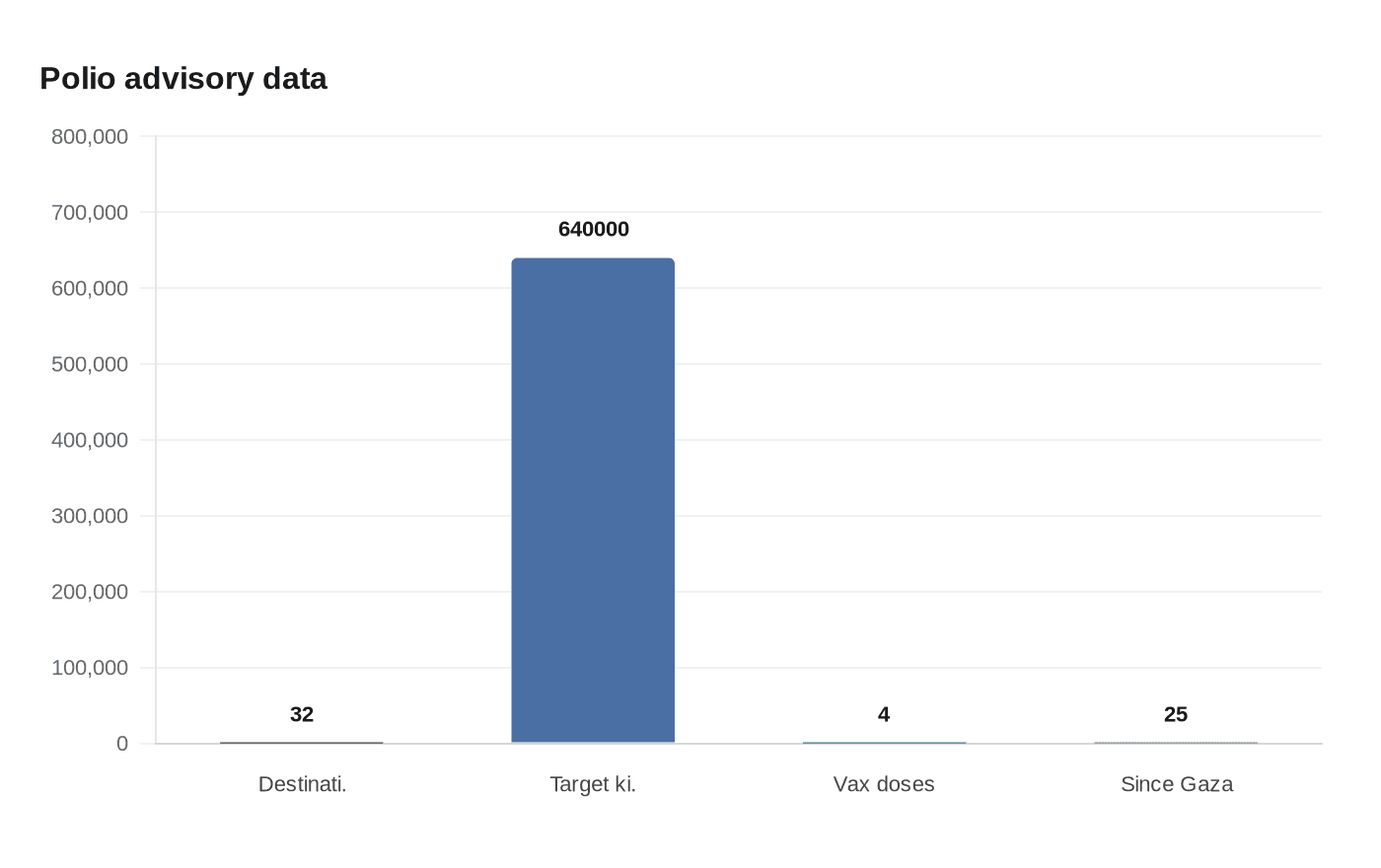
The U.S. Centers for Disease Control and Prevention raised its Global Polio Travel Health Notice to Level 2, labeled "Practice Enhanced Precautions," after poliovirus was detected in multiple international destinations within the past 12 months. The advisory names 32 countries spanning Europe, Africa, the Middle East, South Asia and Oceania, and urges that "children and adults should be up to date on their routine polio vaccines."
The destinations listed include Afghanistan, Algeria, Angola, Benin, Burkina Faso, Cameroon, Central African Republic, Chad, Côte d'Ivoire, Democratic Republic of the Congo, Djibouti, Ethiopia, Finland, Gaza, Germany, Ghana, Guinea, Israel, Niger, Nigeria, Pakistan, Papua New Guinea, Poland, Senegal, Somalia, South Sudan, Spain, Sudan, Tanzania, United Kingdom, Yemen and Zimbabwe. The CDC page on global polio was last reviewed November 25, 2025; the advisory has drawn fresh attention following recent reports of cases, including a child paralyzed by polio in Gaza.
Live coverage of the Gaza case described a 10-month-old boy who contracted polio and is now paralyzed in the leg, the first reported Gaza polio case in 25 years. The U.N. health agency plans a mass vaccination drive aiming to reach 640,000 Palestinian children, underscoring how local outbreaks can prompt urgent international immunization campaigns.
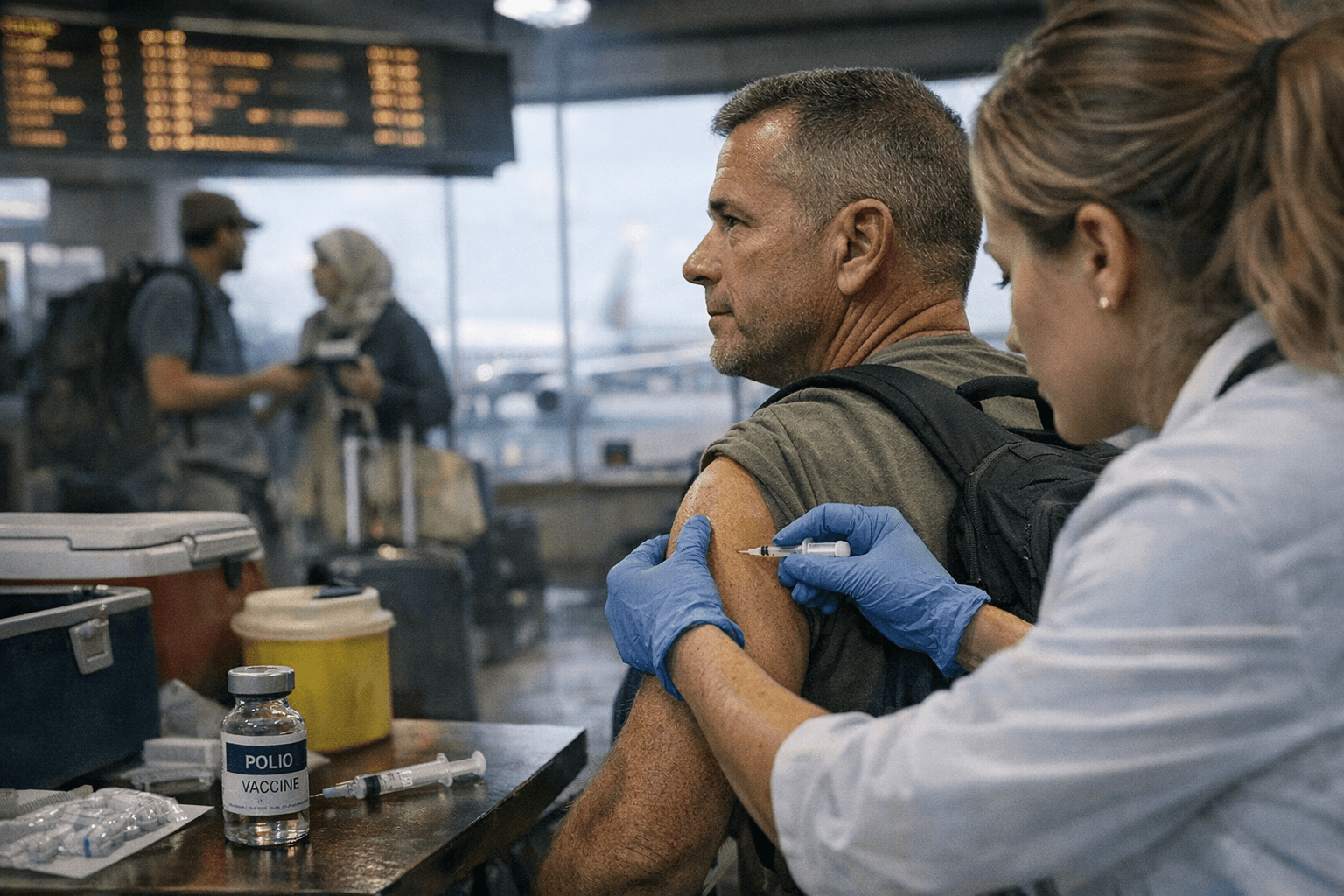
The CDC reiterated practical clinical and traveler guidance. "Adult travelers may get an inactivated polio vaccine booster if they are going to a destination that has circulating poliovirus, have completed their routine polio vaccine series, and have not already received one adult booster dose." Clinicians are urged to "Ensure that anyone unvaccinated or incompletely vaccinated completes the routine polio vaccine series before international travel." Childhood polio vaccination is delivered in four doses, and health officials emphasize that vaccination remains the primary defense.
Public health experts warn that the current advisory reflects persistent vulnerabilities in global immunization systems and the ability of poliovirus to move across borders quietly. The CDC highlights a critical epidemiologic challenge: "Most people with polio do not feel sick." Many infections are asymptomatic or mild, yet a small proportion can progress to paralysis or death when breathing muscles are affected. The virus spreads through fecal-oral routes and contaminated food or water, making sanitation and hygiene essential complements to vaccination.
The Level 2 designation stops short of recommending travel restrictions; CDC travel health levels range from Level 1, "Practice Usual Precautions," to Level 4, "Avoid All Travel." Level 2 is intended to prompt heightened awareness and vaccination checks rather than border closures. For travelers and clinicians, the immediate takeaway is clear: verify immunization records, complete any missing routine doses, and discuss a single inactivated polio vaccine booster for eligible adults before travel to affected destinations.
Beyond the immediate clinical guidance, the advisory spotlights deeper equity issues. Resurgence tends to cluster where health systems are weakened by conflict, displacement or resource shortages, leaving children at risk and complicating mass campaigns. Global eradication of polio has long depended on sustained, equitable access to vaccines and strong surveillance; current detections in diverse regions signal that gaps in those systems persist.
For travelers, a simple act, confirming vaccine status and seeking an eligible booster, reduces individual risk and helps limit international spread. For policymakers, the advisory is a reminder that investment in routine immunization, emergency vaccine stockpiles and water and sanitation infrastructure remains central to preventing paralytic disease from reestablishing footholds in vulnerable communities.
This article was produced by Prism’s automated news system from verified source data, official records, and press releases, then run through automated quality and moderation checks before publishing. The system is built and supervised by the people who set the standards it runs under. Read our full AI policy.
Did this article answer your question?