CDC tracks rare hantavirus outbreak after infected passenger dies aboard flight
A Dutch passenger who died after an Airlink flight to Johannesburg was later found to have hantavirus, triggering contact tracing across flights, ships and at least 12 countries.
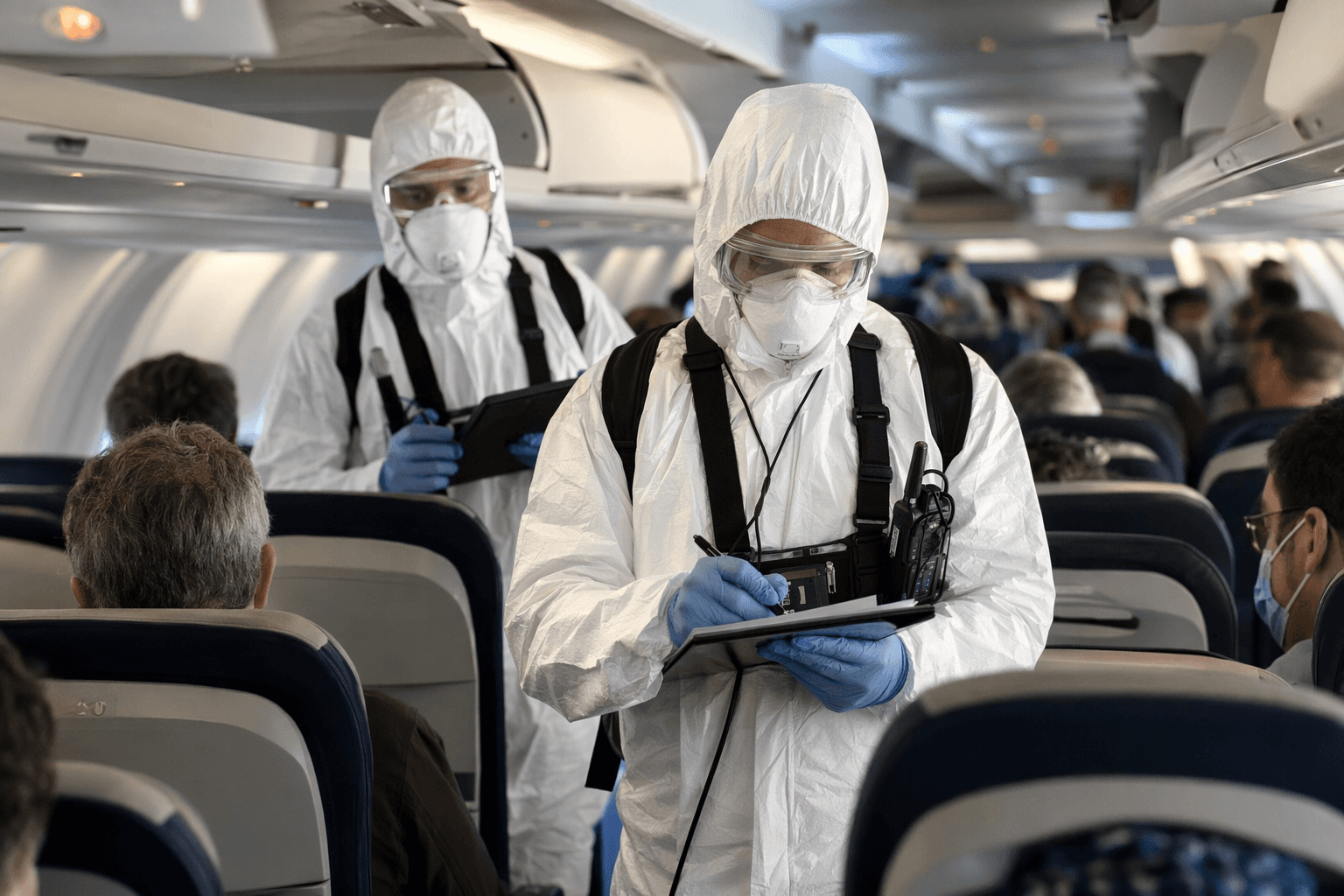
A 69-year-old Dutch woman died in Johannesburg two days after falling ill on an Airlink flight from St. Helena, and laboratory tests later confirmed on May 4 that she had hantavirus. Health officials traced 82 passengers and 6 crew members from that flight, while KLM Royal Dutch Airlines said she was briefly on a Johannesburg-to-Amsterdam flight before being removed because her condition worsened.
The case has drawn attention because the virus involved was identified as Andes virus, a rare hantavirus strain that can spread person to person, usually only with very close contact. The Centers for Disease Control and Prevention said it was responding to a deadly outbreak tied to cruise ship travel, but that no cases had been confirmed in the United States from this outbreak and the overall risk to the American public and travelers remained extremely low.
The outbreak has been linked to the Dutch-flagged cruise ship MV Hondius, which departed Ushuaia, Argentina, on April 1 with 147 passengers and crew aboard. By May 4, the World Health Organization said the cluster included seven cases, two laboratory-confirmed infections, five suspected cases, three deaths, one critically ill patient and three people with mild symptoms. The agency later updated the count to eight cases by May 8, still with three deaths.
WHO said the ship’s patients came from 23 nationalities and that illness onset ran from April 6 to April 28. It also said the vessel was moored off Cabo Verde as authorities continued tracing anyone who may have been exposed. At least 12 countries were monitoring passengers from the cruise ship outbreak, underscoring how quickly a rare infection can cross borders aboard international travel routes.
In the United States, the CDC said it repatriated American passengers to the Nebraska Biocontainment Unit and Emory University Hospital in Atlanta. By May 8, at least five U.S. states were monitoring exposed passengers, and the CDC said all exposed passengers were being followed. The response showed how public health systems move when a dangerous infection appears in a traveler: airlines, hospitals, state health departments and global agencies all had to coordinate quickly.
The episode also highlighted the uneven geography of risk. Andes virus is uncommon, but because it is the hantavirus strain known for person-to-person spread, even a small cluster can trigger wide contact tracing. For health officials, the priority is not panic, but containment, especially when the illness has already moved from a ship in the South Atlantic to flights crossing continents.
This article was produced by Prism’s automated news system from verified source data, official records, and press releases, then run through automated quality and moderation checks before publishing. The system is built and supervised by the people who set the standards it runs under. Read our full AI policy.
Did this article answer your question?


