CEAD's Faber Navalis automates one-piece 3D printing of 12m hulls
CEAD’s Faber Navalis prints one-piece hulls up to 12 m long, producing a 12 m RIB-style prototype in six weeks and claiming moldless, closed-loop production with glass-fiber HDPro.
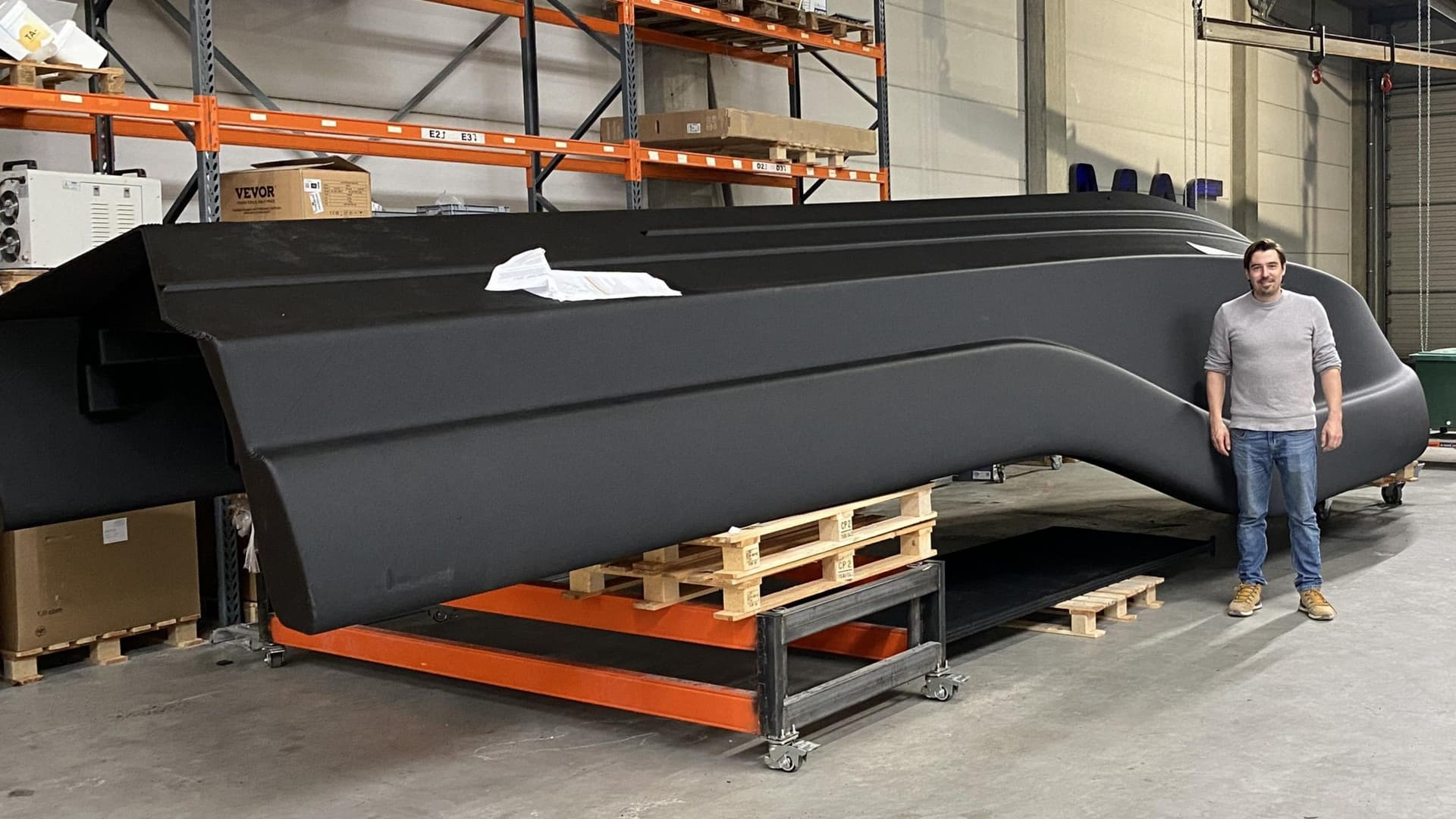
CEAD says its Faber Navalis system can 3D print full-size, one-piece hulls up to 12 meters long, and in some specifications up to 4 meters wide, cutting lead times and eliminating moulds and manual assembly. The company demonstrated the claim at the Marine Application Centre in Delft, where a prototype 12 m RIB-style fast boat was produced in six weeks for the Royal Dutch Navy’s Expertise Center of Additive Manufacturing, a build CEAD co-founder Mr Logtenberg described as: “We did it in six weeks and for a very limited budget. And we can learn from it and build another one in six weeks and even recycle the first one.”
CEAD describes Faber Navalis as an integrated, application-ready system that combines “specialized and patented CEAD hardware, CEAD HDPro material, dedicated Faber Navalis software workflow and quality control into one closed-loop production system: designed to ensure reliable, repeatable and high-performance results, completely automated.” The company highlights a glass-fiber reinforced variant of HDPro aimed at demanding marine environments and says the workflow lets designers embed bulkheads, stringers and stiffeners directly into a single continuous print.
Quality assurance is central to CEAD’s pitch. 3dmag reporter Varvara Koneva, in coverage dated February 6 and updated February 24, 2026, noted that CEAD’s data-logging platform provides real-time process monitoring, quality control and fleet management, and that the material and software stack is intended to meet industrial and defense performance requirements. CEAD’s maritime page, timestamped Vincent2026-02-02T13:59:07+02:00, positions Faber Navalis for industrial and defense-grade production of workboats, patrol vessels, supply boats, USVs, pontoons and work platforms rather than luxury yachts.
Andrea Baldolini, head of sales at CEAD Group, framed that market focus explicitly: “The process to produce yachts have different requirements in term of finishing, etc. from industrial and defense boats, therefore it is not the focus of the Faber Navalis.” Baldolini added that “using large-format 3D printing technologies can add value for patterns, tooling and interior end parts used to produce these kinds of vessels.”
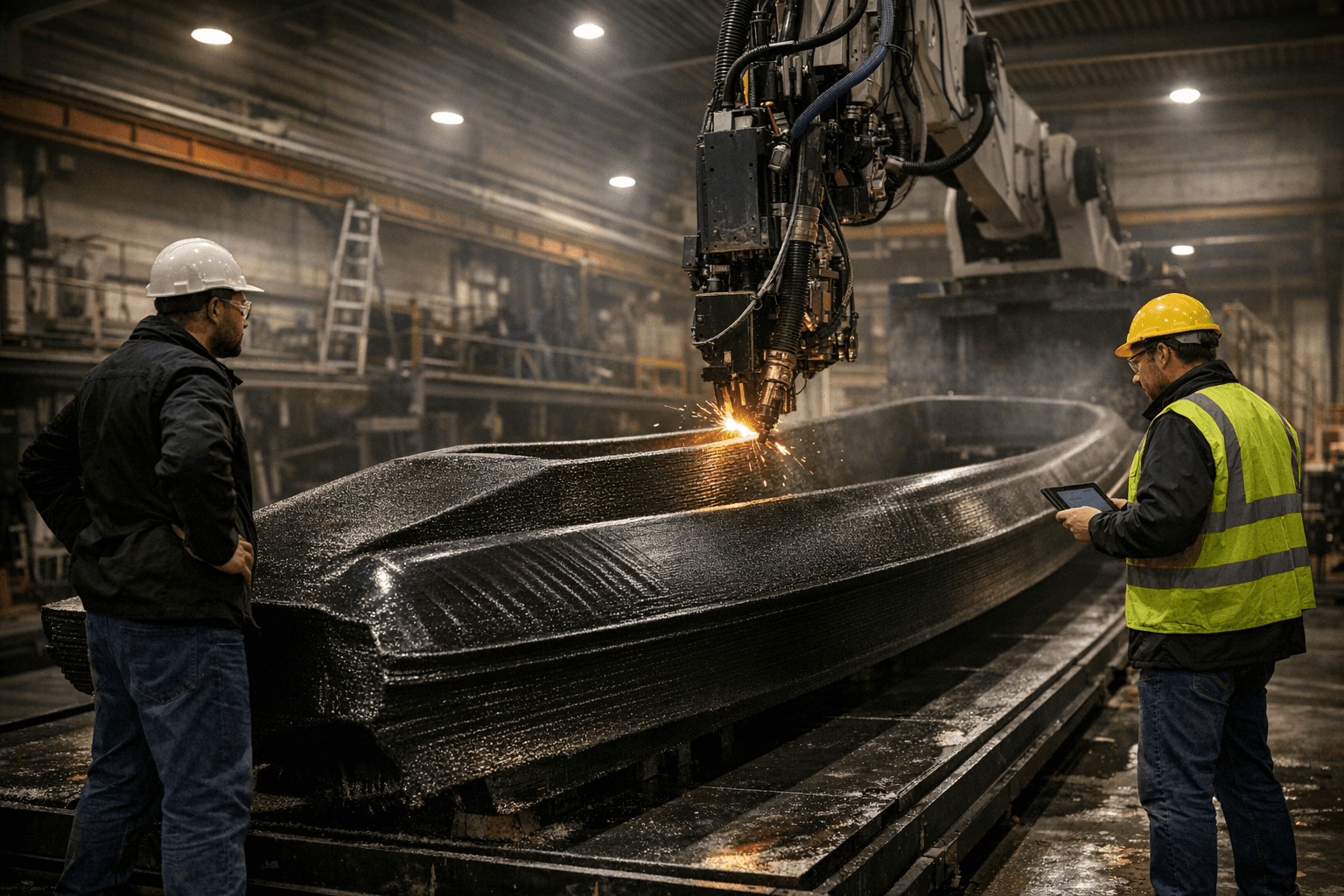
CEAD and BBC reporting also highlight practical logistics and mobility: CEAD runs a testing facility at Delft’s MAC, and Mr Logtenberg said material transport is compact, noting, “The only transport we need to do is the base material, which comes in big bags and it's very transport efficient, compared to a boat.” BBC coverage further pointed out that CEAD’s largest machines, separate from the Faber Navalis line, include a nearly 40 m printer used by a customer in Abu Dhabi to print an electric ferry.
CEAD claims printed hulls will be lighter, tougher and maintenance-free compared with fiberglass and aluminum, but the performance claims in provided materials are presented as company assertions rather than independently published test data. CEAD frames Faber Navalis as a production-ready, container-transportable solution that shifted the company from selling printers to operating production, encapsulated in Mr Logtenberg’s line, “Instead of just building machines, we're going to do it ourselves.” If CEAD’s six-week prototype timeline and closed-loop QA hold up under external verification, the system could reshape where and how industrial and defense hulls are manufactured.
Know something we missed? Have a correction or additional information?
Submit a Tip