Central banks warn energy shock could force interest rate hikes soon
Central banks held rates steady, but Washington to London is signaling hikes could come soon as oil and gas shocks threaten to reignite inflation.

Central bankers from Washington to London are warning that higher energy prices tied to the U.S.-Israeli war with Iran could force them back into tightening, a shift that matters well beyond trading desks. If officials do move, the pressure would feed through to mortgages, credit cards, car loans, business borrowing and hiring before any rate change is even made.
The Federal Reserve kept its target range at 3.50% to 3.75% on April 29, but the decision exposed the deepest split on the committee since 1992. Four officials dissented, three objecting to language that suggested an easing bias and Stephen Miran favoring a quarter-point cut. Jerome Powell left that wording in place, but said it could still be changed as soon as June, underscoring how quickly the policy stance could shift if energy-driven inflation broadens.
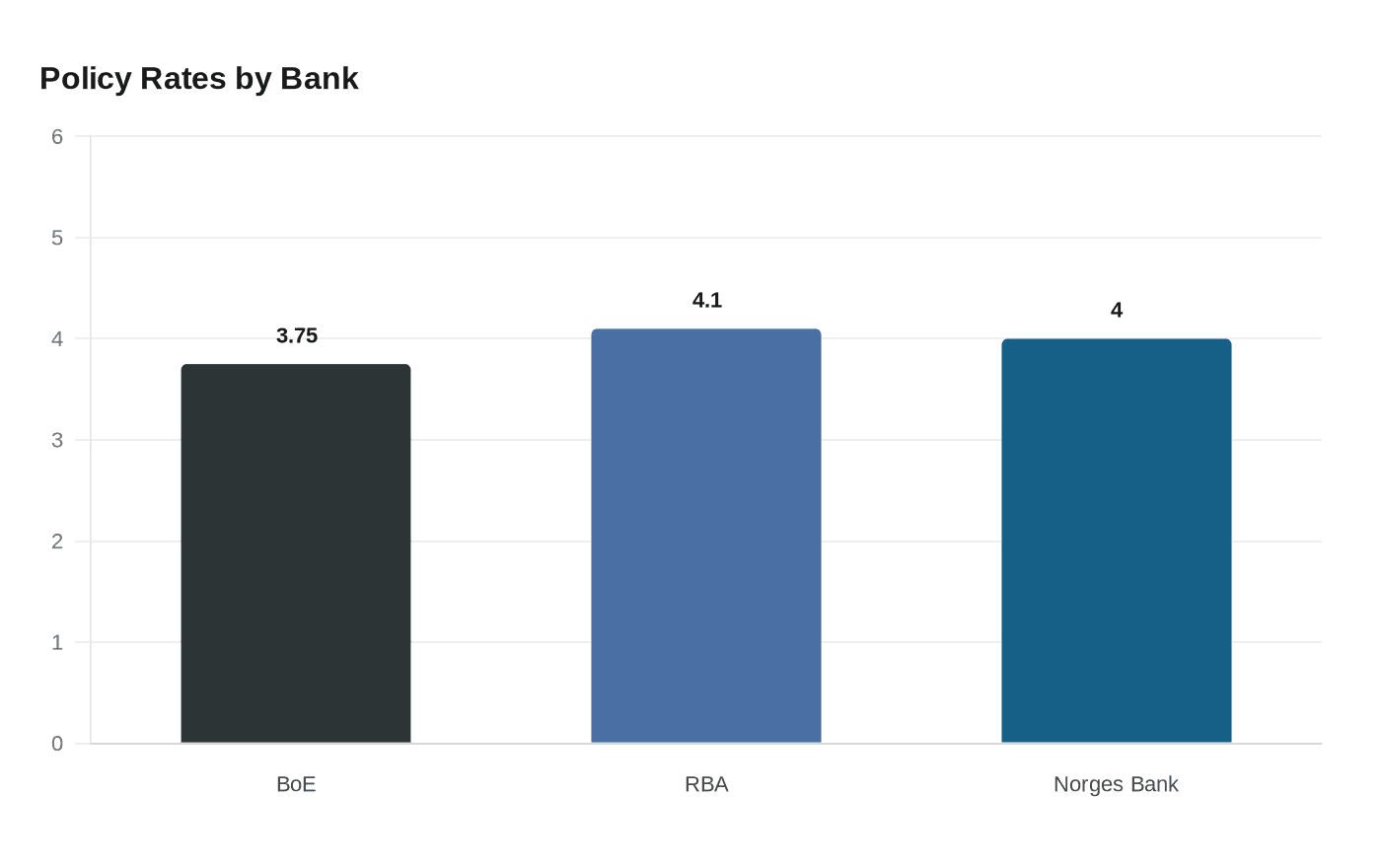
In Britain, the Bank of England held Bank Rate at 3.75% by an 8-1 vote, with one member calling for an increase to 4.0%. The central bank abandoned its usual single forecast and used scenarios instead because the Middle East conflict made global energy prices highly uncertain. The message was blunt: monetary policy cannot directly control oil and gas prices, only the second-round effects that can spread into wages, prices and household bills.
Australia is already closer to another move. The Reserve Bank of Australia has raised rates twice in 2026 to 4.1%, the highest policy rate in the G10, and markets were pricing roughly an 80% chance of another hike next week. That kind of pricing would keep pressure on variable-rate mortgages and business credit even if borrowers never see a formal increase in their monthly statements.
Norway’s Norges Bank has also opened the door to tighter policy later in 2026, reversing earlier expectations for easing as wage growth and rising energy prices keep inflation pressures alive. The bank listed its policy rate at 4.0% in early May and scheduled its next announcement for May 7. New Zealand is holding steady for now, but it has also said it stands ready to act if needed.
Taken together, the signals point to a broader adjustment in global monetary policy. After a run of earlier cuts in several economies, central banks are confronting the possibility that imported energy shocks, not just domestic demand, will determine the next move. For markets that had expected a gradual turn toward easier money, the new risk is clear: the next move may be up.
This article was produced by Prism’s automated news system from verified source data, official records, and press releases, then run through automated quality and moderation checks before publishing. The system is built and supervised by the people who set the standards it runs under. Read our full AI policy.
Did this article answer your question?

%3Amax_bytes(150000)%3Astrip_icc()%2FCertificate-of-deposit-2301f2164ceb4e91b100cb92aa6f868a.jpg&w=1920&q=75)
