Chanda Prescod-Weinstein blends poetry and physics in new cosmic book
Chanda Prescod-Weinstein's new book uses poetry and pop culture to make spacetime legible, challenging who gets to explain science.

Chanda Prescod-Weinstein is staking out a larger claim in science writing: that poetry, culture and imagination are not ornament, but tools for explaining the universe. Her new book, The Edge of Space-Time: Particles, Poetry, and the Cosmic Dream Boogie, arrived in April 2026 with a socially conscious tour through spacetime that treats abstract cosmology as something readers can feel, not just calculate.
Prescod-Weinstein comes to that project with unusual authority. She is an associate professor of physics and core faculty member in women’s and gender studies at the University of New Hampshire, and her research spans particle physics, cosmology, astrophysics, dark matter, neutron stars and the axion as a dark-matter candidate. She is also one of the first 100 Black American women to earn a PhD from a physics department, a fact that underscores why questions of access and interpretation matter in her work.
Her previous book, The Disordered Cosmos: A Journey into Dark Matter, Spacetime, and Dreams Deferred, was published in 2021 and drew attention for linking physics with history, politics, melanin, hip hop and Star Trek. The new book extends that method. Public descriptions of the project say Prescod-Weinstein uses science, poetry and popular culture to explain spacetime and fundamental questions about the universe, while also arguing that understanding the cosmic past matters for humanity’s future.
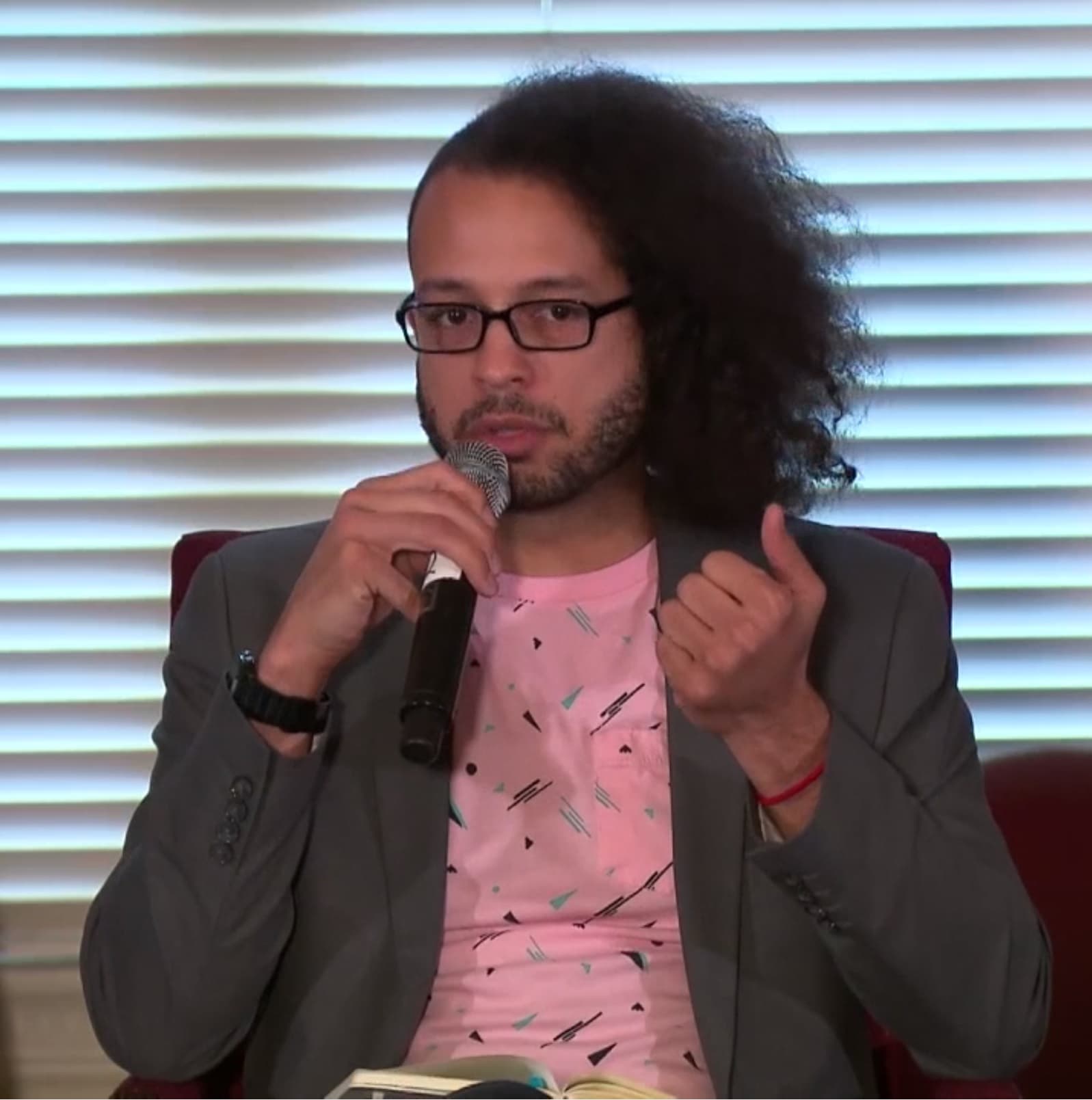
That approach has already drawn audiences well beyond physics departments. Rutgers University paired Prescod-Weinstein with writer Roxane Gay for an April 9, 2026 conversation about the book. Barnes & Noble hosted a live taping and book event on April 13, and St. Louis County Library scheduled another author event for April 24. The spread of those appearances suggests the book is resonating across literary, scientific and humanities circles at a time when many readers are deciding whom to trust on science in the public square.
Prescod-Weinstein’s work lands in that tense space between expertise and accessibility. Instead of stripping science of culture, she folds culture into the explanation itself, making the case that cosmology is not only about particles and equations, but about who gets to interpret the sky, and whose language counts when the public tries to understand it.
This article was produced by Prism’s automated news system from verified source data, official records, and press releases, then run through automated quality and moderation checks before publishing. The system is built and supervised by the people who set the standards it runs under. Read our full AI policy.
Did this article answer your question?