Last full-time museum taxidermist keeps Los Angeles dioramas alive
Tim Bovard tends more than 75 Los Angeles dioramas at dawn, keeping a vanishing museum trade alive as institutions outsource the work.
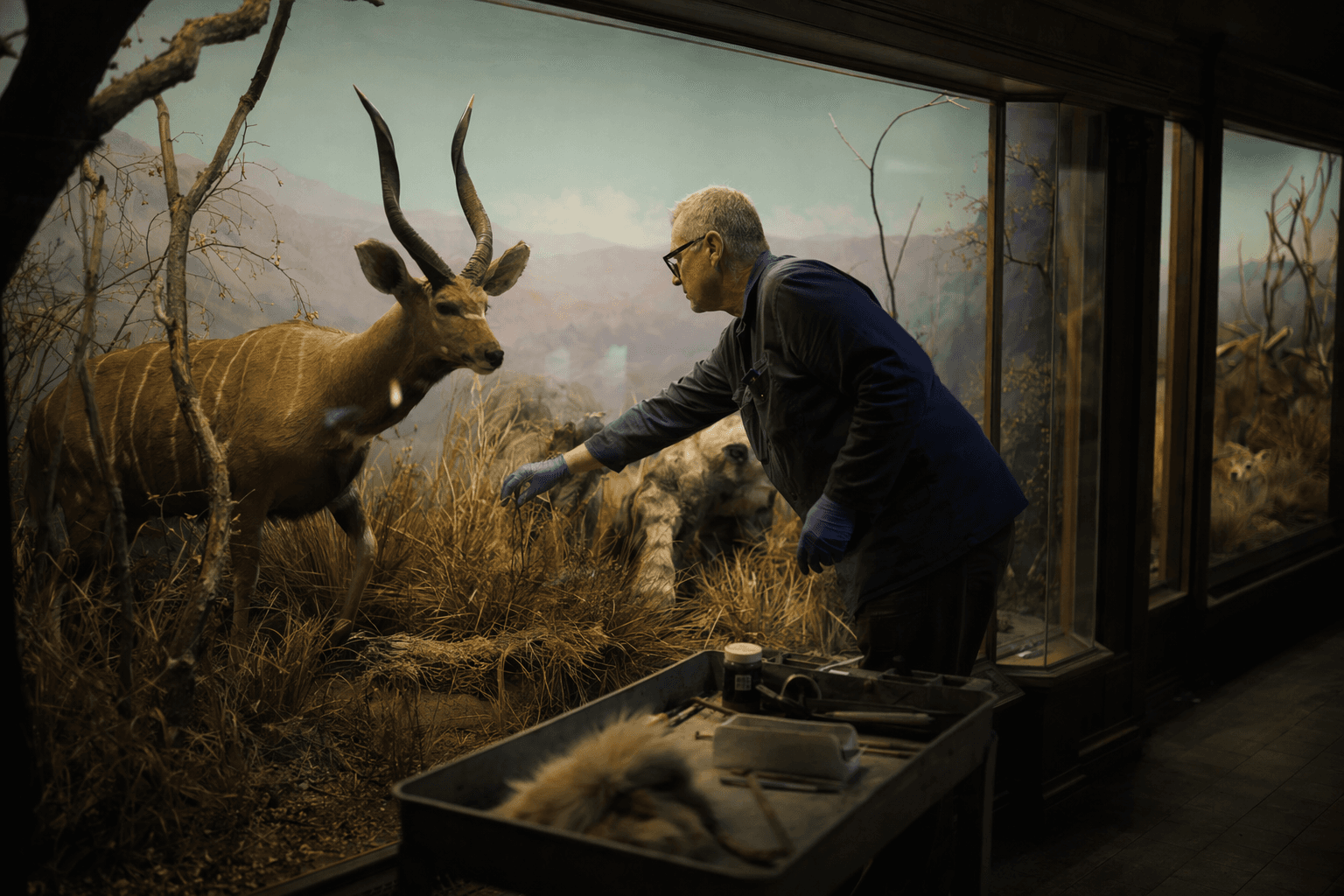
Tim Bovard arrives before most of Los Angeles wakes, moving through the Natural History Museum of Los Angeles County with a taxidermist’s eye for damage, pests, dust and the small details that keep a diorama from slipping into decay. In a museum world that has steadily shed full-time specialists, Bovard stands out as the last full-time taxidermist at any museum in the United States.
His work is not only about preserving a staged scene. Bovard is helping maintain more than 75 historic habitats in the museum’s diorama halls, where staff are restoring and reopening a hall that had been closed for decades to mark the 100th anniversary of the dioramas. The museum says the displays have inspired visitors for a century and now serve a broader purpose, examining biodiversity, ecology, conservation, colonialism and the changing techniques museums use to present science to the public.
Bovard’s path into the trade began early. He started doing taxidermy at age 10, worked in a commercial taxidermy studio in high school and completed a California apprenticeship as a journeyman taxidermist in 1974. He has spent so much of his life around the museum’s diorama halls that his work now reflects both craftsmanship and memory, an ongoing effort to keep what he has long called an “illusion of life” convincing to each new generation of visitors.
That skill has become unusually rare. Smithsonian Magazine reported in 2024 that only a few U.S. museums still employ full-time taxidermists and that most now depend on outside contractors. Museums increasingly maintain established collections rather than build them from scratch, a major shift from the late 19th and early 20th centuries, when taxidermy was central to institutional expansion and display.
The decline of the staff taxidermist is visible even inside the Smithsonian. The National Museum of Natural History declined to replace its last full-time taxidermist when he retired in 2003, underscoring how few museum positions remain devoted to this kind of highly specialized labor. Paul Rhymer has said he will be the last staff taxidermist hired by the Smithsonian, a sign of how the profession is being pushed to the margins even as museums rely on it to care for old collections.
Bovard’s presence in Los Angeles shows what is lost when those roles disappear. Museums need more than curators and conservators to keep their collections intelligible; they need hands-on specialists who can repair a cracked eye, guard against pests and preserve the illusion that turns a specimen into a teaching tool. In Bovard’s case, one morning’s work helps keep a century of museum knowledge visible.
This article was produced by Prism’s automated news system from verified source data, official records, and press releases, then run through automated quality and moderation checks before publishing. The system is built and supervised by the people who set the standards it runs under. Read our full AI policy.
Did this article answer your question?