Chanticleer Garden blends art, history and horticulture near Philadelphia
Chanticleer turns a former estate into a public lesson in calm, with a one-mile path, $15 entry and ever-changing gardens just west of Philadelphia.
A garden built for wandering
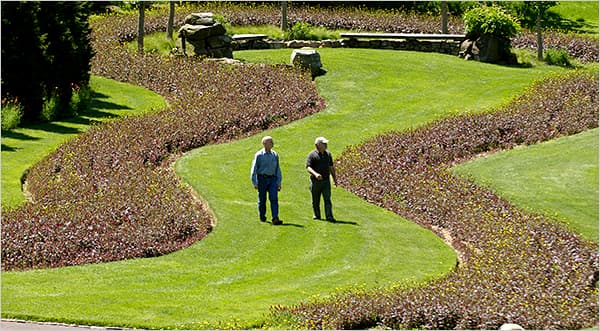
Chanticleer Garden turns a 35-acre former estate into one of the Philadelphia region’s most compelling public landscapes. Set in Wayne on Philadelphia’s Main Line, about 30 miles west of the city, it is designed less like a formal park than a living composition, where art direction, horticulture and history all share the same ground.

The garden is described as a contemporary pleasure garden, and that idea shapes everything about the visit. Expert horticulturists build ever-changing plant combinations, labeling is minimal, and the experience rewards slow observation rather than quick scanning. In an era when urban stress and environmental anxiety can make open space feel more necessary than optional, Chanticleer works like civic infrastructure for the mind: a place where quiet, seasonal change and careful design create a practical form of relief.
From family estate to public landscape
The story begins well before the garden opened to the public. The Rosengarten family’s connection to Philadelphia dates back to 1822, when George D. Rosengarten arrived in the city and helped establish the family’s long arc in business and land stewardship. The estate itself was completed in 1913 as a country retreat for Adolph Rosengarten Sr. and Christine Rosengarten, reflecting the era’s taste for private retreats shaped by wealth, status and horticultural ambition.
That private world changed after Adolph Rosengarten Jr. died in 1990 and left the property to the Chanticleer Foundation. Chanticleer opened to the public in 1993, and the site had already been recognized for its significance years earlier, with a listing on the National Register of Historic Places in 1984. The name Chanticleer, tied both to the rooster motif seen on the estate gates and to literary references in Chaucer and Thackeray, hints at the property’s unusual mix of whimsy, scholarship and cultivation.
What the walk reveals
The garden is built around a one-mile paved path, which gives visitors a clear way to move through a landscape that is intentionally varied from room to room. Rather than a single grand vista, Chanticleer unfolds as a sequence of themed spaces, each with its own texture, scale and mood. The route links the Teacup Garden, Ruin Garden, Gravel Garden, Tennis Court Garden and Pond Garden, allowing the estate to function almost like a gallery of planting styles.
That structure matters because it turns the garden into an educational experience as much as a scenic one. With minimal labeling, the plantings themselves become the teaching tool, showing how shape, color, moisture, texture and season can be arranged to create distinct effects. For visitors, that means the lesson is not only botanical but also emotional: a reminder that carefully designed public green space can calm the senses while sharpening attention.
- The Teacup Garden offers a smaller, more intimate scale.
- The Ruin Garden introduces a sense of texture and age.
- The Gravel Garden demonstrates how dry, spare planting can still feel alive.
- The Tennis Court Garden and Pond Garden show how the estate balances structure with water and open space.
The Chanticleer House and much of the grounds are accessible, which broadens the experience beyond a simple walking loop. The accessibility of the house helps connect the landscape to its domestic and historical roots, while the rest of the property gives visitors room to linger, compare plant combinations and notice how different garden “rooms” speak to one another.
How to visit now
Chanticleer typically operates seasonally, and the current season runs from April 1 to November 8, 2026. Admission is $15 for visitors ages 13 and older, while children 12 and under are free. The garden also describes itself as a private foundation without government funding, a detail that helps explain both its independence and its emphasis on stewardship.
That funding model is important because Chanticleer does more than display plants. It supports programs, lectures and workshops as part of an educational mission, reinforcing the idea that a garden can be a public good even when it is not a municipal park. In practical terms, that means Chanticleer is not simply maintained for beauty alone. It is curated to teach, to model ecological care and to give visitors a place where the pace of movement and the pace of thought can both slow down.
Why Chanticleer matters now
Chanticleer’s significance goes beyond its acreage or its pedigree. It shows how a carefully tended green space can serve multiple roles at once: historic site, horticultural showcase, classroom and restorative public refuge. In a region that carries the pressures of a major metropolitan area, its one-mile path and evolving plantings create a compact argument for why curated landscapes still matter.
The deeper value of Chanticleer is that it proves public calm does not have to be accidental. It can be designed, funded and maintained with the same seriousness once reserved for private estates, then opened so that visitors can benefit from the result. That is what makes Chanticleer feel less like a scenic detour than a model for how green space can enrich civic life.
This article was produced by Prism’s automated news system from verified source data, official records, and press releases, then run through automated quality and moderation checks before publishing. The system is built and supervised by the people who set the standards it runs under. Read our full AI policy.
Did this article answer your question?

