USS Gerald R. Ford returns home after record 326-day deployment
The carrier came home after 326 days at sea, the longest U.S. deployment in decades, after being sent from Europe to the Caribbean and the Red Sea.

The USS Gerald R. Ford returned to Naval Station Norfolk with nearly 4,500 sailors after 326 days at sea, closing out the longest U.S. carrier deployment in more than 50 years. The homecoming on May 16 also brought back the USS Gerald R. Ford Carrier Strike Group, including USS Bainbridge and USS Mahan, after a trip that began at Norfolk on June 24, 2025.
What began as a planned Europe-focused mission stretched across the North Sea, the Mediterranean, the Caribbean and the Red Sea, with the carrier crossing the Atlantic four times. The Navy said the strike group operated across the U.S. 4th, 5th and 6th Fleet areas of responsibility, and the ship transited the Suez Canal as it shifted between theaters. By early May, Ford had left the Red Sea and entered the Mediterranean on the way home. The carrier had also stopped at Souda Bay, Greece, on March 23 for maintenance, repairs, assessment and resupply after operating in the Red Sea.
The deployment surpassed the USS Abraham Lincoln’s 295-day post-Vietnam record and was longer than any other U.S. carrier deployment in the past half-century. Navy and military reporting also places the Ford behind only the USS Midway’s 332-day Vietnam-era deployment for total time at sea, a comparison that underscores how unusual the Ford’s 326-day stretch was in modern service. Carrier Air Wing 8 had already returned to home air stations before the ship itself came back to Hampton Roads.
Defense Secretary Pete Hegseth was at Naval Station Norfolk for the homecoming and presented the Presidential Unit Citation to the carrier group. Navy leadership said the sailors showed resilience, professionalism and sustained morale through the extended mission, while Adm. Daryl Caudle said deployments of this length demand endurance and involve real sacrifice. Former Rep. Elaine Luria also issued a statement on the carrier’s return to Hampton Roads.
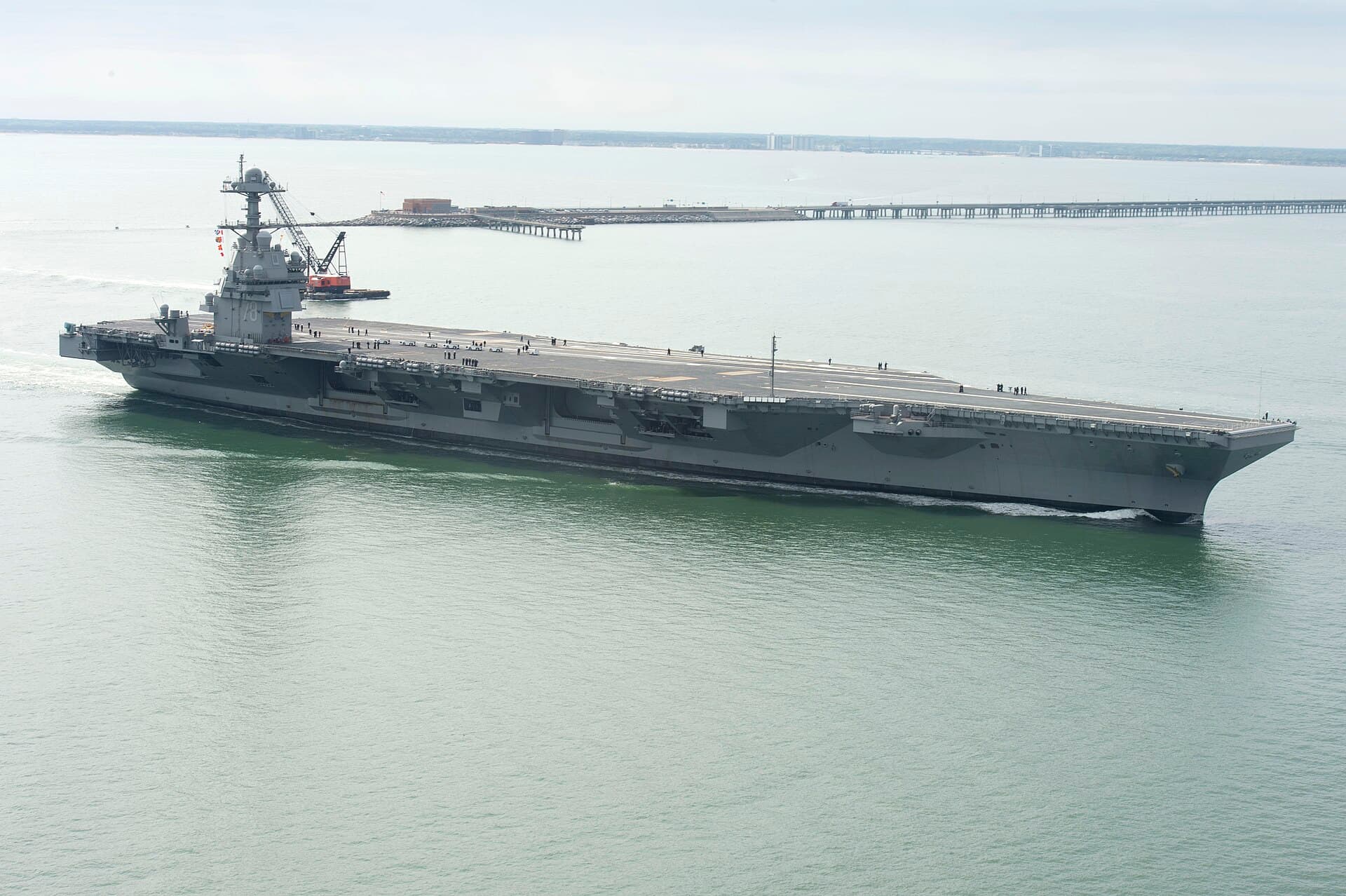
The Ford’s journey reflected how quickly one strike group can be pulled across overlapping crises, from the Caribbean to the Middle East, while remaining on station in Europe and the eastern Atlantic basin. It also laid bare the pressure on sailors, families and the Navy’s maintenance system, which has to keep one of the fleet’s newest carriers moving through a record-length deployment while sustaining operations in multiple theaters at once.
This article was produced by Prism’s automated news system from verified source data, official records, and press releases, then run through automated quality and moderation checks before publishing. The system is built and supervised by the people who set the standards it runs under. Read our full AI policy.
Did this article answer your question?

