Chile launches first deportation flight under Kast’s new migration plan
Chile sent 40 foreign nationals out on its first deportation flight, turning Kast’s hard-line migration pledge into a test of enforcement.
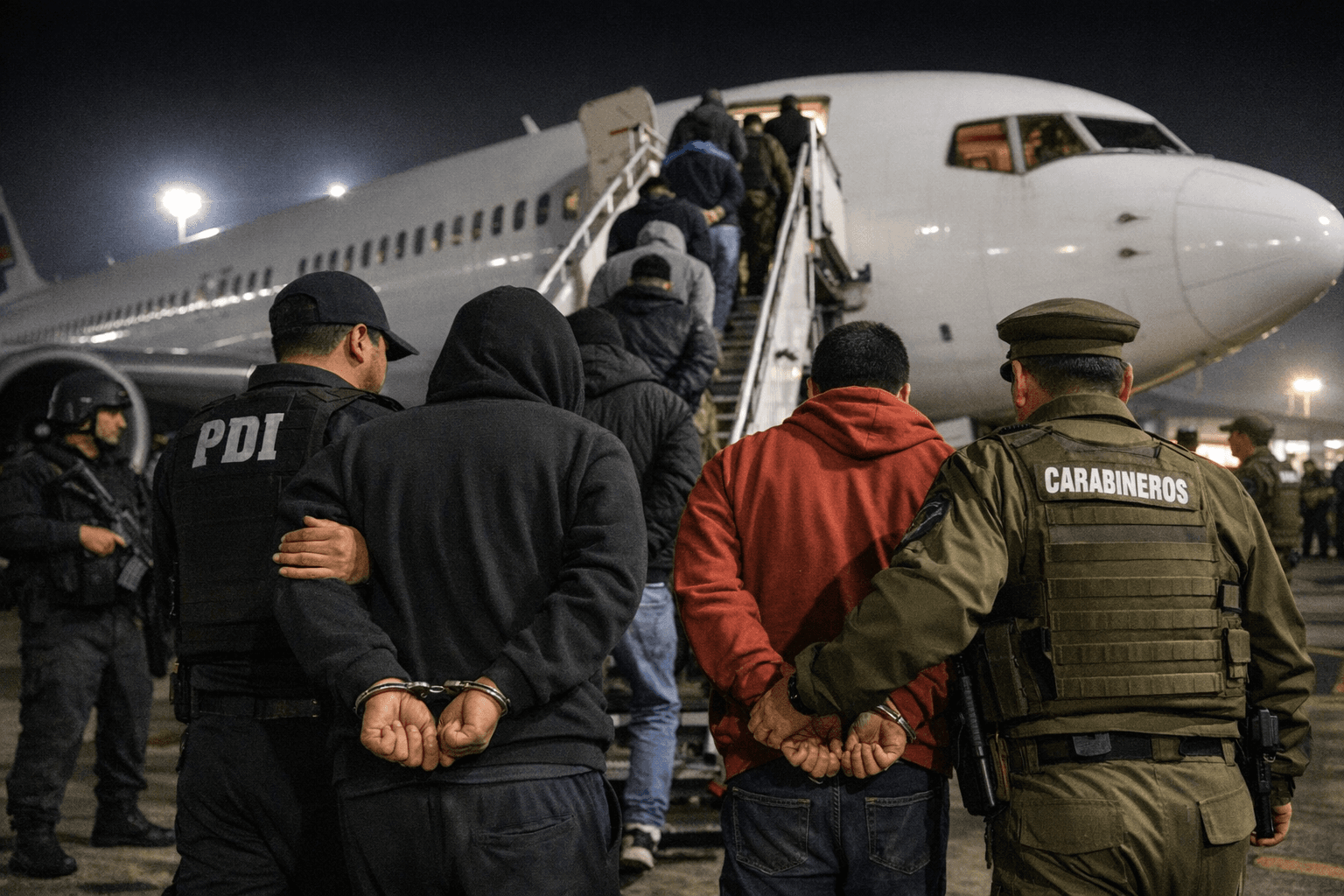
Chile’s new government put its migration agenda into action as a plane carrying 40 foreign nationals left Iquique for Bolivia, Colombia and Ecuador, the first deportation flight under President Jose Antonio Kast. Deputy Interior Minister Maximo Pavez described the operation as the first of many, signaling that Santiago intends to turn a campaign promise into a standing enforcement program.
The flight is more than a single removal. It is the clearest early sign of how far Kast’s right-wing crackdown can move from rhetoric to administration, and whether Chile is building a durable deportation model or staging a symbolic show of control. Kast took office on March 11, and his government has moved quickly to make migration a central test of authority at the border and in the interior.
The broader plan reaches beyond deportations. Reporting in March said the administration wanted to bring the most vulnerable border crossings under control within six months and was considering trenches, walls and new technology to slow irregular migration. The flight from northern Chile fits that design: it places removals inside a wider security strategy rather than treating them as an isolated operation.
The political backdrop is stark. Earlier reporting said about 337,000 foreigners were living in Chile without required documentation, and that the immigrant population had doubled since 2017. That scale helps explain why migration has become one of the most combustible issues in Chilean politics, with public anxiety over border control, crime and labor competition feeding support for harder lines.
Kast has already framed the issue in uncompromising terms, saying irregular migrants should leave voluntarily or be barred from living in Chile permanently. The first deportation flight gives those words an operational edge, while also raising questions that will shape the next phase of his presidency: how many flights the government plans to run, how the removals will be coordinated with Bolivia, Colombia and Ecuador, and how far Chile will go before legal and humanitarian concerns slow the rollout.
For Latin America, the flight matters beyond Chile. Governments across the region are under pressure to show they can manage migration without losing control of borders or abandoning basic protections. By moving first and fast, Kast is trying to define Chile’s answer as one of deterrence and removal. Whether that becomes a lasting enforcement system or a political symbol will depend on what follows after the first plane lands.
This article was produced by Prism’s automated news system from verified source data, official records, and press releases, then run through automated quality and moderation checks before publishing. The system is built and supervised by the people who set the standards it runs under. Read our full AI policy.
Did this article answer your question?