China alleges foreign spies are using turtles and fish for surveillance
China’s security ministry said “spy turtles” and “spy fish” are part of an “invisible secret war” probing weak points in coastal defences.

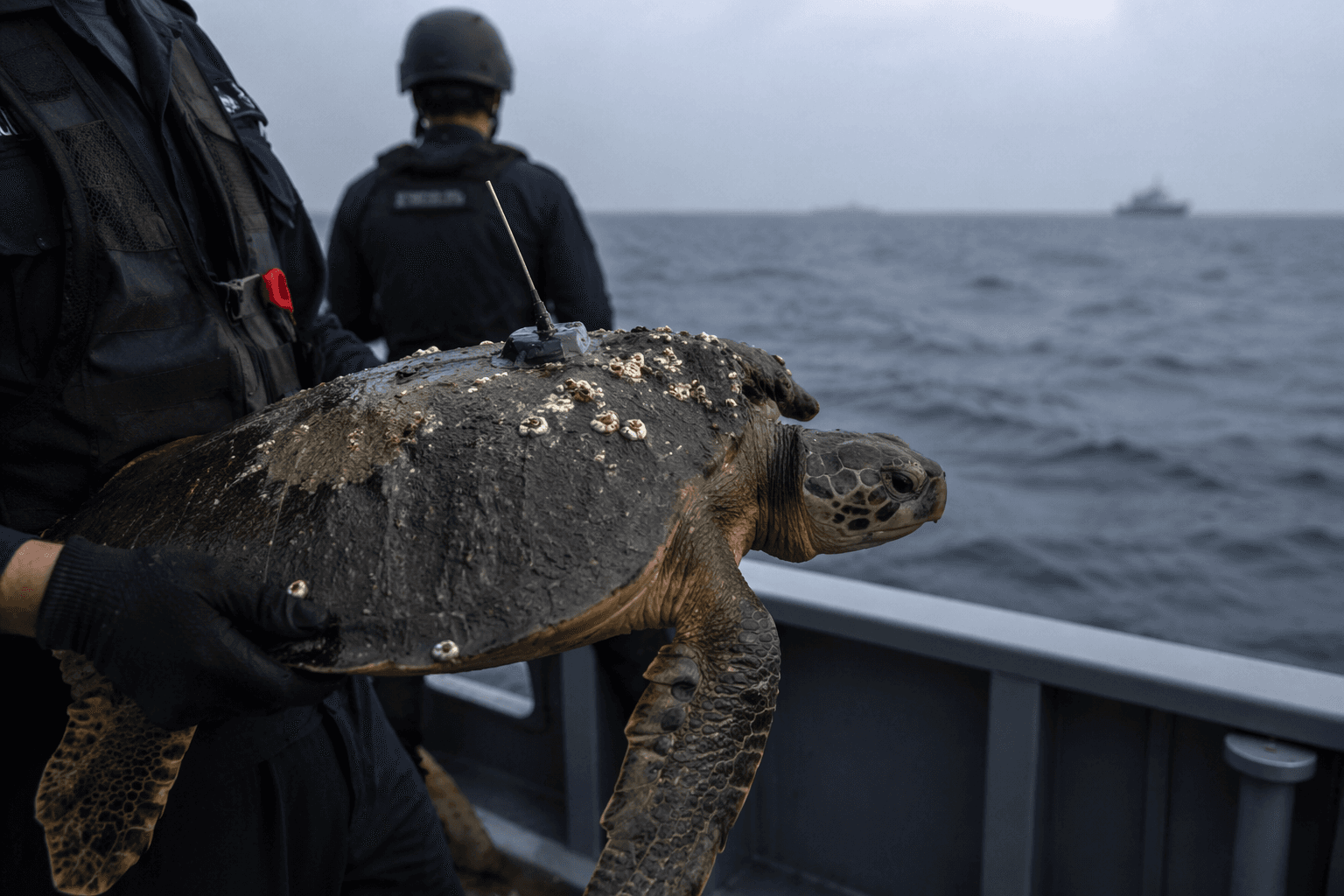
Beijing is turning sea creatures into symbols of a covert fight for the coastline, using a new espionage allegation to amplify its warning about threats beneath the waterline. On Friday, June 12, 2026, China’s Ministry of State Security said foreign intelligence services were using “spy turtles” and “spy fish” fitted with sensors to collect sensitive marine data off China’s coast.
The ministry said the devices measured water temperature, salinity and ocean currents, then sent the information by satellite in real time. In its WeChat post, titled “Under the deep blue, undercurrents are surging,” the ministry described the campaign as an “invisible secret war” and said the data could be used to build underwater maps that identify weak points in China’s coastal defenses.
The message was not limited to animals. The ministry said “relatively large marine animals with sensors attached have been discovered in certain waters of China,” and grouped the alleged operation with other suspected maritime espionage tools, including detection buoys, wave-powered drones and electronic devices placed on cargo ships. China did not publicly identify the foreign intelligence agencies it accused, and the claims have not been independently verified.
The choice to publicize the allegation now fits a broader pattern of Chinese security messaging around the sea, where the South China Sea and neighboring waters remain a strategic flashpoint. Those routes are vital not just for military positioning but for commerce and data, with global shipping and undersea infrastructure running through the Indo-Pacific. U.S. Department of State materials describe maritime security as central to U.S. interests in the Indo-Pacific and note that billions of dollars in trade pass through critical waterways.
Beijing’s framing does more than warn about surveillance. It folds marine science, civilian shipping and wildlife into the same threat narrative, signaling to domestic audiences that the coastline is under persistent pressure while reminding foreign rivals that even obscure undersea activity is being watched. In a region already defined by maritime disputes, the allegation extends China’s security lens deeper into the water and wider across the map.
This article was produced by Prism’s automated news system from verified source data, official records, and press releases, then run through automated quality and moderation checks before publishing. The system is built and supervised by the people who set the standards it runs under. Read our full AI policy.
Did this article answer your question?


